“From local abundance to global leadership in sustainable materials and future-ready “textiles
Giriraj Singh
India’s relationship with fibre is civilisational, 5,000 years deep, woven into our villages, our traditions, and our collective identity. From the legendary muslins of Mohenjo-daro, celebrated as “woven air”, to the craftsmanship that travelled across continents, fibre has always been the lifeblood of our rural economy. Today, at the cusp of a global sustainability revolution, that ancient knowledge is our greatest competitive advantage.
For decades, the banana pseudostem was discarded as waste. Today, that same biomass is premium fibre, feeding export markets, sustaining rural livelihoods, and turning agricultural residue into national revenue. From waste to wealth, from local abundance to global opportunity: this is the essence of India’s New Age Fibre movement, paving the way for India’s path to global leadership in green materials and future-ready textiles.
New Age Fibres are sustainable, plant-based materials that blend India’s traditional knowledge with modern innovation. Fibres like Bamboo, Hemp, Banana, PALF, Flax, Ramie, Sisal, Milkweed, and Kapok have existed for centuries, but are now being rediscovered for high-value uses in textiles, defence, biodegradable composites, and premium products. They are expanding India’s natural fibre basket for a greener future.
Rising incomes, global sustainability mandates, and traceable sourcing requirements are fundamentally rewiring global supply chains and driving a new fibre economy. Consumers are seeking comfort, breathability, and sustainability in everything they wear. This structural shift is why India’s fibre consumption is set to surge from 15 MMT today to 23 MMT by 2030. The world is increasingly seeking exactly what India can offer: ethical, sustainable, and high-performance natural fibres backed by centuries of expertise.
This vision is supported by a clear institutional and policy framework. Under the Mission for Cotton Productivity, with a total outlay of ₹5,664 crore for 2026–2031, a dedicated ₹300 crore New Age Fibres component has been kept. Complementing this effort, the National Fibre Mission announced in the Union Budget 2026–27 provides the broader strategic framework, resting on four pillars: KRISHI-SUTRA for cultivation and raw material development, INFINITY for research and innovation, GRAM-SETU for infrastructure and enterprise creation, and GMPS for branding and market development.
The strength of this policy framework lies in decades of scientific research already delivering results. Milkweed (Aak/Madar), traditionally offered to Lord Shiva, has emerged as a breakthrough after 18 years of research at the Northern India Textile Research Association (NITRA), evolving into defence applications such as sleeping bags for soldiers operating at –20°C. These are 10% lighter than polyester alternatives, warmer than wool, and CLO/Cell certified. Grown on 55 million hectares of wasteland without fertiliser, it can generate ₹1.5–2 lakh per acre annually for farmers.
Banana fibre offers an estimated 1.8 million tonnes annual production potential and additional farmer income from agricultural residue, while Bamboo can yield up to 60 tonnes of biomass per hectare, creating major opportunities for the Northeast. Hemp is also emerging as a promising global market, with cultivation already permitted in Uttarakhand and Uttar Pradesh. Along with Flax, Sisal, Ramie, PALF, Nettle, and Kapok, these fibres are steadily expanding India’s sustainable fibre base.
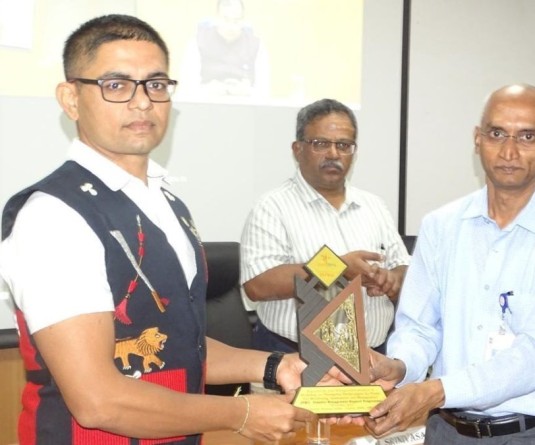
Building on this scientific momentum, the National Seminar on New Age Fibres became a platform where science, policy, and enterprise could converge. It brought together researchers, scientists, entrepreneurs, farmer organisations, industry leaders, and policymakers under one roof. Three Task Force reports covering all ten priority fibres were released, translating field science directly into scheme design and investment priorities.
The seminar also openly identified gaps in standards, processing infrastructure, and institutional financing, reflecting a mission focused on real execution. Key priorities emerged: scaling production from 10,000 MT to 10 lakh MT in five years, developing quality standards, promoting machinery indigenisation, reducing dependence on imported processing technology, and building cluster-based fibre ecosystems from cultivation to value addition. Together, these steps position New Age Fibres as a whole-of-government mission for rural prosperity and sustainable growth.
Perhaps the most transformative frontier is fibre blending. India’s real strength lies not in a single fibre, but in combining them intelligently, such as milkweed for thermal lightness, wool for warmth, bamboo for breathability, and cotton for softness. A blended fabric is not a compromise; it is a performance upgrade creating fabrics that are stronger, smarter, and more sustainable, with better comfort, moisture management, durability, and versatility across fashion, lifestyle, and technical textiles.
The benefits cascade across the entire value chain. Consumers get better comfort and functionality, manufacturers gain premium and differentiated products, and farmers benefit from diversified demand and more resilient incomes. For India, blending is more than a technical innovation; it is the bridge from raw fibre supply to globally competitive, value-added brands rooted in Indian identity.
At its core, the New Age Fibre movement is about transforming lives, creating opportunities for farmers, strengthening rural livelihoods, empowering women, and enabling entrepreneurs to build global enterprises from local resources. Anchored in Prime Minister Shri Narendra Modi Ji’s 5F Vision: Farm to Fibre to Fabric to Fashion to Foreign, India’s Green Fibre Revolution is not a distant promise. The strategy is set. The institutions are engaged. The science is proven. The entrepreneurs are ready. What India is now doing, fibre by fibre, blend by blend, region by region, farm by farm, is writing the next great chapter of its textile story.
(The author is the Union Minister of Textiles. The views expressed are personal)