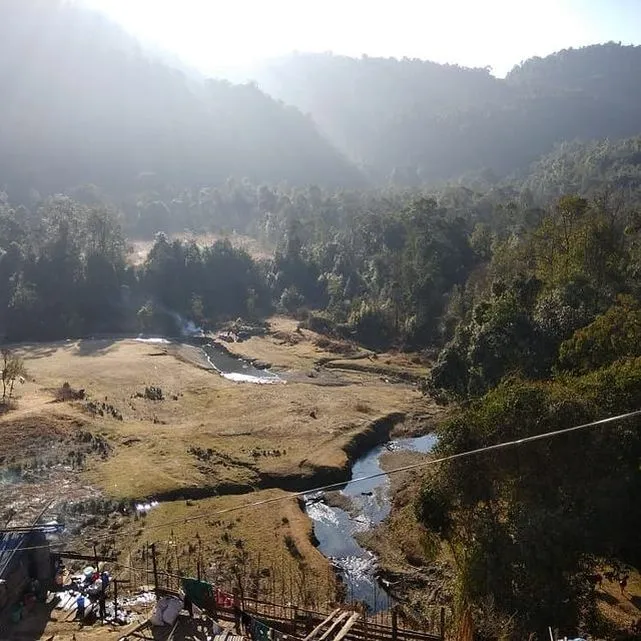
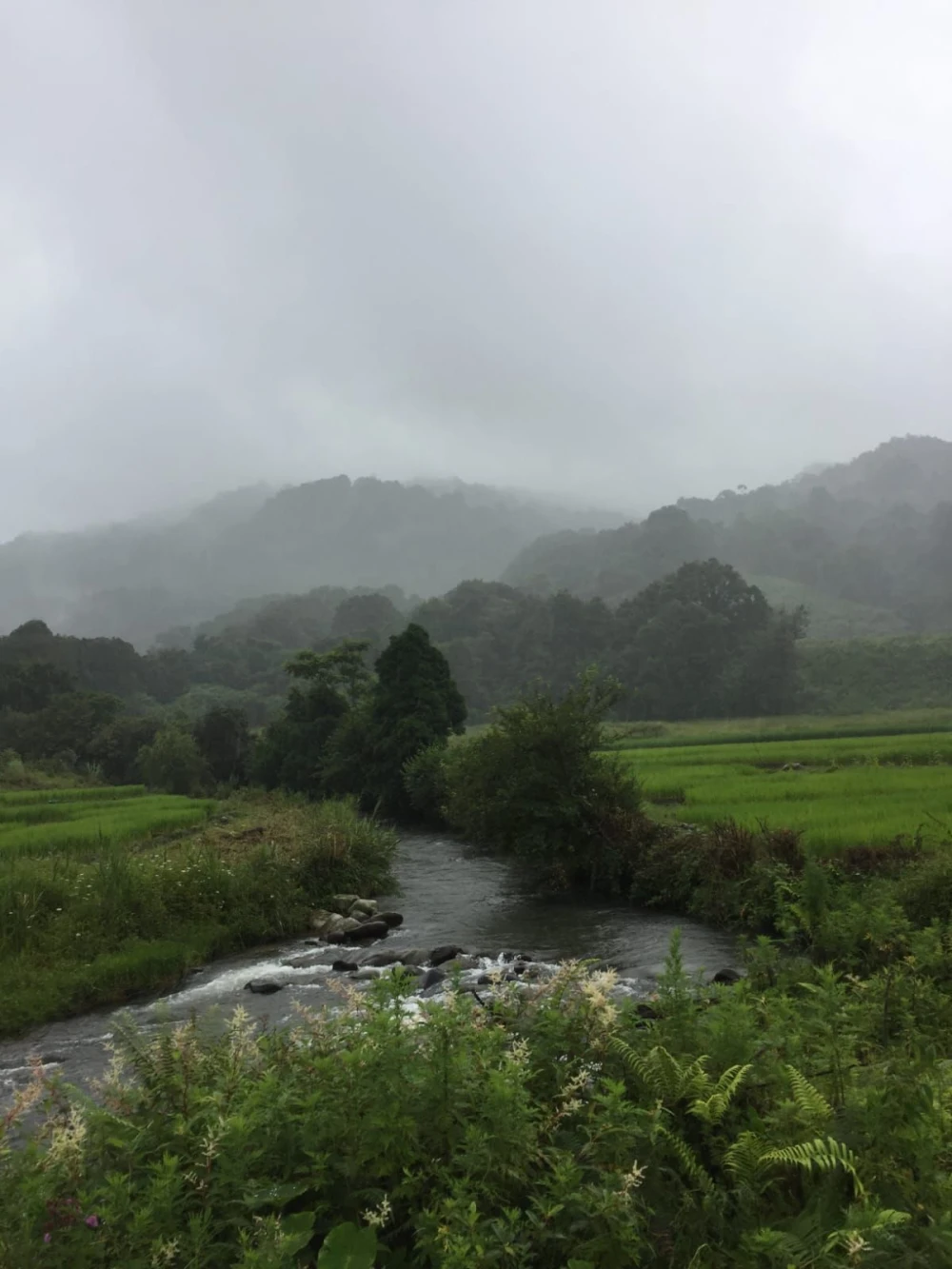
Scenic view of Dzuleke, one of Nagaland’s sought-after tourist destinations. (Morung File Photo)
Morung Express News
Lumami | November 22
Communities in the Northeast must be given real authority to shape, limit or refuse tourism projects before major commitments are made, and not merely be welcomed as hosts, a speaker told an international seminar at Nagaland University.
Jose Antony of Abundance Advisory LLP, The Exponential Foundation and The New Venice was speaking on “From Ecotourism to Community-Governed Visitor Economies: Local Self Reliance, Cultural Resilience and the Circulation of Value” at the two-day seminar on “Ecotourism, Livelihood and Development in Northeast India”, held on November 19 and 20.
Organised by the university’s Departments of Sociology and Geography, the seminar brought together academics, policymakers, tourism practitioners and community representatives to discuss tourism’s impact on livelihoods, culture and the environment.
Risks of tourism
Antony said tourism offered opportunities across the Northeast but carried risks relating to the environment, equity, unequal governance and pressure on existing livelihoods. Once land contracts and markets are committed, control is very difficult to recover, he warned. “Engagement is not simply about welcoming new visitors. It can mean shaping, limiting, changing, or refusing projects,” he said.
Citing an instance where community mobilisation, scientific advice and alliances helped challenge a proposal, he said large investors were not necessarily unstoppable. He cautioned, however, that the legal mechanism involved could not simply be transplanted elsewhere, and that the lesson was to build community strength before major commitments are made. “Who pays the risk and who can renegotiate or end the negotiation? Those questions belong at the centre of tourism governance,” he said.
Strengthening community institutions
Antony said communities should first define what they want tourism to contribute, beyond visitor numbers or investment, including whether gains exceed social and environmental costs, whether other livelihoods remain viable, and whether communities can obtain information, challenge breaches and withdraw. “Calling a project community-based does not make it so. We need institutions that can make these conditions meaningful,” he said.
Noting that contemporary tourism demands financial, technical and negotiating capabilities that individual villagers struggle to maintain, he said village councils, NGOs, public agencies and rights holders have different roles, and women, youth and households outside tourism must also influence decisions. Institutions should be strengthened with clear mandates, published decisions and ways to challenge representatives, rather than replaced, and any change should be locally shaped and not imposed from outside, he added.
Livelihoods and ‘re-fencing’
On livelihoods, he said, “The test is whether tourism expands livelihood choices even when visitor numbers fall.” Debt and unpaid work dependent on continuous visitor growth, he said, can weaken a community’s ability to say no to a project.
Antony put forward the concept of “re-fencing”, which he described as setting limits and responsibilities before investments make change difficult. Large projects, he said, should disclose ownership, financing, land needs and resource demands, and communities need time and independent advice. Thresholds for water, forests and land use, monitoring, and distinct permissions for cultural performances, photography and commercial use were also needed, he said.
Large-format tourism and Hornbill Festival
Referring to the Hornbill Festival, he said large-format tourism raised questions about effects on surrounding communities and resources, and that approval must not end community influence. He said projects should remain open to modification or rejection. He suggested that government and communities jointly identify suitable locations for large-format projects, starting with what communities wish to protect. “Consent to examine a site is not consent to develop,” he said, adding that people living beyond a project’s boundaries could be affected where water or access is shared.
Case for community veto
Antony said affected communities should ideally have binding veto powers over specified consequential decisions, noting that a credible veto could encourage early negotiation rather than confrontation. He said tensions around certain large-format projects in Nagaland itself showed the need to reach agreement in time. “The power to say no can help make agreement more meaningful. This is not a blanket veto,” he said.
He also said large-format tourism could support shared community benefits, with every area receiving a baseline share and additional shares reflecting contributions, and that any common fund should be tested for workability before percentages are debated. Antony said digital tools could help village institutions and tribal hohos share information, obtain expertise and build consensus, but cautioned that such a network must not become an authority above village institutions. He called for minimal data collection, offline options and accountable administration to address privacy risks, and said essential public services must never depend on a community’s acceptance of tourism.
Proposal for pilot, academic study
Proposing a way forward, he suggested a small proof-of-concept among a few villages around a shared priority, such as pooled advice, shared visitor information or local purchasing. “Can people agree on a useful task, share responsibilities and achieve a measurable benefit without giving up their autonomy?” he asked, adding that repeated cooperation could build trust and shared expertise.
He also called for a multi-disciplinary academic study, which he said Nagaland University could take up, examining who benefits, who bears costs and whose voice is heard in large-format tourism, with the Hornbill Festival as a case. He acknowledged that the festival was a large, established event with substantial institutional and commercial interest, and that governance could not be assumed to change immediately.
“We can’t ignore large-format tourism. We can’t just say no,” Antony said, adding that such work could eventually enable constructive community oversight even of the Hornbill Festival. Terming Nagaland’s tradition of community organisation as “a promising starting point, not a ready-made solution”, he said the aim was to form a community trial and not “another layer of bureaucracy”. The lessons, he added, could extend beyond tourism to other areas of business and development.