Church leaders vow to defend Prohibition, accuse govt of ‘Blatant Lie’
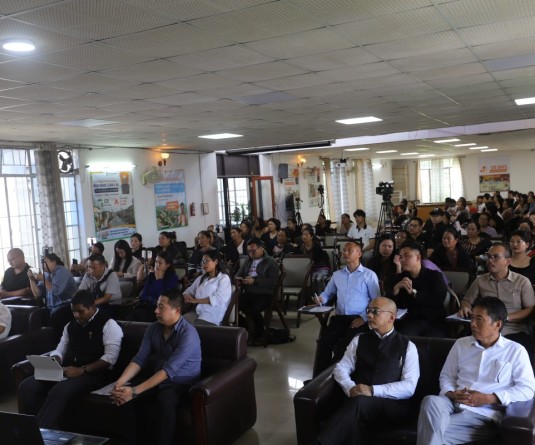
Dimapur, December 20 (MExN): The Dimapur Area Ao Ordained Minister Fellowship (DAAOMF) have vowed to defend Nagaland’s decades-old prohibition law, framing it as a sacred covenant born of historic sacrifice and alleging successive state governments of “terrible betrayal” and “blatant lie” in failing to enforce it.
The DAAOMF, in its ‘Declaration on Liquor’ detailing the 60-year political and spiritual struggle, called the Nagaland Total Prohibition (NLTP) Act of 1989 a “life sacrifice” achieved through hunger strikes, mass protests and “the immeasurable tears shed for the cause.”
The early phase
The sequence of events traces back to the Naga national movement, with the fellowship alleging the initial influx of “Political Rum” supplied by the Government of India in “huge quantity into Naga Hills.” The first formal church-led appeal for abolition liquor was made by the Nagaland Baptist Church Council (NBCC) on February 5, 1962 in it Mokokchung session.
Following statehood, NBCC under the leadership of Kenneth Kerhuo, Rev Ayutemjem and Rev. Longri Ao approached the government seeking to abolish liquor sales by 1964. “But the Government issued more licenses and opened many wine shops, in all districts.”
The fellowship said that on October 12, 1966, a delegation from NBCC met with the Chief Minister and his Cabinet. They urged the government to stop the rum quota for guest entertainment, cancel liquor licenses, and close all wine shops and bars by the end of 1966. The Government initially agreed to these demands. Contrary to this agreement, however, it enacted the Nagaland Excise Act of 1967, which instead regulated and promoted the manufacture, sale, and use of liquor.
Subsequent years saw repeated appeals. In 1967, the NBCC Women Department was formed under ‘Nagaland Baptist Women Union’ (NBWU). In 1969, a Central Committee on Liquor Prohibition was formed. On February 3, 1971, the NBCC gave a three-year deadline for total prohibition by 1973. While the government agreed, the fellowship claims it backtracked by passing the Nagaland Excise Rule in 1974 to “regulate and promote wine sale.”
Another major assurance was cited from November 28, 1984, when then Chief Minister SC Jamir announced licenses would not be renewed after March 31, 1985. “But the Government did not keep its written assurance,” the DAAOMF stated.
Mass movement and 1989 hunger strike
Frustrated by unfulfilled promises, the movement intensified in 1988. The NBCC declared a “Do or Die Mass Movement” from October 25 to 27, 1988 at Pfutsero session.
Subsequently, a large protest rally was held in Kohima on November 15, 1988. During the President's Rule, a memorandum signed by 5,000 church leaders was submitted to the Governor, who acknowledged public sentiment and assured action on their demand.
The movement gained significant traction, leading to Mon district being declared ‘Dry’ on October 1, 1988. Following an indefinite hunger strike in Mokokchung district starting January 3, 1989, then Deputy Commissioner VN Gaur declared Mokokchung district ‘Dry’ on January 4, 1989.
“The fiercest Prohibition battle was waged in Kohima in 1989.” The NBCC submitted an ultimatum for a total prohibition law by March 15, 1989. When this was ignored, a hunger strike by “5000 soldiers of Christ” was held from March 17-20.
The Nagaland Government initially stated it required 60 days to examine all aspects of declaring Nagaland a dry state through legislation. Upon the expiry of that period, the government sought a further 40 days. However, it became evident the government was not serious about the people’s cries and was employing delaying tactics, it alleged.
Consequently, the NBCC has called upon all church leaders from across Nagaland to resume their hunger strike.
The sequence reached a critical juncture on June 22, 1989. Seven church leaders, expecting a prohibition bill, entered the Assembly Hall. They were instead presented with the Bombay Prohibition Act, 1949 extension to Nagaland that allowed regulated liquor sales. “This was a terrible betrayal, blatant lie and a dangerous insult committed by the Government of Nagaland against its people,” the DAAOMF remarked.
In response, on June 23, 1989, at 6:00 AM, 125 “Servants of God” volunteers, including 45 from the Ao community, began an indefinite hunger strike at the Assembly Hall at Phoolbari, “ready to lay down their lives… It was a very touching scene to see grey haired and bald headed 125 spiritual giants from all over Nagaland.”
After 81 hours of hunger strike, the government assured the introduction of a Total Prohibition Bill, leading to the enactment of the Nagaland Total Prohibition (NLTP) Act, 1989.
Countering repeal arguments
The fellowship argues the NLTP Act’s perceived failure is due to non-implementation, not inherent flaws. It points out that the Act’s own structures, a Director of Prohibition, Prohibition Officers, and Prohibition Councils were never established.
It methodically counters arguments for repeal denying a direct link between the Act and drug abuse, questioning the state’s preparedness of medical and police resources, and rejecting the notion that churches should not engage in socio-political issues, citing a belief in “holistic redemption.”
The DAAOMF declaration, signed by Rev Dr Kari Longchar, Convener and Rev C Walu Walling Secretary, concluded with a solemn caution rooted in the 1989 struggle. It states liquor is seen as “a cursed and abominable substance” and it dreads that “the curse of the Kohima incidents of 1989 befalls upon whomsoever are enthusiastic to repeal the Act.”