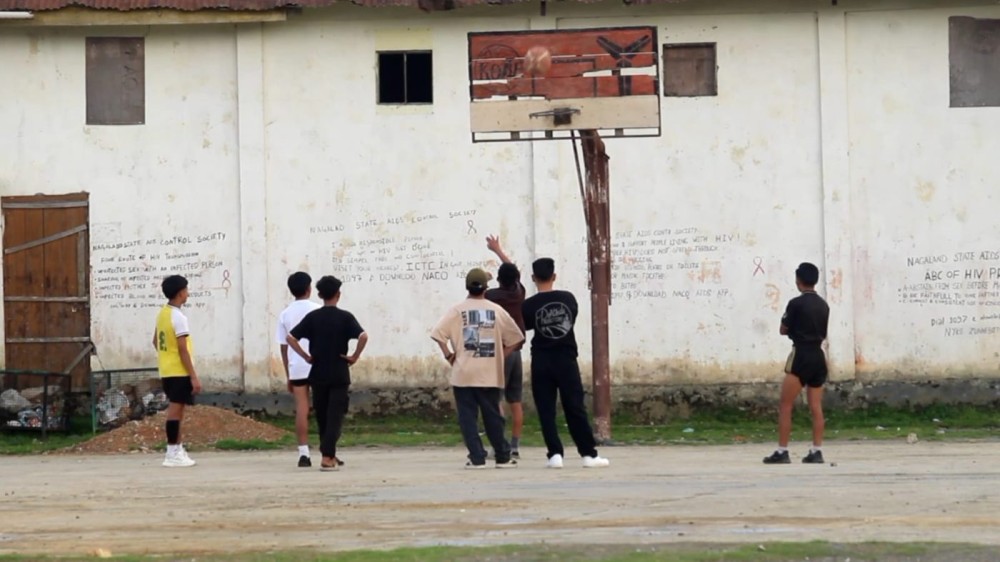
A group of young people wait as their teammate throws the ball toward the hoop on a basketball court in Zunheboto. The hoop is in poor condition, reflecting how the near-total lack of sports infrastructure remains a primary obstacle strangling the growth of the sports industry in Nagaland. (Morung Photo)
Public poll turns mirror on infrastructure deficit and weak governance
Morung Express News
Dimapur | May 9
Inadequate government support and the near-total absence of sports infrastructure remain the primary obstacles strangling the growth of the sports industry in Nagaland, according to a public opinion survey that drew responses from participants across the state.
The Morung Express weekly poll, which sought public opinion on what prevents Nagaland’s sports sector, saw the largest share with 49% respondents identifying lack of government backing as the primary cause, while 35% others cited a combination of interlinked factors including corruption, absence of professional pathways, and a societal mindset that continues to sideline sports as a viable career.
‘Is It Sustainable?’- Sport Sidelined
The poll revealed frustration over the state’s failure to build even basic sporting facilities. “Till today we do not have a single standard stadium of any sport field. This very one fact, lack of sports infrastructure, itself speaks volume,” one respondent stated.
Despite Nagaland’s acknowledged strength in football, basketball and volleyball, respondents said young athletes are left without adequate training facilities, institutional support, or professional prospects. “Nagaland has a huge potential to be one of India’s best states for sports industry. There has been a rise of youths who, if given the opportunity, has prospects of becoming star sportsmen.
Essentially, Nagaland is in dire need of infrastructure(s) and support,” a respondent said.
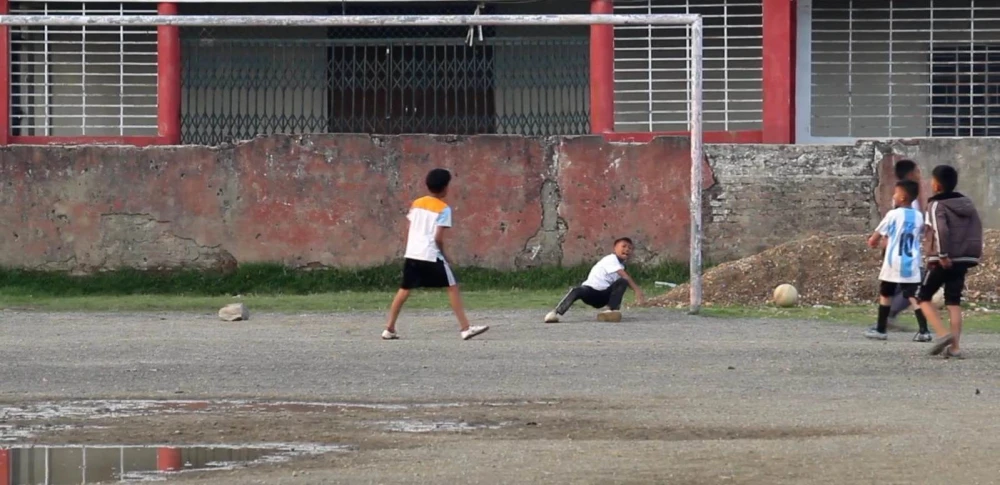
Several respondents pointed to a cultural and structural problem, the perception that sports cannot offer a stable livelihood. “At the core of choosing any profession, there lies a fundamental question, ‘is it sustainable?’ This is precisely why sports or other unconventional professions are often sidelined,” a respondent observed, adding that government jobs are seen as the only legitimate path to security, prestige, and sustainability.
The same respondent argued that the solution lies in systemic reform. “Redefining what professionalism is; reinforcing the existing ecosystem for sports professionals; education reforms where students are not only transformed by holistic learning but where parents are also equally impacted.” The respondent stressed that “values are formed at home” and that family acceptance of sports as a career would trigger wider societal change.
13% respondents attributed the sector’s stagnation to a lack of discipline and professionalism among athletes themselves. “One win and arrogance kicks in, partying day in day out, drinking, smoking, ghutka, no respect for referees are some reasons among many other reasons,” one respondent said bluntly.
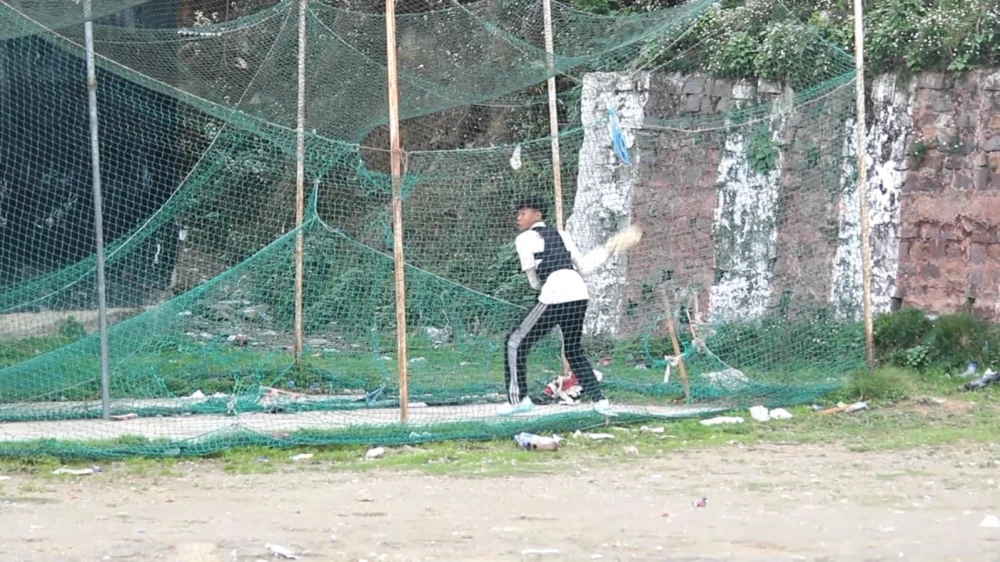
Respondents also expressed disappointment that veteran sportspersons have not leveraged their experience to drive change. “Usually even many regarded sportsmen of different field end up chasing for some stable government jobs or so and do not take the torch ahead,” one response noted, calling on former athletes to “lead the fight to bring change” for younger generations even if they themselves could not reach the top.
Wealth at Home, Stadiums Nowhere
Some respondents highlighted broader socio-political barriers. “Lack of peace and hospitality for the outsiders” and a tribal mindset that discourages outside investment were cited as impediments to tourism and foreign direct investment that could fund sports development. “People of the land need to have now liberal mindset,” one respondent wrote, arguing that openness to outside participation was essential for growth.
Weak governance structures were also held responsible. One respondent described the problem as stemming from “funding delays, weak management systems, and limited professional opportunities for athletes,” and called for improvements in training facilities, grassroots programmes, governance, and investment to make sports “a major source of employment and recognition for Nagaland.”
While criticism of the government dominated the responses, several participants urged the community not to absolve itself of responsibility. “We cannot always blame the government for every shortcoming. We need to make sure we are ready to part-take in the said venture. The community as a whole can boost the growth, while certain sections of society can spare their profound wealth in the overall development of sports,” a respondent said.
One respondent drew a link between sports development and democratic accountability, urging young people to engage with politics. “Young people of today’s generation must be serious in politics which does not mean we should become politicians rather one must be wise and be bold enough to choose the right leader who can be the voice of common people in the Nagaland Legislative Assembly.”