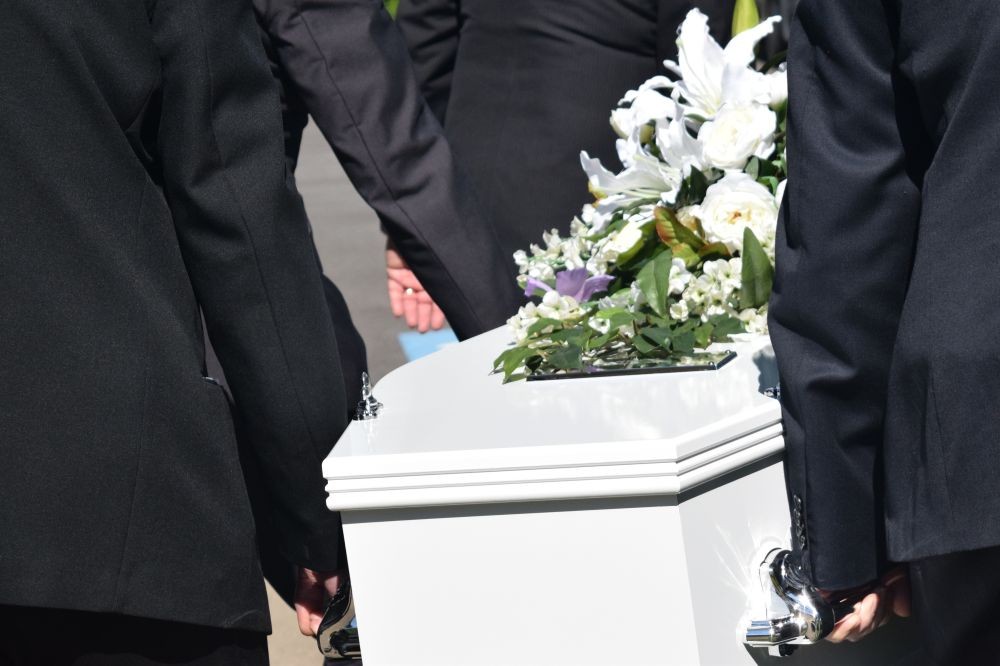
Image by Carolyn Booth from Pixabay | For representational purpose only
H Akato Sema
Ikishe Village, Chümoukedima
I am neither a theologian nor a biblical scholar, and I do not claim to have the final answer on matters of Christian doctrine. I am simply a nominal Christian who has attended many funerals and, over the years, found myself wondering about certain practices. One of them is the practice of speaking directly to the person who has died. I may be wrong in my understanding, and I do not intend to criticise those who practise it. My purpose is simply to share what I have observed and understood from reading the Bible. If my understanding is mistaken, I am willing to be corrected by Scripture.
Death is one of the most painful realities of life. When someone close to us dies, words often fail us. At funerals, memories return, emotions run deep, and we naturally want to say one last goodbye. There is nothing wrong with remembering the deceased, sharing memories, honouring their life and comforting the bereaved. But as Christians, perhaps we should honestly ask: When we stand beside a coffin and speak directly to the person who has died, are we actually following biblical teaching?
Sometimes, during a funeral service, someone may stand beside the coffin and speak directly to the deceased: “You know how much we love you,” “I want to say this to you before you leave,” or “There is so much more I wanted to tell you.” Others may express their gratitude, regrets, memories or words of farewell directly to the person who has died. I understand the emotion behind such words. Losing someone we love can leave us longing for one final conversation, and the heart naturally wishes to say what perhaps was left unsaid. Such expressions are deeply human, especially in moments of intense grief. Yet emotions alone should not determine Christian practice. We should also ask what Scripture teaches.
Ecclesiastes describes death in terms that remind us of the separation between the dead and the activities of this earthly life. I recognise that Christians have different interpretations concerning the state of the dead before the resurrection, and I am not attempting to settle that larger theological question here. My question is much simpler: Does the Bible teach Christians to communicate with the dead? I have not found such a teaching. Instead, Scripture directs God's people away from seeking communication with the dead. Deuteronomy 18 warns against consulting mediums and the dead, while Isaiah asks why the living should consult the dead. These passages may not be addressing the normal practice of remembering someone at a funeral, but they do provide an important principle: God's people are not encouraged to seek communication with the dead.
That distinction matters. There is nothing wrong with speaking about someone who has died. We can remember their kindness, sacrifices, faith and the countless little things that made them special. We can tell the family how much their loved one meant to us and thank God for the years we were privileged to share with them. But speaking to the dead is different. If I stand beside a coffin and say, “You know how much I love you,” or “I wanted to tell you this before you leave,” I am addressing the person who has died, even though I may not necessarily expect a response. It is an expression of love and grief, but it still raises the question of whether Christians should direct their words to someone who has passed away.
The Christian hope after death is not based on the belief that the dead continue their earthly relationship with us. Our hope is in Christ and the resurrection. When Lazarus died, Jesus did not teach Martha how to communicate with her dead brother. Instead, He directed her attention to Himself: “I am the resurrection and the life.” Likewise, when Paul comforted believers who had lost loved ones, he pointed them towards the return of Christ and the resurrection rather than communication with the dead. This makes me wonder whether our funerals sometimes become too focused on the person who has died and not focused enough on the God who gives life.
A Christian funeral should certainly honour the deceased, but it is also meant for those who remain. The grieving family needs comfort, friends need encouragement, and young people need to be reminded that life is short. All of us need to remember that our own lives are ultimately in God's hands. Perhaps, therefore, instead of speaking to the dead, we should speak to the living. Instead of addressing the person in the coffin, we can speak about the life they lived, the memories they left behind and the impact they had on us. Instead of directing our words towards the deceased, we can comfort the family and thank God for the life we were privileged to share with them. Instead of trying to have one final conversation with the person who has died, we can use that moment to reflect on our own lives and encourage one another to live faithfully.
I say this not to ridicule anyone's grief. Grief is deeply personal, and people respond to loss in different ways. Often, those who speak to the deceased are simply expressing pain, love or things left unsaid in the only words they can find at that difficult moment. At the same time, Christian traditions should be examined from time to time. We sometimes continue doing things because our parents and grandparents did them before us. With time, tradition can become so familiar that we stop asking whether it is actually rooted in Scripture. Jesus Himself warned against allowing human tradition to take the place of God's Word.
The question, therefore, should not be which denomination practises something or whether another denomination considers it acceptable. The more important question is: What does the Bible teach? If a practice is biblical, we should have the courage to follow it. If it has no clear biblical foundation, we should have the humility to examine it—even if it has been part of our tradition for generations. We can love the dead without speaking to them. We can remember them without assuming that our words are reaching them. We can honour their memory without trying to continue our earthly conversation with them. And we can mourn deeply while still holding firmly to the Christian hope of resurrection.
Perhaps that is what our funerals should ultimately be: a time to remember the person, comfort the living, thank God for His grace, reflect on our own lives and, above all, point people towards Jesus Christ. When we stand beside a grave, perhaps the most important question is not whether the person in the coffin can hear our words. The more important question is whether we, the living, are listening to the Word of God.
We do not need to speak to the dead to express our love for them. We can honour their memory, mourn their absence and remain grateful for the life they shared with us. Our prayers, questions, hopes and faith should be directed to God. In the end, a Christian funeral should not leave us trying to hold on to the dead through words. It should remind us, the living, to hold on to Christ. For the dead, we entrust them to God; for the living, we seek God's guidance; and for the future, we place our hope in the resurrection through Jesus Christ.
That, I believe, is a more meaningful and more biblical way of saying goodbye.