Shakuntla Ranawat
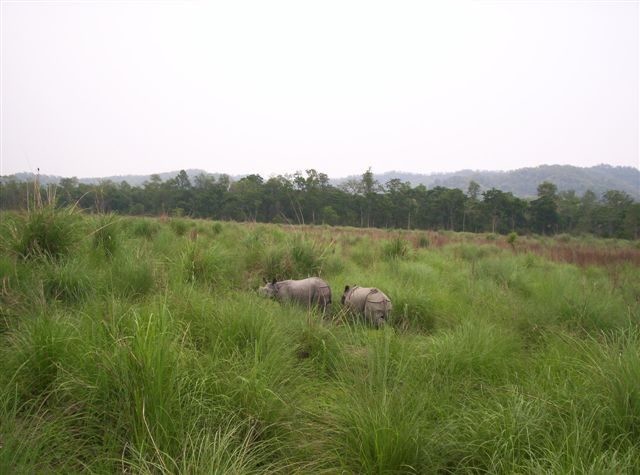
In semi-arid regions of India, the land opens into wide stretches of grasslands filled with shrubs and scattered trees. These landscapes, commonly called savannas or grasslands, rarely appear in conservation headlines. Instead, they are often dismissed in official records as “wastelands.” Yet emerging ecological research suggests that these misunderstood ecosystems may be one of India’s quiet but powerful climate shields.
Savannas cover nearly 10% of India’s land area and stretch across Rajasthan, Maharashtra, Karnataka, Telangana, and parts of central India. To the untrained eye, these open lands may appear barren compared to dense forests. For decades, this visual perception has shaped policy decisions, leading to widespread attempts to convert them into forests through large-scale tree-planting drives.
However, scientists increasingly argue that these landscapes are not degraded forests waiting to be restored. Instead, they are ancient ecosystems that have evolved over centuries under specific conditions of seasonal rainfall, grazing and natural fires.
Beyond their age, savannas play a crucial ecological role, particularly in climate regulation. Unlike forests, where carbon is stored mainly in trunks and leaves, savanna ecosystems store much of their carbon underground. The extensive root systems of grasses trap carbon deep in the soil, forming a stable reservoir that can remain locked away for long periods. Disturbing these grasslands through construction or replacing them with plantations can disrupt this balance and release stored carbon back into the atmosphere.
In this sense, savannas function as a quiet climate buffer. Their carbon storage is less visible than that of forests but equally significant. Protecting these landscapes could therefore become an important part of India’s climate strategy.
Savannas also support remarkable biodiversity. These landscapes provide habitat for some of India’s most threatened wildlife, including the critically endangered Great Indian bustard and the elusive Indian grey wolf, which depend on wide, open habitats rather than dense forests.
Savannas play an equally important is the role in sustaining human livelihoods. Millions of pastoralists rely on these grasslands for grazing livestock such as cattle, sheep and goats. These traditional grazing systems form the backbone of rural livestock economies in many parts of India, producing milk, wool and meat while sustaining communities that have managed these landscapes for generations.
Ironically, some well-intentioned climate solutions may be threatening these ecosystems. Planting trees in natural savannas can damage these ecosystems by shading out native grasses and wildflowers, disrupting fire cycles and altering soil processes that maintain biodiversity. However, more than 173,000 hectares of forestland were diverted for mining, infrastructure and other non-forest activities between 2014 and 2024. Despite their importance, savannas remain among India’s least protected ecosystems. Only a small proportion, between 0.1% and 8.7%, falls within the country’s protected area network.
India’s savannas may not have towering trees or dense canopies, but their ecological value runs deep, literally beneath our feet, and their restoration in the traditional way can offer transformative results towards the impact of climate change and regional upliftment.
Shakuntla Ranawat is a science journalist, book reviewer and content strategist.