By Dolly Kikon
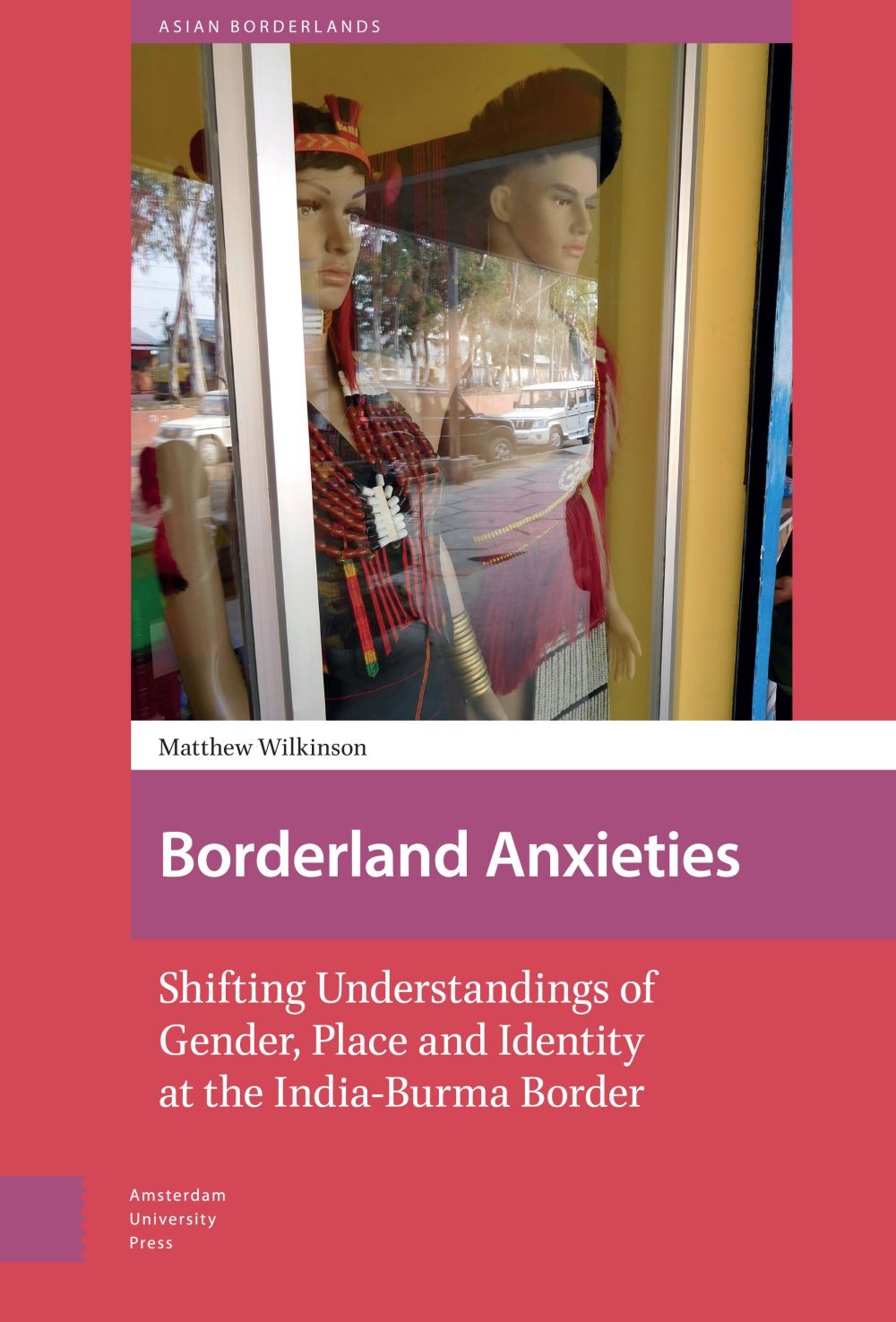
‘Borderland Anxieties explores the complex relationships between liberalization, gender and migration in Nagaland, a state in Northeast India that is emerging from decades of armed conflict. In the wake of Nagaland’s conflict, liberalization and an ‘opening up’ of the state to new connections and flows take place alongside ongoing militarization, nationalist insurgency, and political unrest.
Nagaland’s complex peace-conflict continuum has encouraged a reordering of possibilities for men and for women in the state, but also, attempts to maintain fundamental social roles that are seen as defining an ethnic group, as foundations of identity, and for many as uncompromisable. In exploring the complex dynamics of peace, conflict, and tension in Nagaland, Borderland Anxieties offers a window to understanding how gender, politics and anxiety intersect in a borderland state experiencing rapid social, political, and economic changes.’
What first drew you to Nagaland, and why did you want to write a book about this place?
I stumbled into Nagaland almost by accident. I’d read about Nagaland as a tribal state and highland, and as a contested space, and took the Kamrup Express into Dimapur arriving in the middle of the night. I actually really struggled in Nagaland on that trip. I got lonely and lost travelling in the interior. I got sick and spent days rehydrating in Tuensang hospital, where the wonderful nurses and doctor literally did save my life. I was even stuck in Longwa for a week after the bus broke down. But in that time I met some wonderful people who took me into their homes and gave me their time and attention. Even people who had so little to give, especially in smaller towns, fed me and gave me shelter and often tried to gift me almost everything they owned.
I think that’s where the seeds of this book were planted. I wanted to unpack the complexities of this place and the people who call it home. I was not, and still am not happy with the ways Nagaland and Naga people, and really wider Northeast India, are portrayed in the media. I saw this as a way to show a lot of the complexity of this place.
I also don’t want to overlook ongoing tensions and contestations taking place in Nagaland, but in unpacking Nagaland and a lot of the changes taking place here, I do want to uncover the nuance, the variety of perspectives and opinions that coexist. I think that is a task that might never be complete. Still, I hope this book offers a careful starting point that encourages deeper listening, more thoughtful discussion, and continued reflection on life and change in Nagaland and in other places undergoing rapid and dramatic changes.
What do you mean by “borderland anxieties,” and who is actually feeling these anxieties?
I use borderland anxieties to describe a cluster of tensions that shape everyday life in Nagaland and also in other parts of Northeast India - things like militarisation, migration, extraction economies, ongoing state-making projects, and what I think is a widely understood feeling of being at the ‘edge’ of India. At the same time, the border is not the whole story. Questions about identity, history, language, and experiences of state violence matter deeply, particularly in the context of the Naga political struggle. I use the concept of the borderland as a way of bringing these concerns together, because I think debates about borders are also arguably debates about belonging, homelands, and how people imagine their place in the world. These anxieties are not experienced by everyone in the same way, but I see them as especially present in the lives of men who often have their social roles, status, and identities attached to these debates.
Your book focuses on men in Nagaland. Why?
Naga men is contentious topic for any book. For me, as an outsider and as an academic, all I’d read and heard leading to my first engagements in Nagaland was that the state is home to patriarchal politics and attitudes, ideas and traditions that stretch back into deep histories of men as the heads of households and men as guardians of Naga society. Even recent discussions of men in Nagaland often continue to draw on abstract ideas of Naga men as insurgents or as tribal archetypes. These simplifications aren’t limited to Nagaland. We see this taking place all over Northeast and also in other parts of the world.
From the outset, I wanted to humanise this abstract figure, to do it justice and unpack the complexities, the contradictions faced by men in Nagaland. I’m not shying away from conflict, from ethnicity and the importance of tribe and clan. Those things are real and present. But so is a deeply bonding and humbling factor that I think a lot of writing misses when it comes to men. That is, we’re all trying to shape our lives and our worlds into a vision of how we think it should be. I wanted to tell that story, of how these men pursue their visions for their lives and the wider world, in this place that I really have come to love and admire.
Was there a particular moment or experience during your research that really stayed with you?
There are so many I’ve lost count. Every time I come back here, it’s like a reunion, and not just with my friends here who I can’t imagine my life without, even if I’m sitting on the other side of the world, but also with a place that offered up a new experience and a new insight every day. I think one thing that will stick with me is the moment in many of my conversations here, especially with some of the ‘tough’ men, the men with rough hands and hardened faces, that look so strong and so stoic. When I sat with them and just let them speak, let them tell me about their passions, their thoughts, their fears, I could see in front of me that hard exterior cracking. I think there were moments when people who gave me their time and attention realised they could put the mask down, and be really vulnerable and really honest. Some of those people are no longer with us, and I feel so privileged and humbled that they could let their guard down, feel safe, feel heard, and really speak from their heart to me. I hope in this book I’ve given them justice.
What do you hope readers take away from this book?
I don’t want readers to think this is just a book about Nagaland, or about men’s lives in a contested and complex borderland, although those stories are central. I want readers to see in this book an exploration of the ways that perceptions shape our realities. In Nagaland, in this book, perceptions about change - about changing gender dynamics, changing cities and urban spaces, changing patterns of migration, often mattered as much as the changes themselves. These perceptions were sometimes vague or built on simplified political narratives, but they still shaped people’s fears, hopes, and responses, sometimes with destructive and painful outcomes. I hope this book encourages readers to recognise and question similar dynamics in their own lives and communities.
Dr. Matthew Wilkinson is an ethnographer with a special focus on frontiers, borderlands, and liberalization in Asia and South Asia. His research spans a wide range of specialties, but centres on processes of rupture and disruption in complex and rapidly changing areas. Dr. Wilkinson has a special interest in unpacking ‘messy’ social and political dynamics associated with peacebuilding, development, and liberalization in India and Bangladesh.