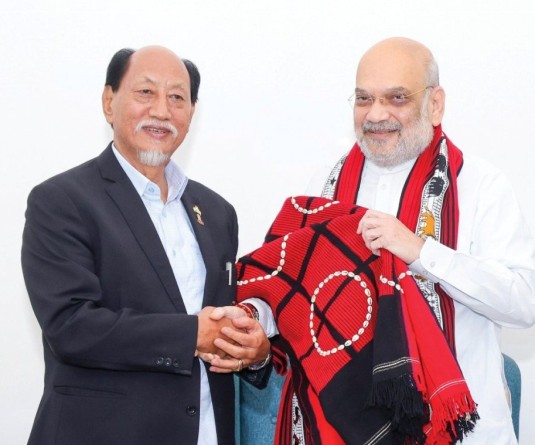
IDAN Chairperson Abu Metha at the National Intellectual Property (IP) Yatra at the Integrated Business Hub and Innovation Centre in Dimapur, March 12. (Morung Photo)
Coalescing traditional knowledge and intellectual property systems
Morung Express News
Dimapur | March 12
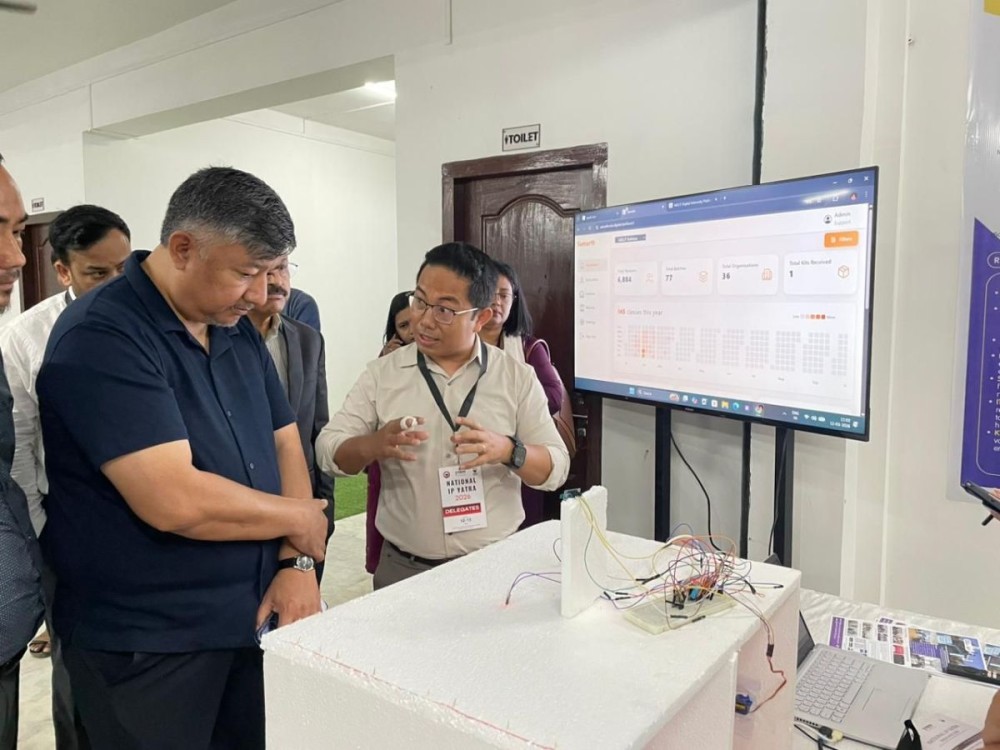
The Nagaland leg of the National Intellectual Property (IP) Yatra began on March 12 at the Integrated Business Hub and Innovation Centre in Dimapur. The 2-day event, organised by the Intellectual Property Facilitation Centre (IPFC) of the Investment and Development Authority of Nagaland (IDAN) , is aimed at raising awareness about Intellectual Property Rights, including patents, trademarks, and copyrights, among startups and entrepreneurs. It is part of a nationwide initiative by the Ministry of Micro, Small, and Medium Enterprises (MSME).
According to the IDAN, the seminar is designed for start-ups, entrepreneurs, artisans, creators, SHGs, FPOs, NGOs and scholars. Representatives from CSIR-NEIST, Jorhat, IDAN’s technology transfer partner for the event, were also present.
Speaking at the inaugural programme, IDAN Chairperson Abu Metha said that the MSME sector has been one of the state government’s top priorities. He urged the youth to adopt modern technology to compete globally, while stating that the internet has democratised access to information like never before, removing geographical barriers for rural entrepreneurs.
“The uneducated of today’s age are not those who cannot read and write. But the uneducated people of today’s age are the ones who are unable to use the tools of modern technology. You have to empower yourself with modern technology,” Metha asserted, adding that, “the World Wide Web and the internet have made the world flat. Today the world is democratised through knowledge.
Knowledge is not restricted to only a few, or to the best universities and colleges in the world.”
IDAN Under Secretary I Changsang said that Nagaland's traditional craftsmanship and agricultural biodiversity require formal frameworks to capture their economic value. “This is precisely why initiatives such as the National IP Yatra are important. They help bridge the gap between traditional knowledge and modern intellectual property systems, enabling creators to protect their innovations through patents, trademarks, copyrights, and geographical indications,” he said. Changsang pointed to Geographical Indication tags like Naga Mircha and the Chakhesang Shawl as examples of cultural heritage transforming into marketable identity.
He said that sectors like handloom, food processing, and traditional arts form a vital component of the state’s “orange” (creative) economy. However, he added that without proper intellectual property frameworks, artisans, farmers, entrepreneurs, and innovators often cannot fully capture the economic value of their creations.
Mohd Ali Rahman, Director of the MSME Development Facilitation Office in Dimapur stated that MSMEs contribute 30 percent to India’s GDP, 36 percent to manufacturing, and 45 percent to exports, ranking as the second-largest employer after agriculture. Rahman noted that over 7 cr MSMEs are currently registered on the Udyam portals, generating employment for more than 13 cr people.
Outlining government interventions, Rahman detailed the MSME Innovative Scheme, which integrates incubation, design intervention, and IPR protection. “Today, the bigger challenge remains to be that of IP commercialisation. There is a need to handhold the youth, startups, MSMEs, and help them make their innovation and creativity available to the public at large,” Rahman said. He also referenced ongoing special drives to increase the participation of women-owned MSMEs in trade fairs.
The event will feature expert-led sessions on technology transfer, IP commercialisation, and securing intellectual property rights, and conclude on March 13.