Nine representatives of the Changki Kaketsüri Longjem (CKL), the students’ union of Changki village pose for a photo during the 13th edition of Samvaad 2026 in Jamshedpur on November 19.
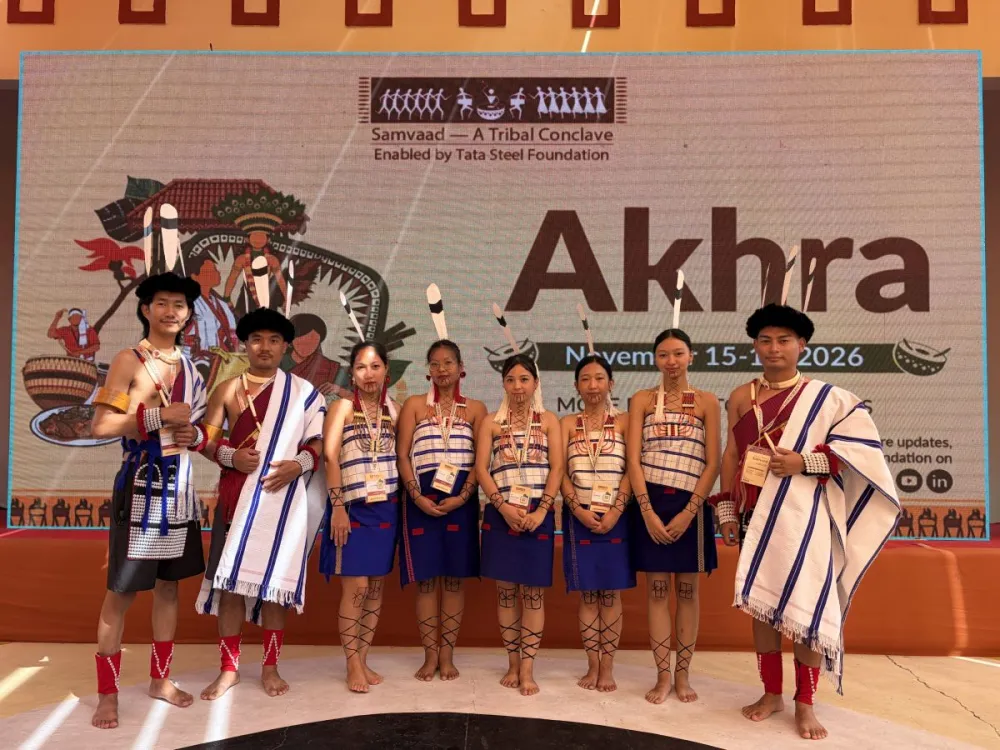
Jamshedpur, November 20 (MExN): Nine representatives of the Changki Kaketsüri Longjem (CKL), the students’ union of Changki village in Mokokchung district of Nagaland, participated in discussions at the 13th edition of Samvaad 2026, a five-day tribal conclave organised by the Tata Steel Foundation in Jamshedpur from November 15 to 19.
The conclave brought together indigenous communities from across the country to exchange knowledge, discuss issues concerning tribal identity and development, and celebrate their cultural heritage.
Representing the Ao Naga community of Changki village, the nine-member group participated in discussions on language preservation, tribal identity, ancestral land and the role of younger generations in keeping indigenous knowledge alive.
During a session themed “Reimagining Identity to Connect the Dots”, the Changki representatives shared how their students’ union has been using technology and social media to preserve and promote their mother tongue.
Tiapong Tzudir, one of the participants, said the union has been making efforts to teach the Changkio language through digital platforms by sharing simple everyday expressions and words on social media.
Initiatives ranging from teaching people how to count in their mother tongue to introducing everyday expressions and ways of addressing one another have helped make language learning more accessible, particularly to younger generations.
Tzudir emphasised that language preservation need not always depend on large institutional efforts, but could also begin with small, consistent initiatives within the community.
The discussions also highlighted the significance of ancestral land among tribal communities. The Changki representatives shared their perspective that land was not merely a geographical territory defined by size or measurements, but an integral part of their identity, history and sense of belonging.
For the community, the relationship with ancestral land extends beyond ownership and encompasses memories, traditions, connections with nature and cultural inheritance passed down through generations.
The Akhra platform provided indigenous participants an opportunity to exchange experiences and perspectives on tribal governance, ecology, language and cultural heritage. Discussions also explored the social and cultural challenges facing communities amid changing times and the need to ensure that indigenous voices remain central to conversations on development and the future.
Reflecting on the experience, Tzudir said the participants had the opportunity to encounter communities and histories they had not heard of before.
“We heard about tribes we had never heard of before and got to listen to their stories and experiences. That was very impactful. There are so many opportunities and platforms across communities, and we really need to start looking at them more, participating and making use of these spaces,” Tzudir said.
He noted that such platforms offered opportunities not only to share one's culture and experiences but also to learn from the diverse indigenous communities across the country.
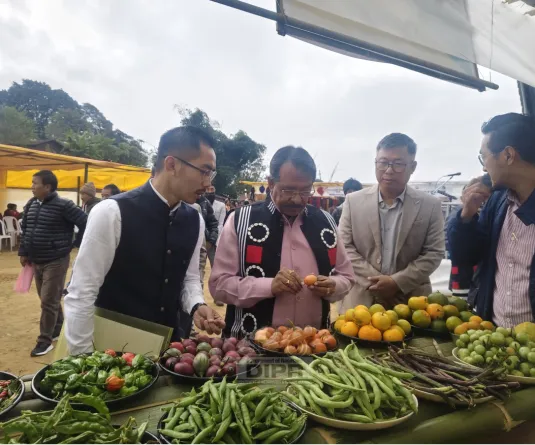
While nine members from Changki participated in the Akhra segment, other representatives from Nagaland were also present across different segments of Samvaad, including the traditional cuisine showcase.
Samvaad 2026, held from November 15 to 19, marked the 13th edition of the conclave and brought together tribal communities for discussions on identity, governance, education, language preservation and community aspirations.