Each Morung representing different Naga communities demonstrates ancestral wisdom through unique cultural artifacts and rich culinary traditions.
Tokavi K Zhimo
Kohima | December 2
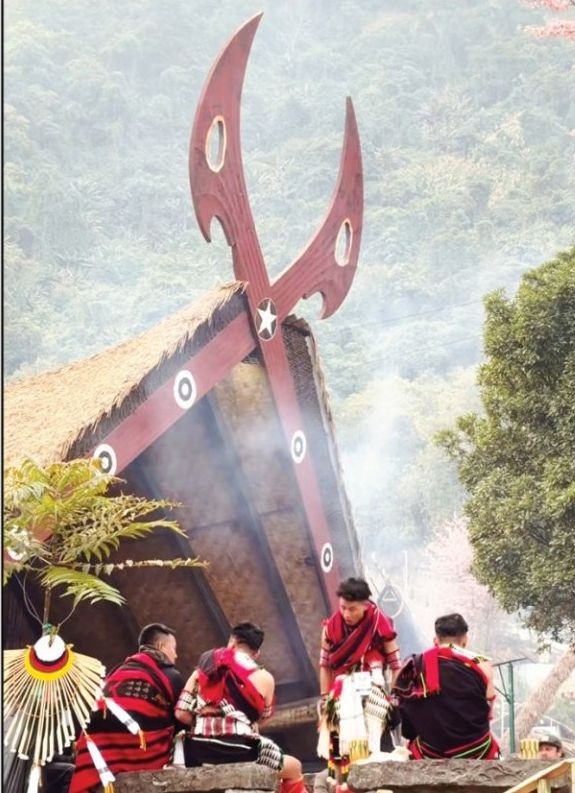
The Hornbill Festival’s vibrant heart beats in its Morungs, each a living archive where Naga communities demonstrate ancestral wisdom through unique cultural artifacts and rich culinary traditions. From the warrior legacy of the Sumi to the alcohol-free hospitality of the Kuki, the Morungs offer a journey into the diverse heritage of Nagaland.
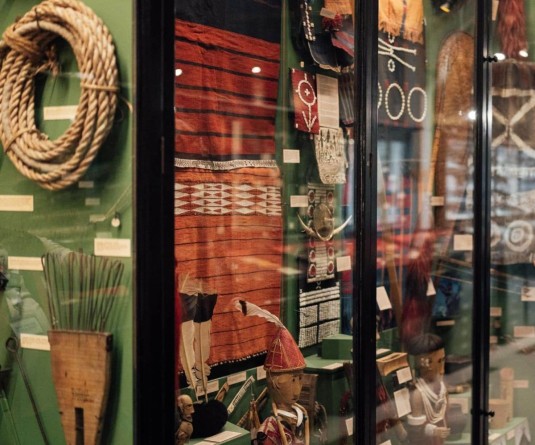
The Sumi Morung, managed by Kohima Sumi Hoho, is a key attraction. It displays traditional household items, ancient tools and a central fireplace symbolising “unity.” Above the hearth, clusters of hanging crop seeds reflect an old Sumi practice for preserving “life and prosperity.” The Sumi community, primarily from several districts in Nagaland and Upper Assam, is renowned as a warrior community.
The fermented soybean delicacy ‘axone’ is a major highlight in the Sumi Morung. ‘Axone is one of our greatest attractions,’ said Zhutovi Chisho, a representative of Sumi Hoho Kohima.
“Dishes like smoked pork with ‘axone’, yam curry with mastered leaves, and ginger paste reflect the deep respect the Sumi have for traditional methods of cooking,” he said. “We have set up our Morung exactly as our grandparents practiced, from the fireplace to the crops hanging above it,” Chisho added.
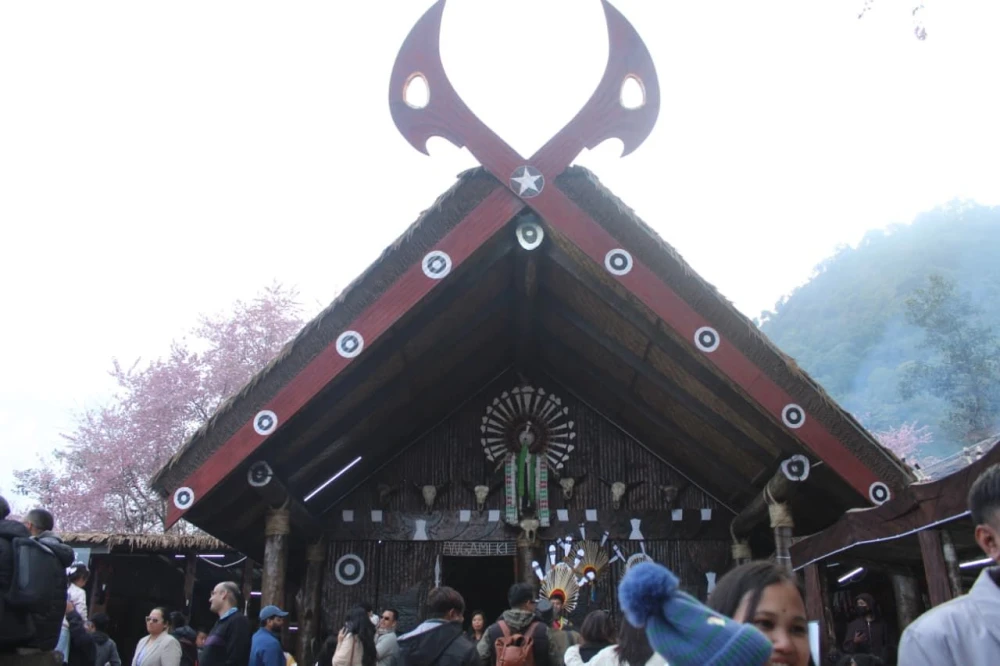
The Yimkhiung Morung, which represents the Yimkhiung community spread across Kiphire, Shamator and Pungro, is managed by Yimkhiung Akhir Ariahako (YAA).
On the inaugural day, their Morung offered a traditional menu featuring organic lemon tea, traditional rice beer, maize pickles, beans, and cow leg dishes etc.
Vongtu, Sports and Cultural Secretary, YAA emphasised the central role of beans in Yimkhiung cuisine, noting they are included into nearly every meal. “The Morung aims to present a fresh culinary experience each day, ensuring visitors encounter something new with every visit,” Vongtu said.
The Rengma Morung, managed by Tseminyu Louhu Village Students’ Union, is drawing visitors with its unique local cuisine. The Rengma community, primarily residing in Nagaland’s Tseminyu district and parts of Assam’s Karbi Anglong region, is renowned for its artistic legacy.
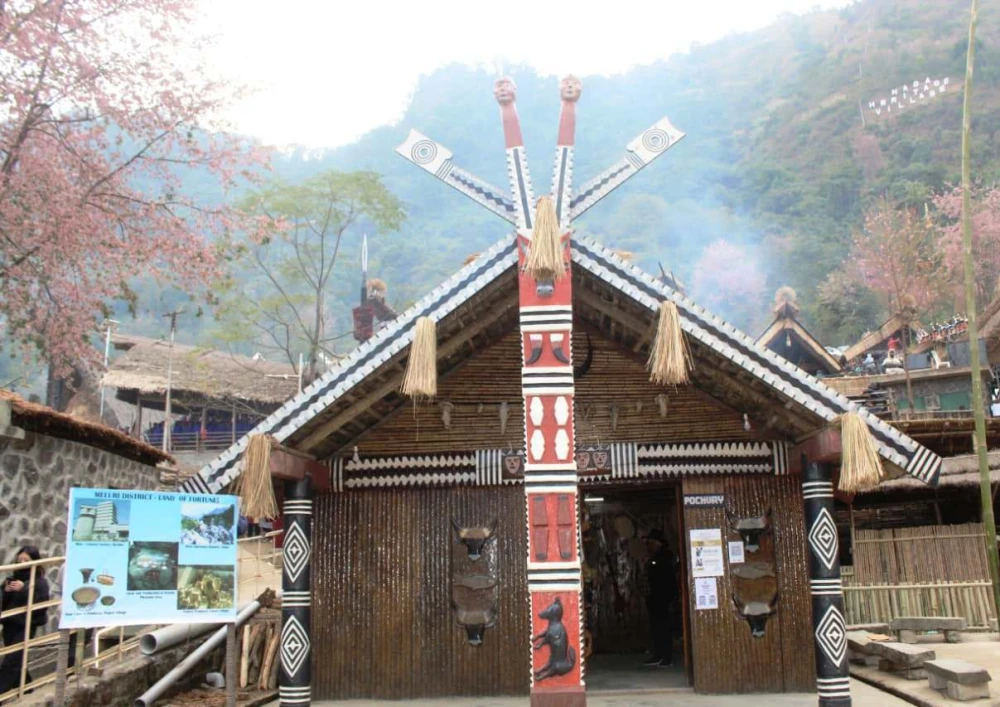
Beyond the cultural displays, the Morung offers an array of traditional beverages, including rice beer and various fruit-based fermented drinks.
“The standout dish here is Hankerjeni, made from yam and mixed leaves,” said Kenyuni, a representative. “Unlike many Naga dishes, it contains no chillies and relies solely on the natural flavours of its ingredients.” Other culinary offerings feature pork cooked with perilla seeds, a simple yet flavourful salad made from mastered leaves.
This year, the Chakhesang Morung is managed by Thuvopisumi village. Kezito Tetso emphasised that the Morung features a robust collection of artefacts and is known for serving traditional cuisine including local pork, mithun, snails, and a variety of vegetable dishes.
The community follows a rotational system, taking turns each Hornbill Festival to manage the Morung and ensure that cultural responsibilities are shared.
The Rehangki also known as Zeliang Morung, overseen by Benreu Youth Organisation, is another highlight.
Ichu Iralu, highlighted the Zeliang signature cuisine preparation known as Jekechang, a delicacy made from fermented mastered leaf and used in chutneys.
The menu also features snails, spring garlic, red rice, and mithun meat. ‘Each dish reflects the close relationship the Zeliang community shares with the land,’ Iralu said.
The Kuki Morung stands distinct from others, both in its architectural style and its unique culinary offerings. Unlike the typical dormitory-style structures, their Morung resembles a traditional Kuki house.
While most Morungs serve local rice beer, the Kuki Morung refrains from serving alcohol. Instead, it offers sticky rice, sausages, ‘ghalo’, and notably, coffee, an unexpected but popular item among the visitors.
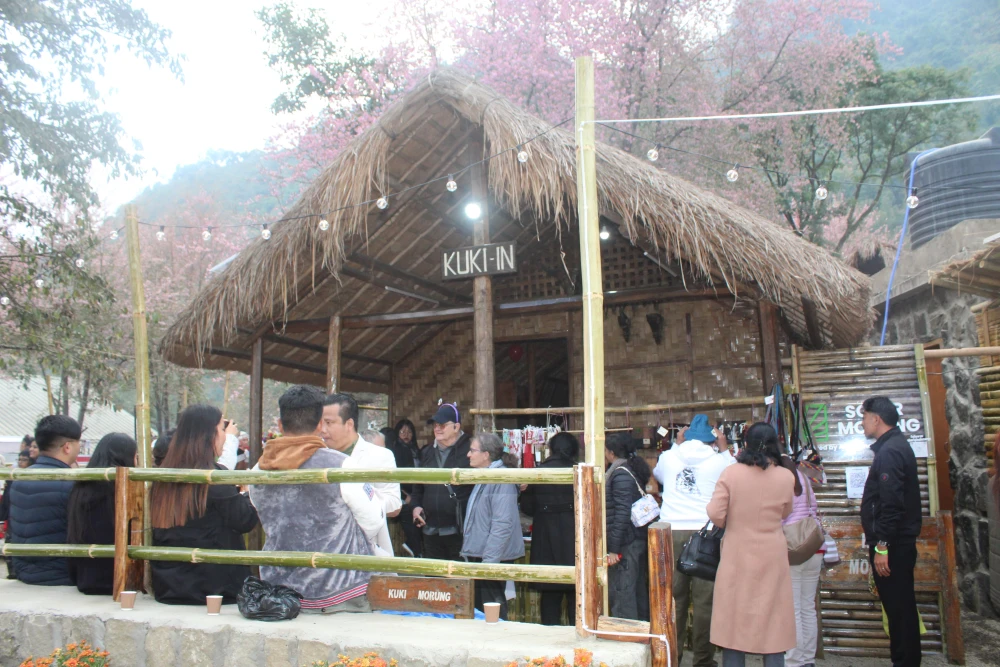
“We do not serve rice beer… rather we serve them coffee with reasonable price rate, which attracts the visitors,” said Lamkhomang, General Secretary of Kuki Union Kohima, which manages the morung on an annual basis.
The morung also hosts a collection of cultural exhibits and performances, drawing significant crowds, he added.
The Konyak Morung, managed by Konyak Students’ Union (KSU) Kohima, highlights the rich heritage of the people.
A key attraction is the presence of tattooed elders, including 90-year-old Nyemwang Konyak. He shared that in the past, these tattoos were typically applied by individuals known as “queens.”
Nyemwang received his tattoos as an adult and noted that the artisan who engraved them has since passed away.
The Konyak Morung also draws attention to Yungyankhampai, a 24-year-old who stands at 6.9 feet tall. “We are proud of him, not for any bad purpose, but to show the uniqueness of our people in a positive way,” said Shoiang W, Finance Secretary of KSU Kohima.
With Christmas approaching, the union is raising funds as a gift for him. “He is no longer studying and comes from Longwaywasa village, which is very far from Kohima. For this purpose, we are using the payment and click system,” shared Shoiang.
A visitor from Belgium, an anthropology and architecture photographer, expressed great interest in the Konyak culture. The actual Konyak villages are even more compelling than displays, he said.
This is his second time in Nagaland but his first visit to Kisama. This is an “interesting opportunity for tourists to experience and explore a small but unique culture,” the visitor added.