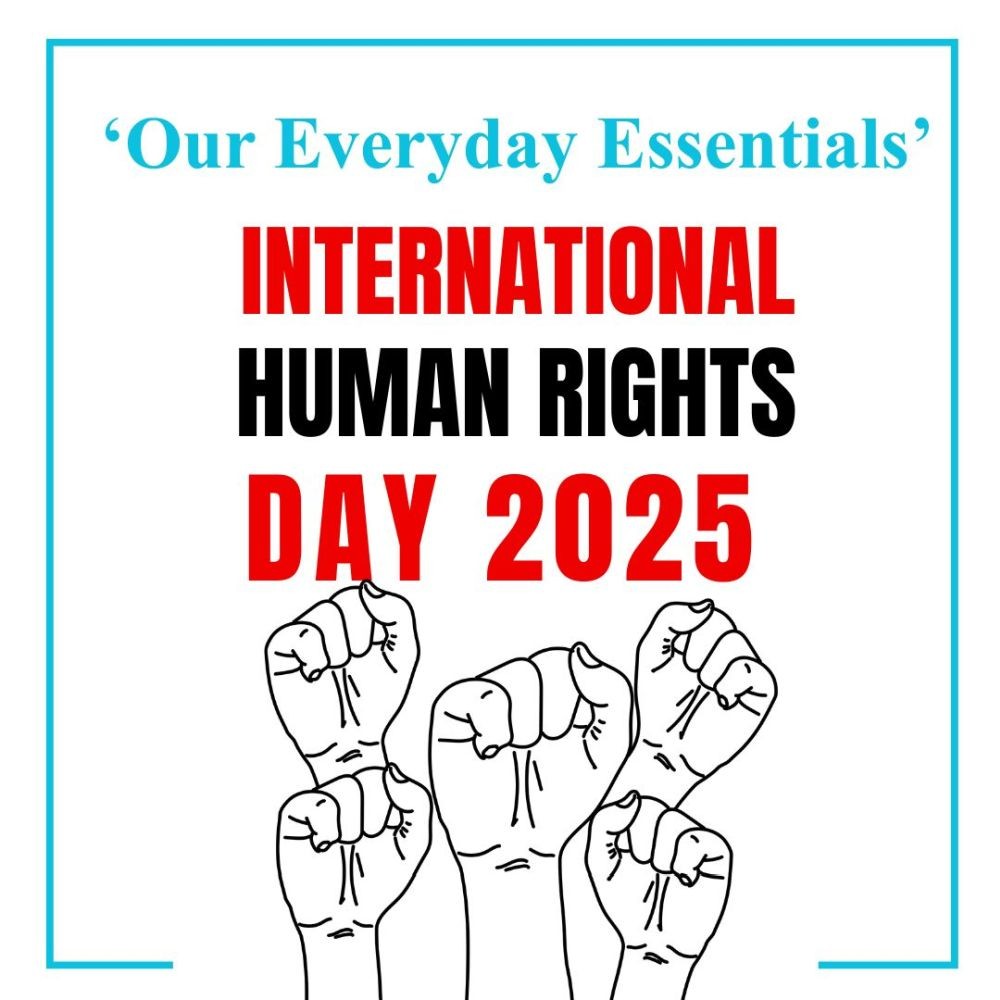
International Human Rights Day is observed annually on December 10.
Vishü Rita Krocha
Kohima | December 9
“Strengthening “our everyday essentials” is how we uplift our community and villages, honour our cultural values, and shape a Naga society that is equitable, resilient, and full of opportunity for generations to come,” remarked Khrolhiwe-u (Awi) Tsuhah, a youth leader from Chizami on the eve of International Human Rights Day that is observed on December 10 every year.
Speaking to The Morung Express in relation to this year's theme, “Our Everyday Essentials,” she maintained that, “human rights are not lofty concepts reserved for international platforms but they are shaped each day by how we speak, act, and treat one another.”
In this regard, she underscored that, “human rights live in our homes, our villages, our institutions, and our decisions” while emphasising that, “when we choose dignity, fairness, and compassion in our daily interactions, we help build a society where every person feels seen, respected, and protected.”
As we observe Human Rights Day, she urged that, “let us remember that we all have a role, wherever we are placed — as students, professionals, leaders, workers, or community members,” while maintaining that, “every small effort matters.”
In this context, she also underlined the need for “speaking the truth with respect, helping someone in need, addressing injustices around us, and choosing to act with integrity even when no one is watching.”
If each of us contributes our small bit, she affirmed that, “together we can nurture a Naga society that is more compassionate, more just, and more humane — a society where rights are not only protected in words, but lived in action every single day.”
Beyond achieving the Sustainable Development Goals, she further asserted that, “our commitment must begin with ensuring that every village has reliable basic services, that children can learn without barriers, that families can access healthcare without hardship, and that communities have the infrastructure needed to move forward.”
This, she added, “includes improving connectivity, ensuring clean drinking water, strengthening public institutions, and protecting our natural resources.”
As far as Nagaland and it’s political issues are concerned, Neingulo Krome, Secretary General of Naga Peoples' Movement for Human Rights (NPMHR) highlighted that, “the United Nations is now already thoroughly briefed and aware of how even the basic human rights , such as, the right to life are being violated.”
However, he also maintained that, “the UN chooses to ignore for very obvious reasons which is a serious contradiction to its own purpose of establishment in itself, which is most unfair to the struggling people all across the world, including Nagaland.”
On the theme, “Our Everyday Essentials”, he maintained that, “it is a rather challenging message for the United Nations Organization itself, where the UN has been endlessly propagating catchy themes for the poor and downtrodden sections of the human race, without being able to provide even the very basic needs like food or shelter to millions in need.”
Therefore, he said that, “Our Everyday Essentials” sounds good and promising, but also questioned, “what about its delivery?”
Mention may be made that this year's theme has been chosen as “a reminder that human rights begin with each of us, in the choices we make every day, and in our shared commitment to building a more just and humane world.”
This theme also aims “to reaffirm the values of human rights and re-engage people with human rights by showing how they shape our daily lives, even in ways we do not notice.”
The UN observance of Human Rights Day also advocates that, Human Rights “begin with us, with the small, everyday choices we make from treating others with respect, speaking up against unfairness, and listening to those whose voices are often ignored” while highlighting that “everyday choices and voices matter more than you may realize; they build a culture of dignity and fairness around us.”
But, it added in the meantime that, “human rights also depend on collective action, when communities, movements, and nations come together to demand justice and equality.”