

Natural Farming is a local low-input climate-resilient farming system that advocates the complete elimination of synthetic chemical agro-inputs. It is a holistic farming system which helps in improving soil regeneration, water and air quality, enhance ecosystem biodiversity, produce nutrient rich food and store carbon to help mitigate the effects of climate change. This farming system will work in harmony with the nature while so maintaining and improving ecological viability.
Insect Pest management in natural farming focuses on creating a healthy ecosystem through cultural and ecological practices using natural deterrents and employing biopesticides rather than chemicals, to suppress pests and boast plant resilience. The major aim for the natural farmer is to create conditions, which keep a plant healthy and less vulnerable to pest and disease (biotic and abiotic stress) infestation. Thus maintaining and a healthy soil which is the foundation of a healthy plant with diverse cropping system that prevents insects from building up to levels that cause economic damage.
Pest infestation can be managed in three ways:
1. Preventive measures
2. Monitoring
3. Curative measures
1. Preventive measures: Pests attack and loses can be prevented by adopting the following ways
a. Selecting seed varieties well adopted to the local environment
b. Using pests and disease free seed and planting material
c. Adopting Mix cropping/Inter cropping/diversified cropping to decrease the risk of pests infestation
d. Crop rotation
e. Conservation of Natural enemies to create a balance between pest and predators
f. Adopting cover cropping and mulching
g. Choosing optimal planting time & sufficient spacing between crops
h. Removing infected and infested plant parts
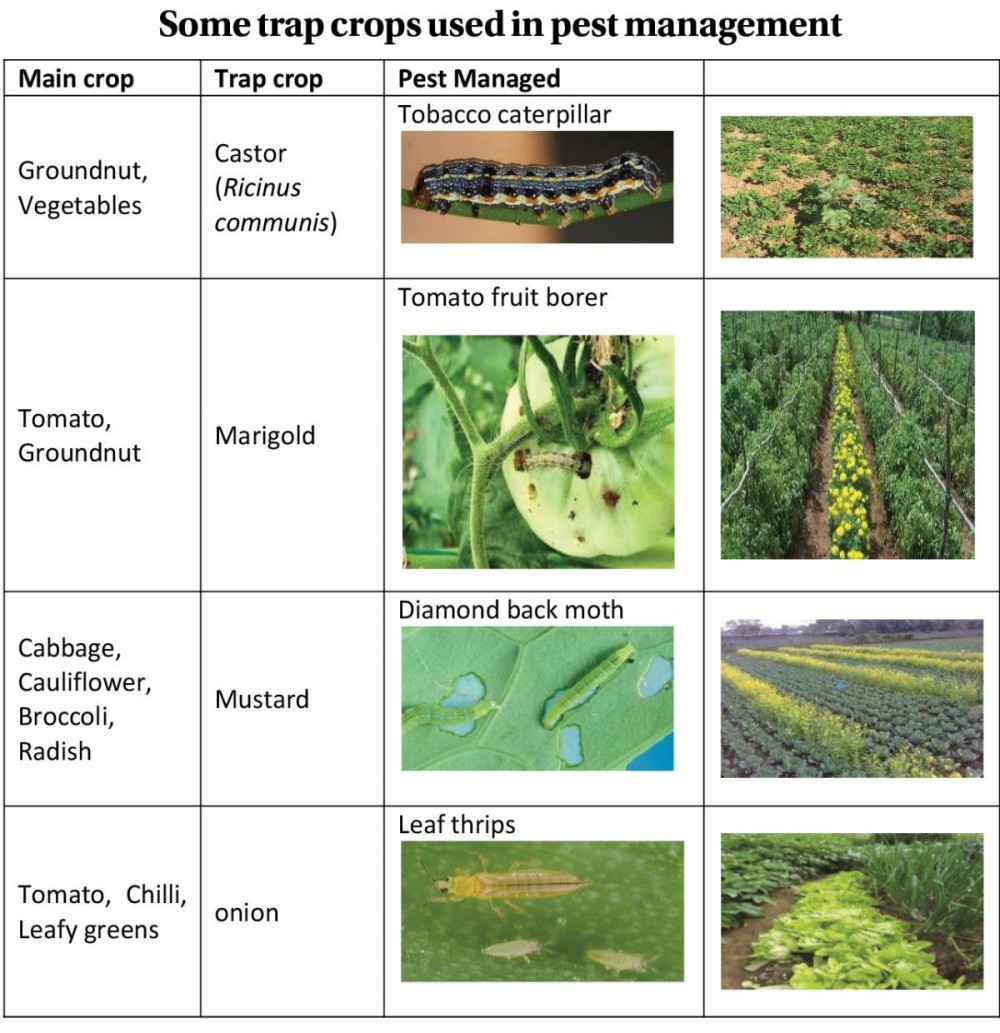
i. Planting trap crops that attract agricultural pests, thereby diverting them away from the main or target crop
2. Monitoring: Regular monitoring of the crop to detect pest incidence so that we can adopt appropriate management practices to avoid economic loss.
3. Curative measures:
a. Promoting and managing Natural enemies: Establishing a diverse cropping system including host plants of natural enemies which will provide food and shelter and minimize the application of Natural pesticides.
b. Mechanical control: Hand picking caterpillars, egg masses and removing highly infested plants reduces pest population in the field. Installing bird perches and use of different traps also manages the pests effectively. Different traps that can be use are as follows
• Light traps for adult moths
• Blue sticky traps for adult thrips and leaf miners
• Yellow sticky traps for adult white flies, thrips, leaf miners, aphids, fruit flies and fungal gnats.
• Bait traps for flies
• Fruit bagging for fruit flies
c. Some naturally prepared biopesticides that can be use are:
I. Neemastra: A natural pesticides effective for managing leaffeeders and sap sucking pests.
Ingredients used: Neem leaves/ dried fruit, Desi Cow urine, Desi Cow dung and water.
Method of preparation: Crush 5 kg neem leaves or dry fruit into fine powder and put in a drum then add 100 litres of water into it. Add 5 litres of desi cow urine and 1 kg of desi cow dung. Stir the mixture with a wooden stick and cover the mixture for 48 hours. Keep the drum in a shade place. After 48 hours, strain the mixture through a cloth and use it for spraying.
Rate of application: 2 litre Neemstra in 20 litre of water.
II. Brahmastra: A natural pesticides effective for managing sap sucking pests and older larva of leaffeeders.
Ingredients used: Desi Cow urine, Leaves of Neem, Pongamia, Custard apple, Guava, Datura, Lantana, Bitter gourd, Castor, Parthenium, Pomegranate, Vitex spp.
Method of preparation: Take crushed and ground leaves 200 grams each of any five leaves from the above in a vessel then add 4 litres desi cow urine into it and cover it with a lid. Bring the solution to boil on a low flame and then remove from the flame. Keep it aside for cooling. After 48 hours, store the solution in a container away from direct sunlight. It can use up to 6 months.
Rate of application: 1 litre brahmastra in 40 litres water.
III. Agneyastra: A natural pesticides effective for managing fruit borers, root borers and leaf folders that are hidden inside fruits, roots and leaves of plants.
Ingredients used: Neem leaves, Green Chilli, Garlic, Tobacco leaves, Desi Cow urine.
Method of preparation: Take 10 litre desi cow urine, 5 kg crushed Neem leaves, 500 gram crushed green chilli, 500 gram crushed garlic and 500 gram crushed Tobacco leaves in a vessel. Heat the solution on low flame till it starts boiling. Then remove the solution from the flame and let it cool for 48 hours. Strain the solution through a cotton cloth and store in a cool shade place. The solution can be used for up to 6 months.
Rate of application: 1L Agneyastra in 40 L water.
Precaution: Store the natural pesticides in a shade place and spray the pesticides during evening hours.
Article contributed by Dr Moanaro, TO, KVK Dimapur; E Lireni Kikon, ACTO, KVK Dimapur and Dr Phool Kumari, SS cum Head, KVK Dimapur

