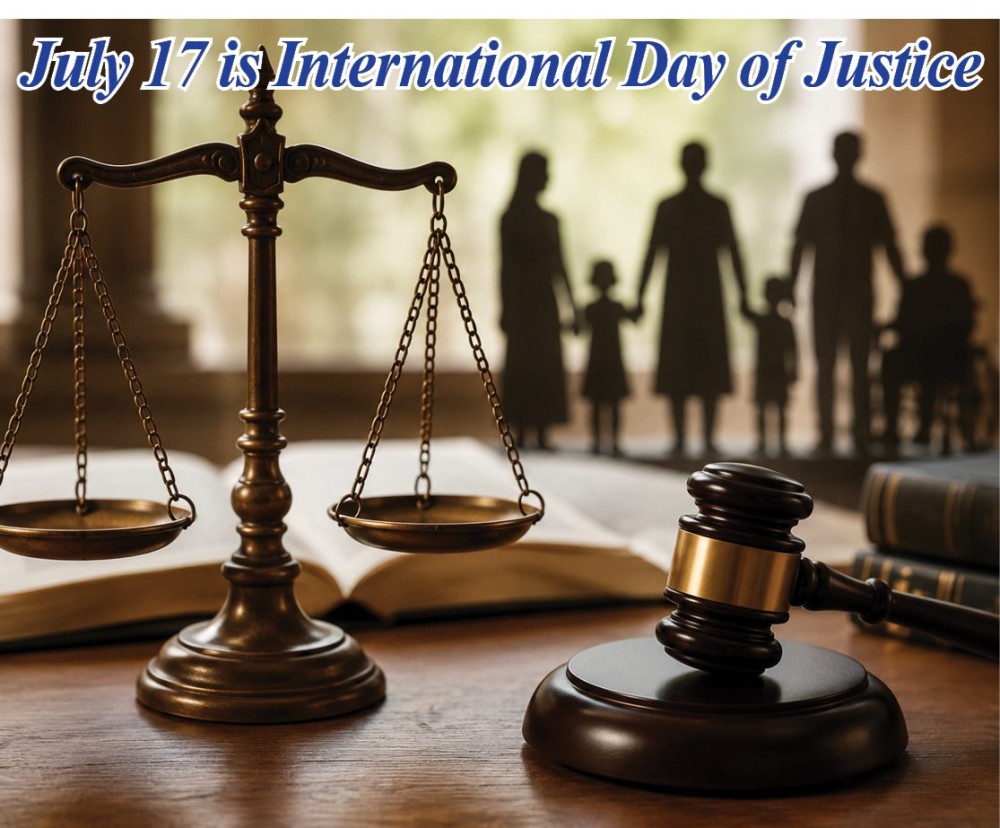
Marking the International Day of Justice, a legal expert called for accessible, timely and inclusive justice, alongside stronger judicial infrastructure and faster disposal of cases in Nagaland. (Illustration: AI-generated using ChatGPT).
Morung Express News
Kohima | July 16
On the eve of International Day of Justice, a legal expert called for greater efforts to make justice more accessible, timely and inclusive in Nagaland, stressing that the rule of law is the cornerstone of a peaceful and democratic society.
Speaking on the significance of the day, the expert underscored that justice goes beyond the courtroom, requiring that every individual, regardless of tribe, gender, religion or social background, has equal access to fair, timely and impartial remedies under the law.
“It also requires a careful balance between constitutional principles and the state’s customary laws, while upholding fundamental rights, human dignity and social harmony.”
Reflecting on the challenges faced by people seeking justice particularly in Nagaland, the expert noted that the journey is often shaped by legal, social, cultural and institutional realities.
Although many continue to pursue justice with determination, several obstacles remain.
One of the biggest concerns, the expert observed is ‘access to justice’ stating that people living in remote areas often have to contend with long distances to courts, limited awareness of legal rights, financial constraints and delays in legal proceedings.
These barriers can discourage individuals from seeking legal remedies through the formal justice system.
Balancing customary laws and constitutional rights
The expert also pointed to the need for a better balance between ‘customary justice institutions and the formal legal framework.’
While customary bodies have long played an important role in resolving disputes and maintaining community harmony, the expert noted that concerns sometimes arise regarding procedural fairness and their compatibility with constitutional guarantees, particularly in matters involving women, children and other vulnerable groups.
Nevertheless, the expert pointed out that customary laws and the formal legal system generally complement each other.
“Customary institutions play a significant role in resolving community disputes and preserving social harmony, while the formal justice system ensures constitutional safeguards and protects fundamental rights.”
However, differences can emerge when customary practices conflict with constitutional values, particularly concerning gender equality, children’s rights and due process, the expert added.
On delay of cases and timely justice delivery
On delays in court proceedings, the expert explained that while a fair trial requires due process, which naturally takes time, prolonged delays are also caused by a shortage of judges and court staff, frequent adjournments, a growing backlog of cases, slow investigations and prosecutions, inadequate infrastructure, and procedural complexities.
The expert added that the limited use of technology, coupled with delays in filing evidence and securing witness attendance, further slows the justice delivery process.
When asked whether women, children and other vulnerable groups receive timely and fair justice in the State, the expert acknowledged that challenges remain despite improvements in legal protections over the years.
According to the expert delays in investigations and trials, social stigma, fear of reporting, inadequate support services and limited legal awareness continue to hinder access to justice.
Strengthening victim support mechanisms, ensuring effective implementation of laws, and expediting the disposal of such cases were identified as key priorities for improving access to timely justice.
To make the justice delivery system more efficient and people-friendly, the expert recommended strengthening judicial infrastructure, increasing the number of judges and prosecutors, promoting digital courts, reducing unnecessary adjournments, improving investigation standards, expanding legal aid and legal awareness programmes, and enhancing coordination between customary institutions and the formal justice system.
Knowing one’s rights
In a message marking the International Day of Justice, the expert reminded citizens that justice is the foundation of a peaceful, democratic and progressive society.
“Every citizen has a responsibility to uphold the rule of law, reject violence and discrimination, report injustice and support institutions that protect the rights of all. By promoting fairness, accountability and equal treatment, we can build a stronger, more inclusive and harmonious Nagaland,” the expert said.
“Know your rights. All citizens have equal rights. Everybody is equal in the eyes of the law. Justice delayed is justice denied.”