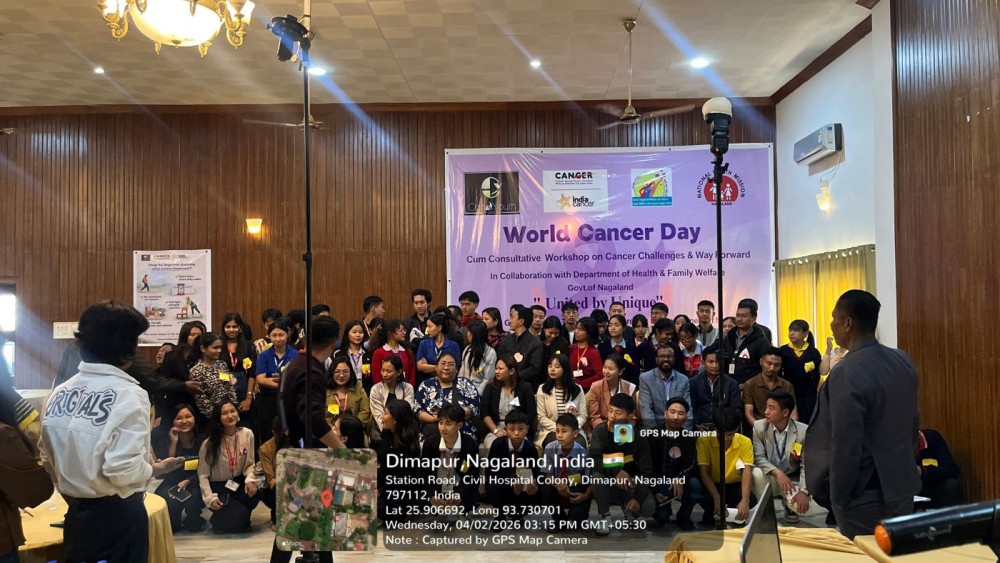
Can Youth, Dept of Health & Family Welfare observe Word Cancer Day
Morung Express News
Dimapur | February 4
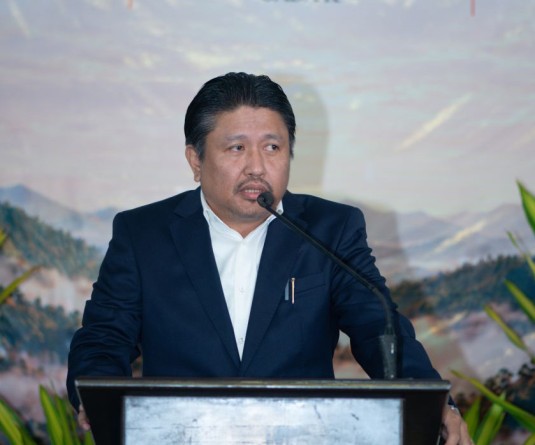
Nasopharyngeal carcinoma (NPC) has emerged as a defining cancer challenge for Nagaland, with the state recording the highest incidence in India among both men and women, according to Dr KeveduyiTheyo, National Heath Mission Director, Directorate of Health and Family Welfare.
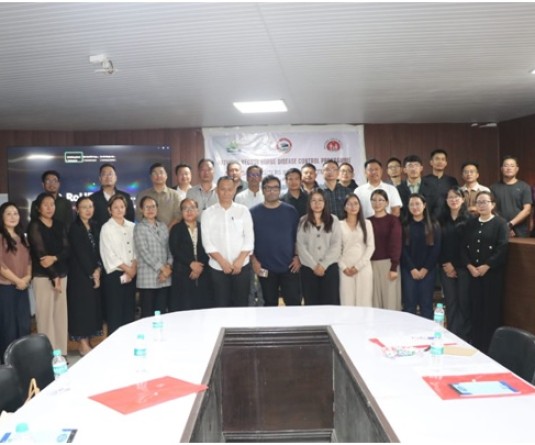
The World Cancer Day-cum-Consultative Workshop on Cancer Challenges & Way Forward was held today at Hotel Acacia. The event was organised by Can Youth in collaboration with the Department of Health & Family Welfare, Government of Nagaland under the theme ‘United by Unique.’
While presenting the cancer fact sheet on Nagaland, Dr Theyo said the state’s cancer profile is markedly different from the rest of the country, driven largely by lifestyle practices, dietary habits, and gaps in healthcare infrastructure.
Fifth leading cause of death
Cancer is currently the fifth leading cause of death in the state, with approximately 28 cancer-related deaths per one lakh population.“Nagaland’s burden of cancers such as nasopharyngeal, oesophageal and stomach cancers is disproportionately high compared to most parts of India,” he noted.
Data revealed that 43.3 per cent of adults in Nagaland use tobacco in smoked or smokeless forms, while nearly 24 per cent of the population above 15 years consume alcohol. Betel nut chewing and the widespread consumption of smoked and fermented foods further contribute to the high prevalence of upper gastrointestinal cancers in the state.
Among men, nasopharyngeal cancer accounts for 14.3 per cent of all cancer cases, followed by stomach cancer at 12.6 per cent and oesophageal cancer at 10.6 per cent. In women, cervical cancer leads at 16.4 per cent, followed by breast cancer at 12.2 per cent and stomach cancer at 11.3 per cent.
Citing figures from the Indian Council of Medical Research (ICMR) Cancer Registry, Dr Theyo said the age-adjusted incidence rate (AAR) of cancer in Nagaland stands at 124.5 per one lakh population for males and 88.2 for females.
Placing Nagaland’s situation in the national context, Dr Theyo highlighted that India recorded an estimated 1.41 million new cancer cases and over 9.16 lakh deaths in 2022, with projections indicating a rise to 1.57 million new cases by 2035. Tobacco use, infections, late-stage diagnosis and limited access to advanced treatment remain key drivers nationwide.
Enhancing awareness, early detection & improving oncology services stressed
However, he stressed that Nagaland faces added challenges due to limited oncology infrastructure and delayed diagnosis, which contribute to higher mortality.
“Strengthening early detection, increasing public awareness, and improving oncology services are critical if we are to reduce preventable deaths,” he stated.
Calling cancer a global crisis with a local urgency, he underlined the need for coordinated action, warning that without targeted interventions, lifestyle-related cancers will continue to take a heavy toll on the people of Nagaland.
Addressing the event as the special guest, S Tainiu, State’s Secretary to Health & Family Welfare, acknowledged cancer survivors, while paying tribute to those who lost their lives and expressed solidarity with patients undergoing treatment.
She said that the very purpose of this day is to spread awareness on prevention, early diagnosis, and treatment.
Many cancers can be cured if detected early, yet access to screening and care remains limited for many. She called on the government, healthcare providers, and communities to strengthen healthcare systems, encourage early detection, equal care and reduce stigma across all sections of society.
Referring to this year’s theme, ‘United by Unique,’ Tainiu said every cancer experience is different. She urged an approach to care that considers patients’ medical, emotional, and social needs, while reiterating that listening to patients and caregivers is key to building more inclusive and effective cancer care.
Survivor’s tale
Cancer survivor and founder of Beyond Cancer, Ahimsa Zhimo said the experience of cancer leaves a lasting impact long after recovery. Sharing her testimony, Zhimo said that despite being cancer-free for over a decade, the experience still feels fresh, underscoring the lasting physical and emotional impact of the disease.
She encouraged the community to spread awareness and support those fighting cancer. While cancer affects individuals differently, she highlighted the need for a collective response, echoing the call to be ‘united by unique.’
She pointed to stigma and the fear of being seen as a burden as major reasons why many patients delay or avoid treatment. According to her, concerns about family lineage, past experiences, and social judgment often influence decisions to seek care.
Recalling her own experience, Zhimo said she was initially hesitant to pursue treatment due to fears of being judged or blamed.
Psychosocial factors play a significant role in treatment-seeking behaviour, as fear, stigma, levels of social support, and personal beliefs often determine when/if people seek medical care.
“The Naga mentality is changing, but stigma was a big barrier. People are opening up now, yet back then it was difficult to disclose due to fear of judgment,” she added.