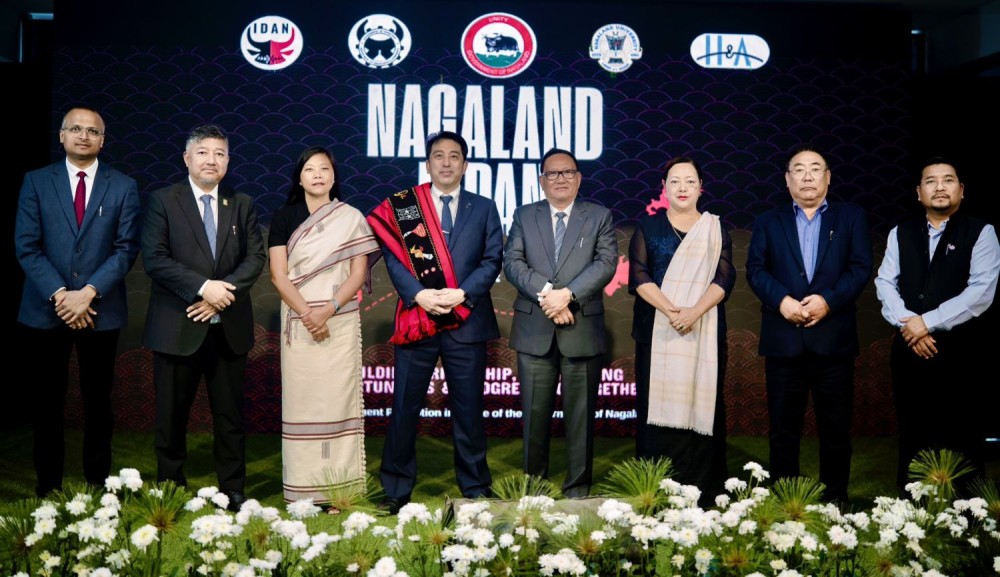
Officials during the Nagaland–Japan Connect 2026 held at IBHIC, Forest Colony, Dimapur on January 28.
Morung Express News
Dimapur | January 28
Nagaland–Japan Connect 2026, held at IBHIC, Forest Colony, Dimapur on January 28, marked a major milestone in the Government of Nagaland’s global engagement strategy. The initiative positions human capital development, international mobility, and people-to-people partnerships at the centre of the state’s economic vision. The event brought together state government officials, Japanese prefectural representatives from Kochi, industry partners, academic institutions, and youth to create structured pathways for overseas employment, skill development, and long-term cooperation with Japan.
Delivering the keynote address, Deputy Chief Minister TR Zeliang said the Nagaland–Japan partnership is rooted in mutual trust, shared values and a common vision for the future, aligned with the theme ‘Build, Connect, Progress.’
Zeliang recalled Japan’s long-standing engagement in Nagaland’s development, beginning with the Japan International Cooperation Agency’s (JICA) visit in 2014. In 2017, JICA finalised assistance for the Nagaland Forest Management Project (NFMP), covering 185 villages across 22 forest ranges in all districts, aimed at forest restoration and livelihood generation.
Japan also extended an official development assistance loan of approximately Rs 564 crore for a 400-bedded Medical College Hospital at the Nagaland Institute of Medical Sciences and Research (NIMSR), Kohima, which Zeliang said reflects “Japan’s strong commitment to strengthening healthcare infrastructure and medical education” in the state.
Emphasising youth-centric development, the Deputy CM highlighted initiatives such as the Centre of Excellence for Foreign Languages, which are creating structured pathways for overseas employment.
“Today, we are seeing tangible results,” Zeliang said, noting that over 300 youth from Nagaland are already working in Japan, generating steady incomes and strengthening families through remittances.
He added that the Memorandum of Understanding (MoU) with Kochi Prefecture marked an important step in formalising government-to-government collaboration particularly in human resource exchange, skill development and agriculture, further strengthening people-to-people ties.
Calling for expanded collaboration, Zeliang affirmed that Nagaland offers more than a skilled workforce, inviting Japanese partnership in high-potential sectors and positioning the state as a gateway to Southeast Asia.
Reiterating that the Nagaland–Japan Connect 2026 is “not merely an event, but a platform for sustained engagement,” Zeliang said the government remains committed to creating enabling policies, strengthening institutions, and deepening international cooperation so that the youth can confidently participate in the global workforce.
Hekani Jakhalu, Advisor for Industries & Commerce underscored the need for youth to move beyond traditional employment avenues, citing the growing pressure on the job market. In her special address, she noted that with more than ten lakh job seekers, Nagaland faces an urgent challenge to create sustainable livelihood opportunities.
She said the initiative aims to broaden opportunities for young people and equip them to compete in the global workforce. Jakhalu described Japan’s decision to partner with Nagaland as a reflection of the credibility and commitment of both the people and the state government. She added that the programme should be seen as a starting point, calling it “a beginning, not an end.”
“Japan is facing a rapidly ageing population, and Kochi Prefecture is actively seeking motivated and disciplined young workers,” said Kunitoshi Hojo, representing the prefecture. Highlighting the growing demand for skilled youth from Nagaland, he said, “From zero workers from Nagaland just two years ago, we now have 19, and we expect many more success stories to follow.” Hojo reaffirmed Kochi Prefecture’s commitment to strengthening cooperation with Nagaland.
Dr Pangersenla Walling, Centre of Excellence for Foreign Languages, Nagaland University highlighted the academic and language-training backbone of the programme, noting that language is the gateway to opportunity. She informed that the certificate programmes are designed to make students “job-ready, culturally prepared, and globally competitive, with targeted subsidies ensuring access for deserving candidates.”
Key Memorandums of Understanding (MoUs) were exchanged during the inaugural session, formalising cooperation in vocational training, internships, international placements, and investment facilitation.
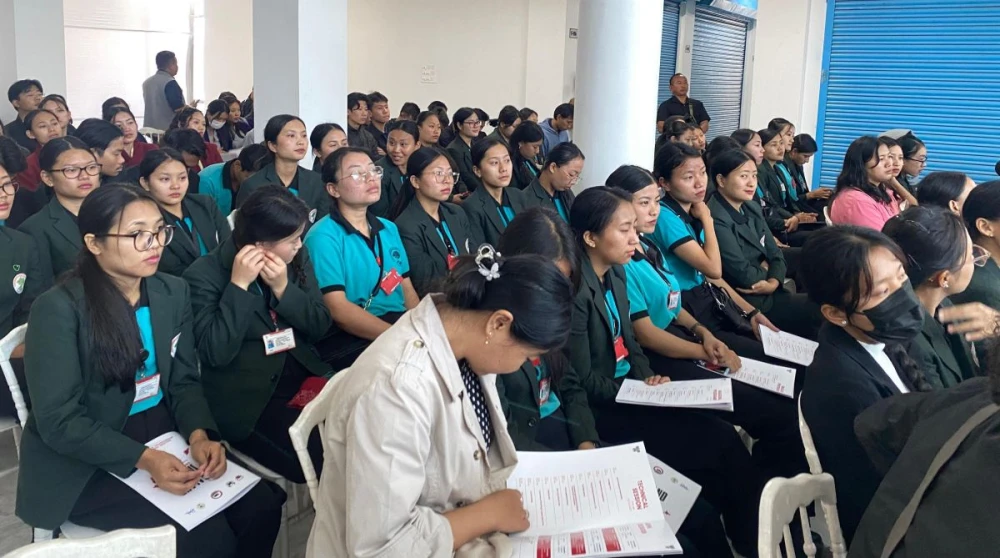
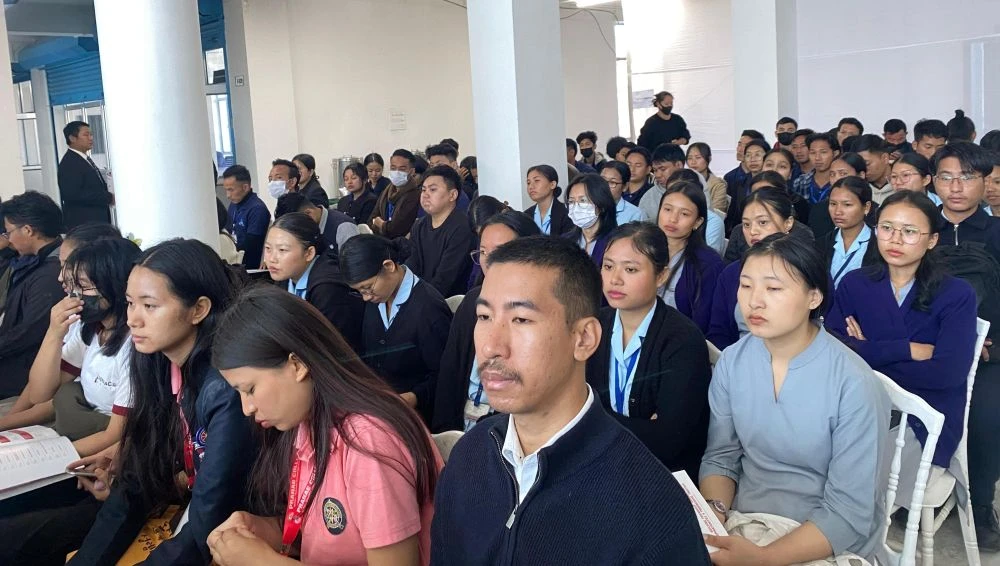
The technical session prepared participants for overseas employment, focusing on Japanese working culture, workplace ethics, discipline, and expectations. It provided a clear roadmap for employment in Japan, covering language proficiency, skill standards, recruitment procedures, and long-term career pathways.
Over 450 students registered for the event where direct job interviews and interactions with Japanese employers across agriculture, healthcare, manufacturing, electronics, hospitality, and heavy machinery sectors were held.