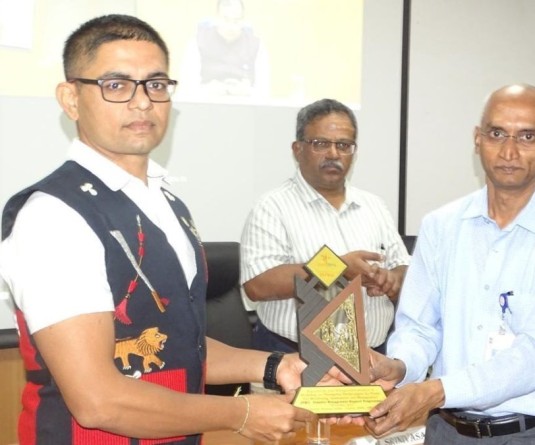
S Richard Humtsoe
National Secretary, Lok Janshakti Party Ramvilas
The State of Nagaland, endowed with rich cultural diversity and a resilient societal fabric, continues to grapple with a constellation of deeply rooted structural and political challenges. Addressing these issues demands not only administrative precision but also a calibrated, inclusive, and forward-looking diplomatic approach.
At the forefront lies the protracted question of political settlement and identity. The longstanding negotiations between various Naga groups and the Government of India reflect a complex interplay of historical grievances, aspirations for autonomy, and concerns over territorial integrity. A durable resolution necessitates a framework that harmonizes constitutional provisions with the unique socio-cultural ethos of the Naga people. Sustained dialogue, confidence-building measures, and the institutionalization of inclusive representation—encompassing all key stakeholders—are indispensable to achieving a settlement that is both just and enduring.
Equally pressing is the challenge of economic underdevelopment and limited infrastructure. Despite its strategic location and resource potential, Nagaland’s economic growth has been constrained by connectivity deficits, underinvestment, and limited industrial diversification. A comprehensive development strategy should prioritize sustainable infrastructure expansion, promotion of local entrepreneurship, and integration with regional and transnational trade corridors. Such efforts must be carefully aligned with environmental stewardship and indigenous land rights, thereby ensuring that development does not come at the cost of cultural and ecological integrity.
The issue of governance and institutional capacity also warrants urgent attention. Administrative inefficiencies, coupled with concerns regarding transparency and accountability, have impeded effective service delivery. Strengthening governance structures through capacity-building initiatives, digital modernization, and robust anti-corruption mechanisms would significantly enhance public trust and administrative efficacy. Importantly, empowering traditional institutions and integrating them constructively within the formal governance framework can yield a hybrid model that is both legitimate and effective.
Social cohesion and youth engagement represent another critical dimension. With a young and dynamic population, Nagaland faces the dual challenge of providing meaningful employment opportunities and preventing disaffection. Targeted investments in education, skill development, and cultural industries can harness the demographic dividend while preserving the rich heritage of the region. Encouraging participatory governance and civic dialogue among youth will further contribute to long-term stability and innovation.
Lastly, the delicate balance between security imperatives and civil liberties must be carefully maintained. While peace and stability are prerequisites for progress, they must be pursued in a manner that upholds human dignity and fosters reconciliation. Transitioning from a security-centric paradigm to a peacebuilding-oriented approach—anchored in justice, dialogue, and rehabilitation—can pave the way for a more harmonious societal order.
In synthesis, the path forward for Nagaland lies in a multidimensional strategy that blends political accommodation, economic revitalization, institutional reform, and social empowerment. Such an approach, guided by empathy, pragmatism, and mutual respect, holds the promise of transforming longstanding challenges into opportunities for sustainable peace and prosperity.