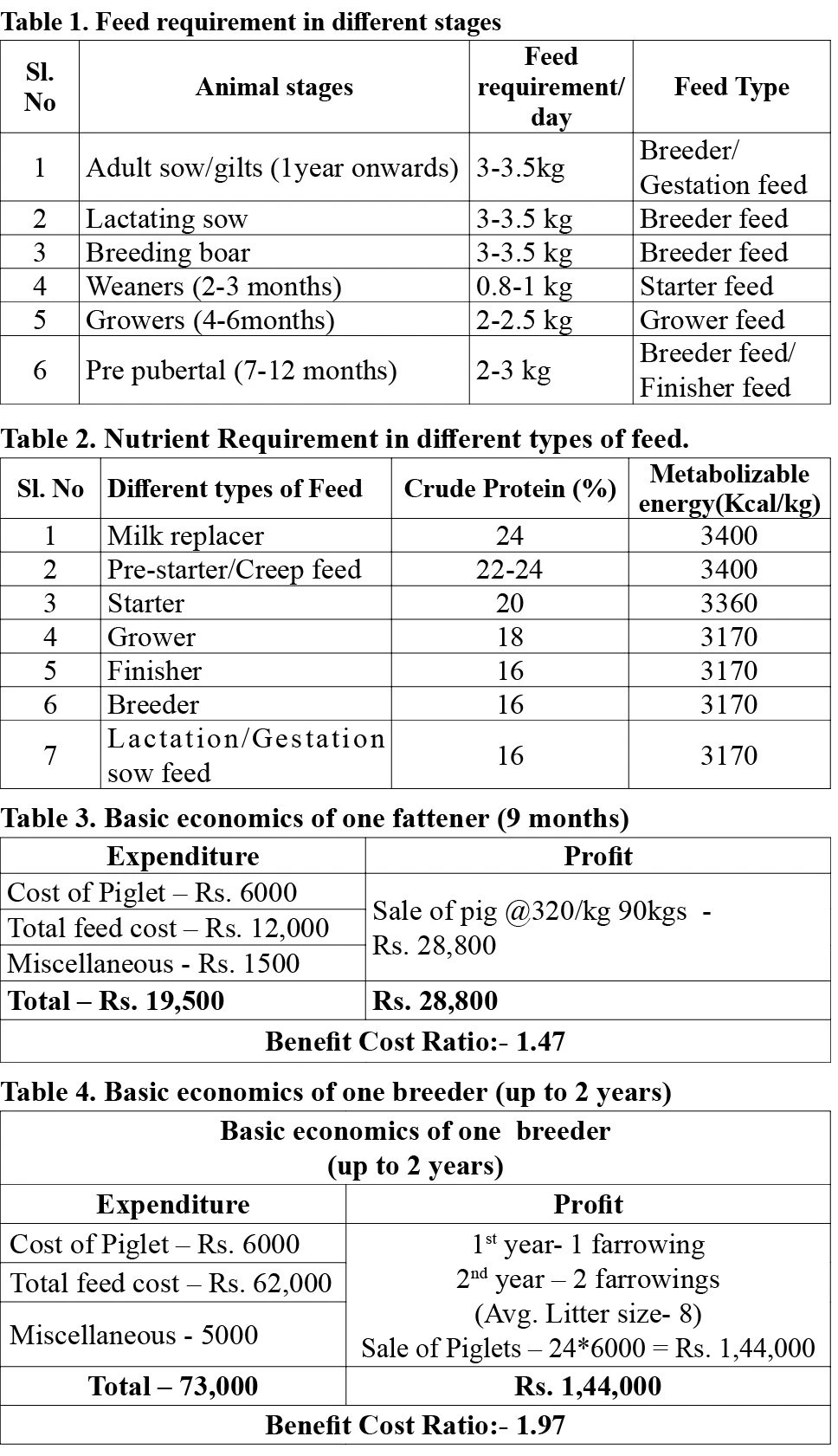
The main goal of the swine industry is to improve production efficiency and maximize economic returns. Dressing percentage in pig meat is 65-80% and in the NEH region, tribal people consume every part of the pig. Efficient feed focused on feed conversion ratio is essential because pigs have a high feed conversion efficiency of about 2.5 to 3. Because pigs cannot digest poor-quality roughages, they require high-quality forage and grains, which can raise feeding cost to up to 70% of total input expenditures. Different feed formulas can be used for pigs, and the most appropriate feed for a particular pig varies with pigs’ age, weight and stage of development. In general, though, most pig farmers use a combination of different feeds in order to provide their pigs with all the nutrients they need. To provide pigs with the best possible nutrition, feeds must be tailored to their specific needs at different ages and production stages.
Types of feeds for different stages are:-
1. Piglets
i. Colostrum feeding
Colostrum feeding is the first milk, which is an essential source of energy for thermoregulation and body growth, nutrients and immunity for the piglets. Therefore it is essential to maximize colostrums intake in the first 6 hours after birth (approx. 150-280ml/kg).
ii. Milk replacer
To supply piglets with extra nutrients and energy when sow milk is not sufficient. It should be of high quality and easily digestible.
iii. Creep Feed/ Pre starter
Creep feed can be fed to piglets from 7 to 10 days after farrow (or birth). Target roughly 1kg of creep feed per piglet before weaning. Piglets fed creep attain 12-15kg body weight at 8 weeks of age.
2. Starter: - This pig diet is specifically for young piglets from 6 weeks of age to attainment of 20 kg body weight. Feed is typically provided ad libitum (free-choice)
3. Grower: -This type of diet is for young pigs that weigh over 20 kg or are aged 10 weeks until they attain 35 to 40 kg body weight.
4. Finisher: - This is the feed given to pigs that are over 40 kg in body weight until they reach a marketable body weight which is around 90-100 kg or slaughter.
5. Breeder: - Breeder feed is fed to breeding boars and gilts.
6. Sows/Gestational Feed: -This is the feed which is given to sows. Pregnant sows require limit-feeding to regulate body condition and prevent excessive fat.
7. Flushing ration: - A well-balanced, high-protein ration before breeding is required to obtain greater litter size and body weight. Usually fed to gilts and sows 15 days before mating.
Conclusion
Optimizing swine productivity and economic efficiency relies on formulating precise diets that meet exact nutritional demands without costly nutrient wastage. Nutritional management or recommendations should take into account various factors known to influence nutrition of the pig and appropriate adjustments must be made. Making these practical, everyday adjustments keeps feed costs down while keeping animals healthy and profitable.
Article contributed by Atokali Sumi, Pedenuo Shüya, Talimoa Aier, Ruth Newmai, Maongkar Changkiri and Mahak Singh.