A senior Judge of the Supreme Court of India has said that the issue of outlining the application of the Nagas’ customary laws away from that of modern judiciary can be resolved only by an ‘administrative mandate’ involving both the government and the citizens themselves. Supreme Court of India Judged, Justice Altamas Kabir implied to village leaders and “Gaon Buras” (GBs) that defining the application of “customary laws” within modern governance and judicial systems is not a prerogative of only a single entity but several.
The entities that can motivate a step toward defining the role of Naga courts and customary law systems within or from modern legal systems, the Justice said, are the government and the citizens themselves. The administrators of the customary laws can work with the government and the people to evolve a resolution, His Honor said.
Justice Kabir was directing the statement to GBs and village headmen who had gathered at the Chumukedima Police Centre today for an interactive session revolving around legal services, specifically Juvenile Justice.
During the interactions, a GB had lamented to Justice Kabir that customary laws and the traditional justice system of the Nagas are giving way more to “Indian court” and legal justice systems. Speaking in ‘Nagamese’ (a bastard dialect common in Nagaland), the GB said Naga customary courts have now ‘moved away’, giving place to the modern legal system. Asserting that the customary laws have been practiced from ages until now where it is starting to lose relevance in the face of modern laws and mechanisms, the GB appealed to the Supreme Court Justice to ‘do something’ and offer “help” about the matter.
In response, Justice Kabir said the issue is a difficult “idea” and one that involves the need for concerted efforts and perspective. The ‘idea’ is to a “mandate” where the role of the Naga courts and system need to be delineated away from the role of mainstream judicial systems. ‘Things are changing; whatever is happening (in the system and society) is changing; the issue is an administrative problem.
It needs an administrative mandate,” His Honor said.
“You have to work it out; you have to work out a mandate,” he told the gathering, also comprising members of both the national and state judiciary mechanisms, students, village leaders and elders and students.
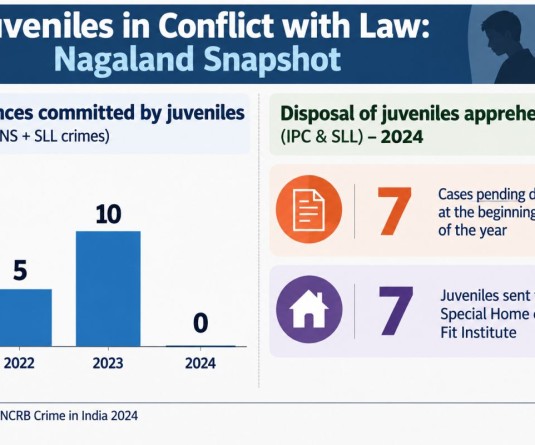
The event was primarily organized as a platform for issues concerning Juvenile Justice, the role of the legal justice systems and what the courts can play in mitigating administering juvenile justice or rehabilitating children found of offence. However, the exchanges veered more towards the stated issue of customary courts vis-à-vis modern legal systems.
Interestingly, one of the GBs even appealed to the Supreme Court judge to ensure that “sanction” for instituting customary courts in all villages in Nagaland reach the targeted stakeholders. Earlier, on Independence Day, a GB told Justice Kabir, that the Government of Nagaland had announced a “customary court” for every village in Nagaland. ‘I appeal to you to see that sanctions for the customary courts are implemented,’ the village leader said in Nagamese. In response, Judge Kabir said such matters are concerns of the state government and not the Judiciary.