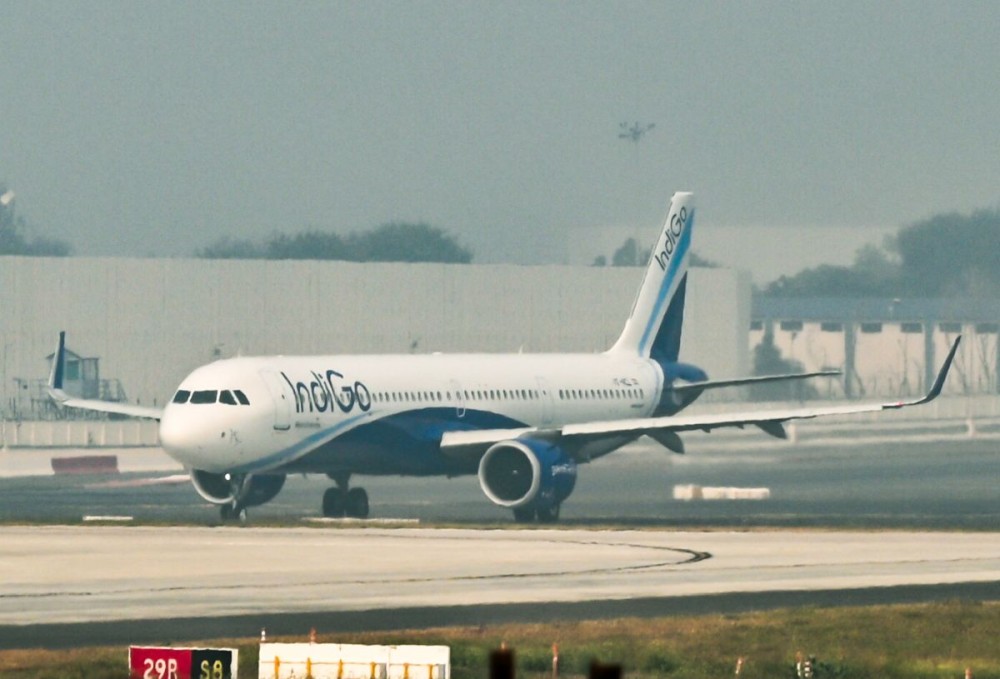
New Delhi: An IndiGo aircraft stands parked on the runway at the Indira Gandhi International Airport as several IndiGo flights continue to be cancelled or delayed in New Delhi on Saturday, December 6, 2025. (Photo: IANS/Deepak Kumar)
Ministry of Civil Aviation sets cap on unreasonable airfare surge
Morung Express News
Dimapur | December 6
The nationwide flight crunch spurred by alleged crew shortage in India’s largest airline— IndiGo, continued to send ripple effects across the country. On December 6, two IndiGo flights scheduled to depart from Dimapur at 12:10 pm and 3:30 pm were cancelled. While passengers were refunded, as per sources, no alternative travel arrangements were provided.
Arrivals at Dimapur remained operational. Air India Express flight from Delhi via Guwahati, and an IndiGo flight from Delhi landed as scheduled.
On December 5, two outbound IndiGo flights from Dimapur— to Delhi and Kolkata, were cancelled.
The Hornbill Festival also felt the effect of the crisis. Indian pop rock band— Sanam was forced to cancel a show scheduled at the Naga Heritage Village, Kisama, as part of the Hornbill Festival. As posted by the band on social media, they were stranded at the Bagdora airport in West Bengal.
Cap on airfare
The Ministry of Civil Aviation (MoCA) imposed caps on surging domestic airfares, on December 6, as a result of the IndiGo flight disruptions.
Citing “unreasonable surge in the fares on number of sectors,” the MoCA restricted airlines from charging more than Rs 7,500 for flights up to 500 km, Rs 12,000 for 500-1,000 km, Rs 15,000 for 1,000-1,500 km; and Rs 18,000 for flights exceeding 1,500 km.
The caps excluded User Development Fees (UDF), Passenger Service Fees (PSF), and taxes. The restrictions apply to all booking channels immediately but exclude Business Class and RCS UDAAN flights.
The MoCA directive said that the move aims to address capacity constraints in the public interest. It asked airlines to maintain ticket availability and refrain from steep revisions on affected sectors. Meanwhile, the Directorate General of Civil Aviation (DGCA) was directed to monitor compliance of the directive.