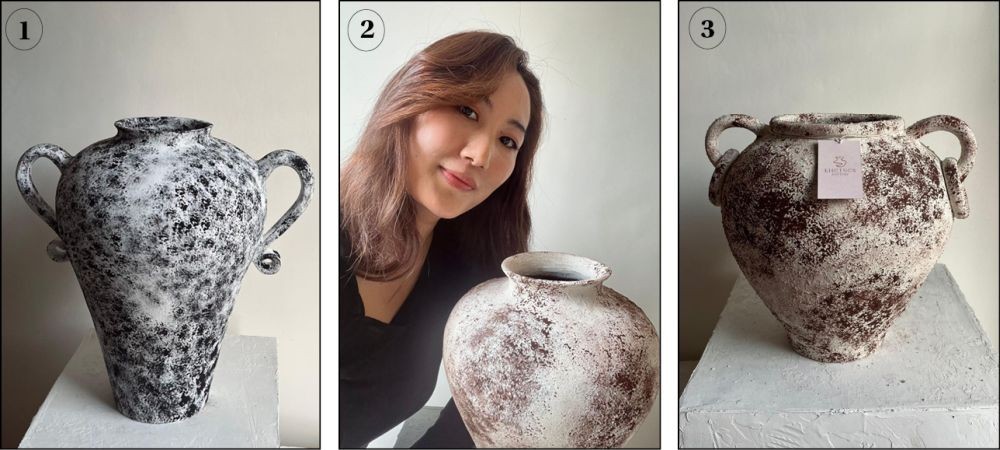
(Pic 1 & 3): Handcrafted pots displayed at Khetsen Pottery studio in Wokha. (Pic 2): Renchumlo Murry, founder of Khetsen Pottery, poses with one of her handcrafted creations at her studio in Wokha.
Khetsen Pottery blends heritage, craftsmanship and entrepreneurship in Nagaland
Meribeni T Kikon
Wokha | June 21
In a modest studio in Nagaland's Wokha district, lumps of black clay slowly take shape as handcrafted vessels and decorative pieces. The process is painstaking, often taking more than a month to complete. Yet for entrepreneur and potter Renchumlo Murry, every piece represents more than craftsmanship—it embodies heritage, memory and a determination to preserve a fading tradition.
As founder of Khetsen Pottery, Murry is part of a new generation of artisans reimagining traditional crafts for contemporary markets. What began as a hobby has evolved into a small enterprise that creates handcrafted pottery, generates local employment and keeps alive an age-old practice passed down through generations.
"I first got into pottery as a hobby, drawn by a long-standing fascination with the craft," Murry told The Morung Express. "The moment I touched clay, it felt strangely familiar." That feeling, she later discovered, was rooted in family history.
Through stories shared by relatives, Murry learned about her grandmother, a potter who supported her family and served her community through the craft. Though she never had the opportunity to watch her grandmother work, those stories became a source of inspiration.
"Pottery is more than a hobby or profession for me. It is a way of honouring my grandmother's legacy and carrying forward a tradition that has been passed down through generations," she said.
Interestingly, Murry's academic background is in horticulture rather than fine arts. However, creativity had always been central to her life. Gardening, painting, knitting and stitching eventually led her towards pottery. Seeking formal training, she pursued a Diploma in Pottery at the Artsy Naga School of Fine Arts in Chümoukedima, where she refined her skills and deepened her understanding of the craft.
The name "Khetsen", meaning "hand-designed" or "made by hand" in the Lotha dialect, reflects the philosophy behind the brand. Every piece is manually shaped, embracing the beauty of human touch rather than machine-made perfection.
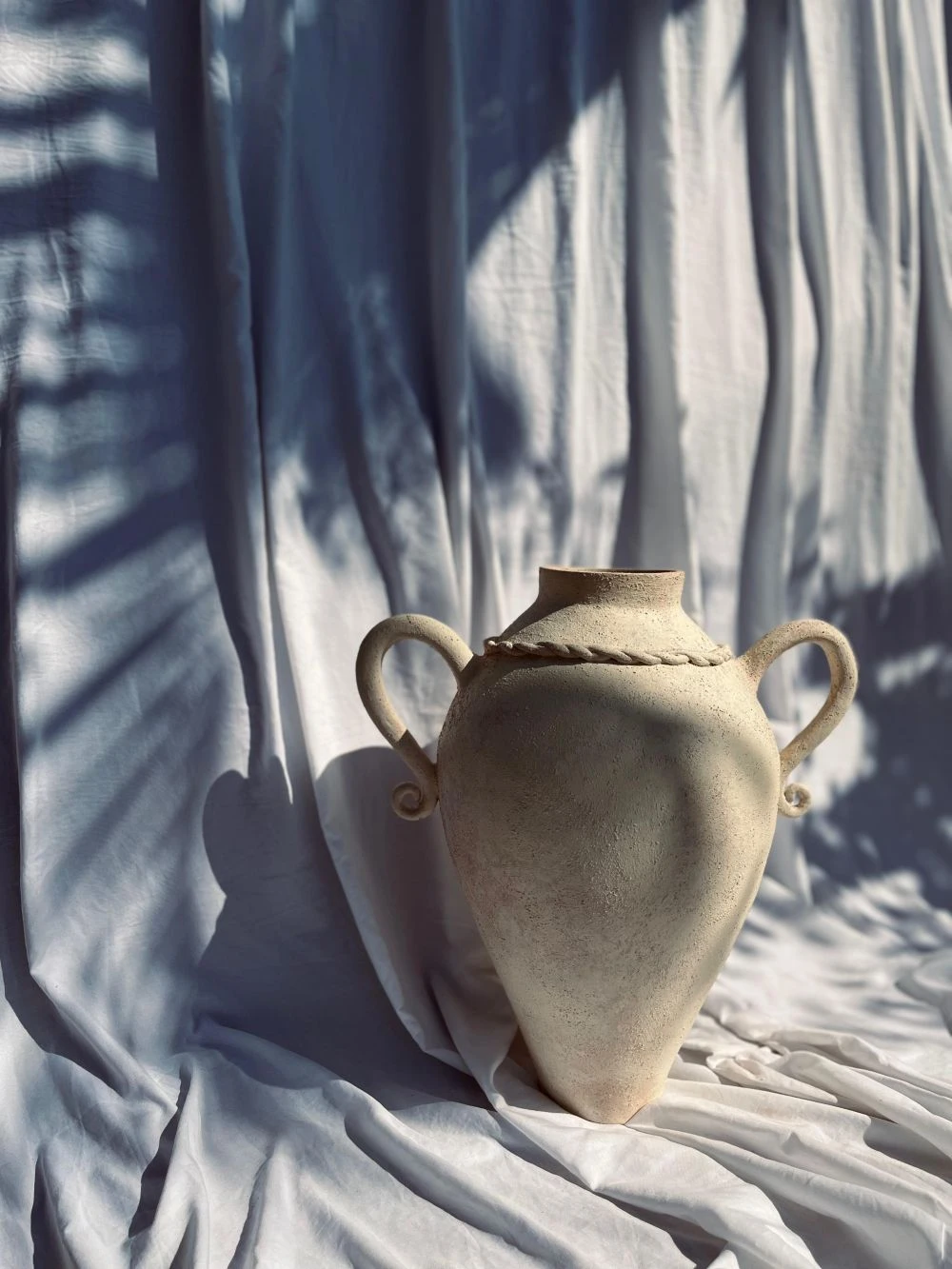
Today, Khetsen Pottery operates with a team of five, including four pottery assistants who help at different stages of production.
The process begins with sourcing clay from traditional deposits used by generations of potters. According to local belief, these deposits naturally replenish themselves every season, reinforcing the community's respect for nature and its resources.
Once collected, the clay undergoes a lengthy preparation process. It is soaked, converted into slurry, sieved, partially dried and wedged before shaping begins. A medium-sized vessel can require 10 to 15 hours of hand-building, followed by up to two weeks of drying. It is then fired in a kiln at temperatures of about 1,000 degrees Celsius before being cleaned and finished.
"It requires patience, skill and several weeks of careful work," Murry said. "Sometimes pieces crack during firing, and that is truly heartbreaking."
Unlike factory-produced products, Khetsen Pottery embraces imperfections.
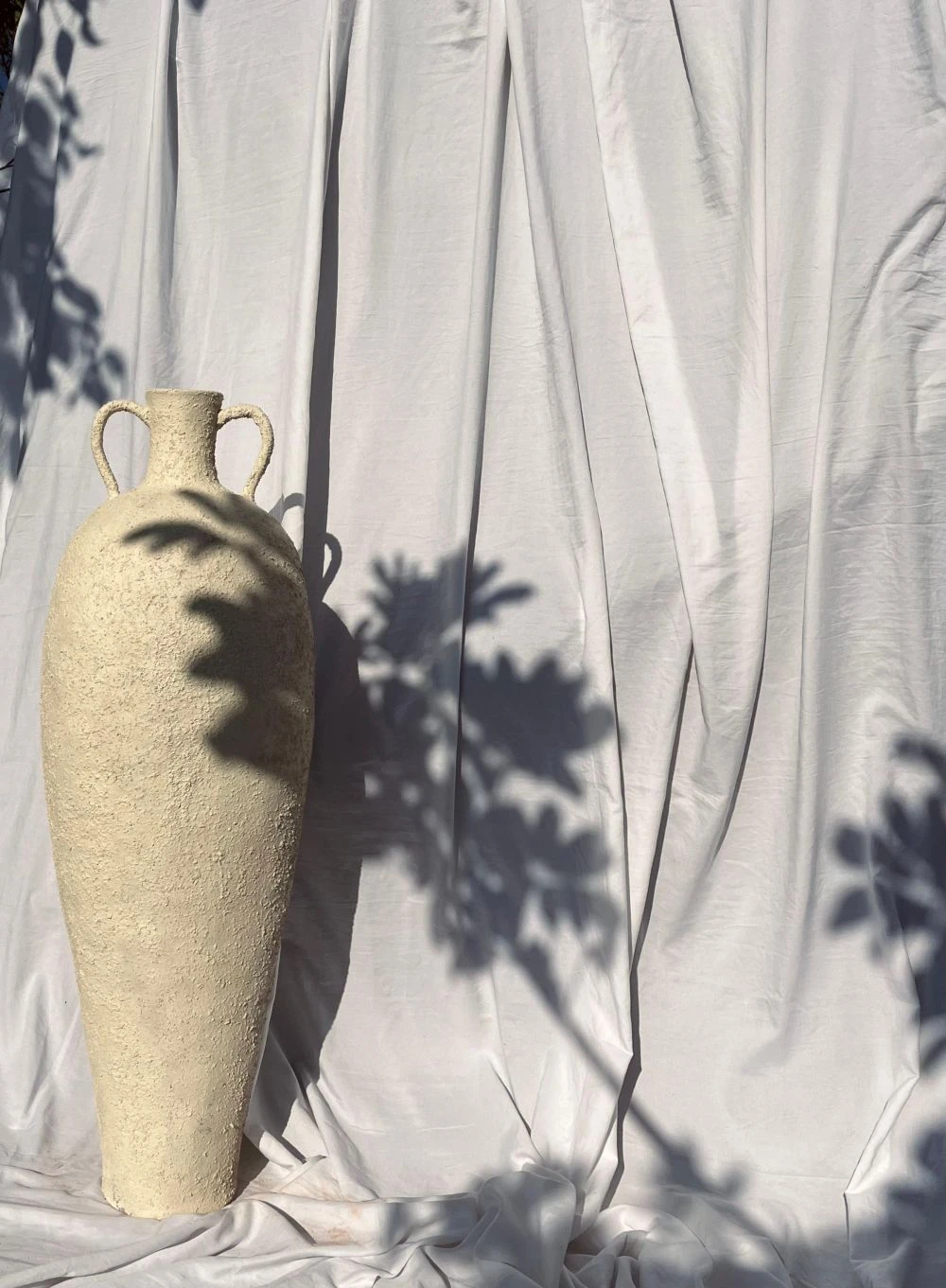
"Every mark, texture and irregularity is a reminder that the piece was shaped by human hands," she said. "In a world that is becoming increasingly synthetic and automated, our pottery invites people to slow down and appreciate authenticity."
This philosophy is reflected in some of the studio's most popular collections, particularly the Mother's Day Collection, inspired by memories of her late mother. The collection resonated strongly with customers because each piece celebrated individuality and strength.
"The pieces are original, organic and intentionally imperfect, but each one is unique in its own way, just like our mothers—each with their own character, strength and story," she said.
Beyond preserving heritage, Khetsen Pottery is also creating livelihoods. Local women are involved in clay processing, while youth assist in sourcing raw materials. The studio has also provided training and employment opportunities for school dropouts.
"Traditional crafts can play a big role in rural development because they create work that people can do right where they are," Murry observed.
Building the business was not without challenges. Securing capital for equipment, tools, raw materials and labour proved difficult in the early stages. Like many entrepreneurs from Nagaland, she also struggled to access larger markets.
Social media helped change that.
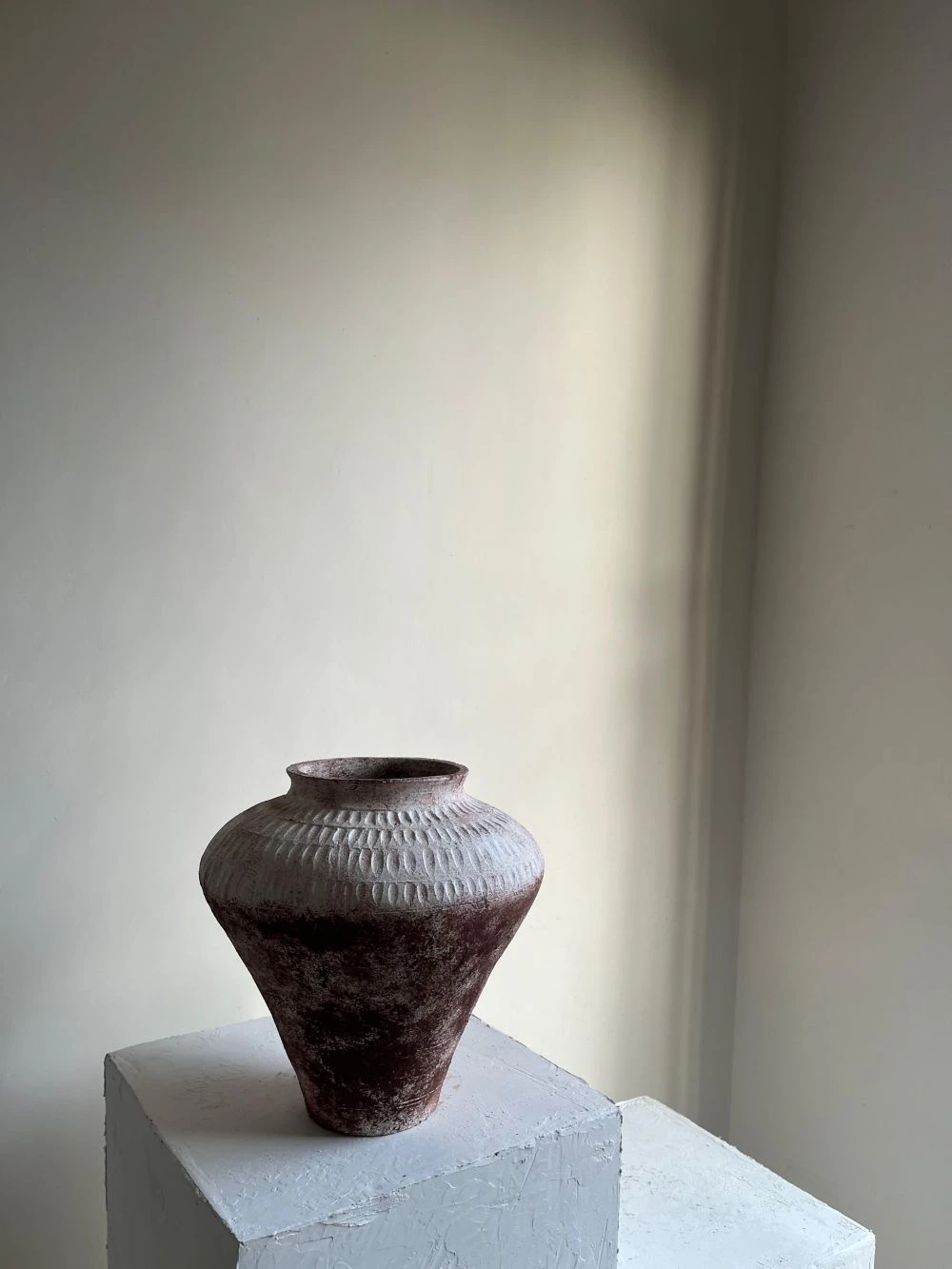
What began as sharing creative experiments on Instagram gradually attracted attention and orders from customers beyond Wokha. Today, around 80 per cent of Khetsen Pottery's orders come through the platform.
Encouraged by growing appreciation for handmade products, Murry hopes to expand across the Northeast and eventually introduce authentic hand-built Naga pottery to national and international markets.
At the same time, she remains concerned about the future of traditional pottery in Wokha, where only a handful of elderly women continue to practise the craft. However, she is encouraged by increasing interest among younger artists and the emergence of institutions offering pottery education.
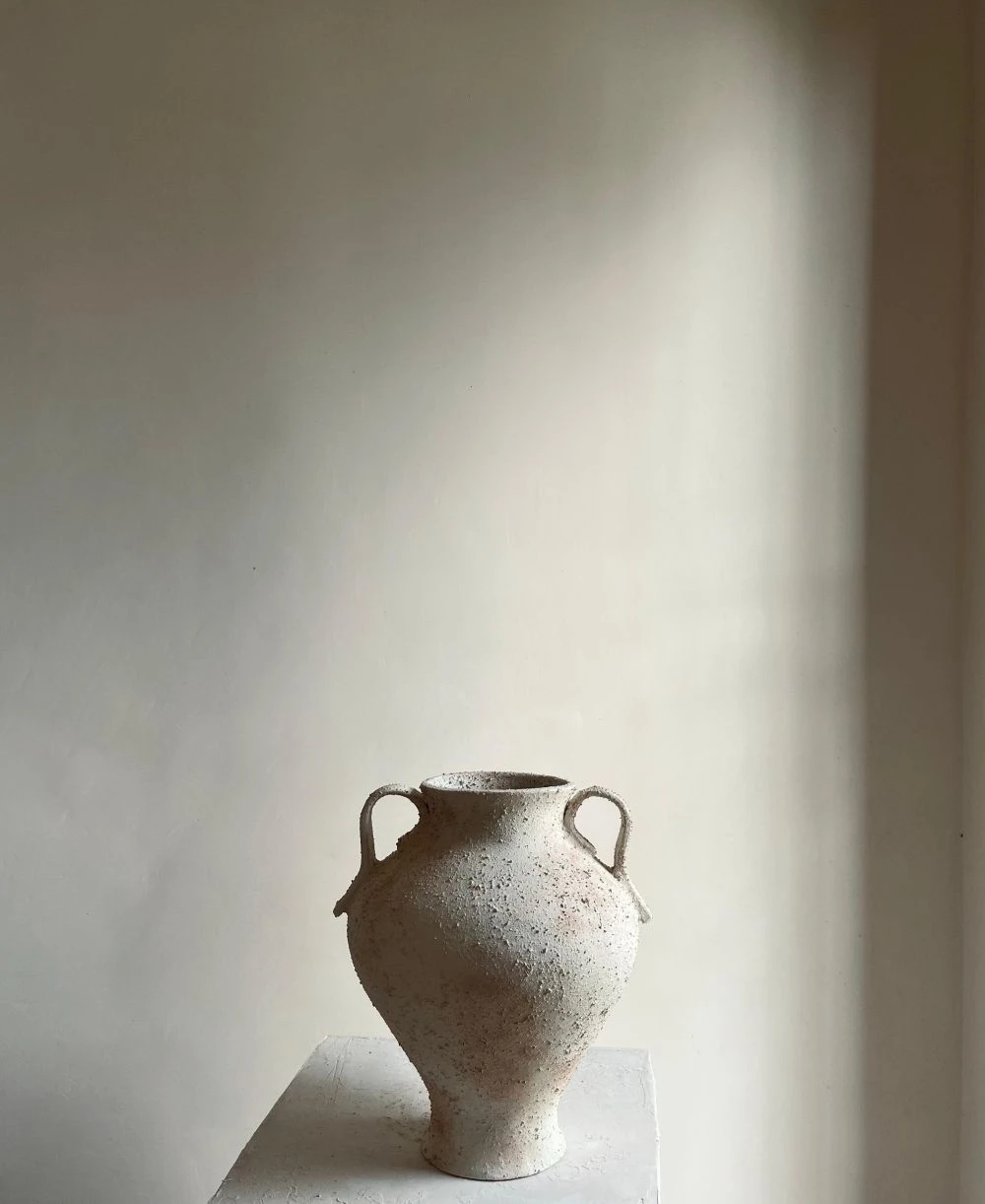
Looking ahead, her vision extends beyond business growth. She hopes Khetsen Pottery will become a space where young people, particularly school and college dropouts, can acquire skills, find meaningful work and build confidence through craftsmanship.
"I want it to stand as a space that helped preserve traditional pottery, supported local livelihoods and encouraged young people to find dignity and opportunity through craft," she said.
In an era increasingly dominated by automation and mass production, Khetsen Pottery serves as a reminder that some of the most meaningful creations still emerge from patient hands, ancestral wisdom and a simple piece of clay. For Murry, preserving pottery is not merely about sustaining a craft—it is about ensuring that a living tradition continues to shape communities and livelihoods for generations to come.