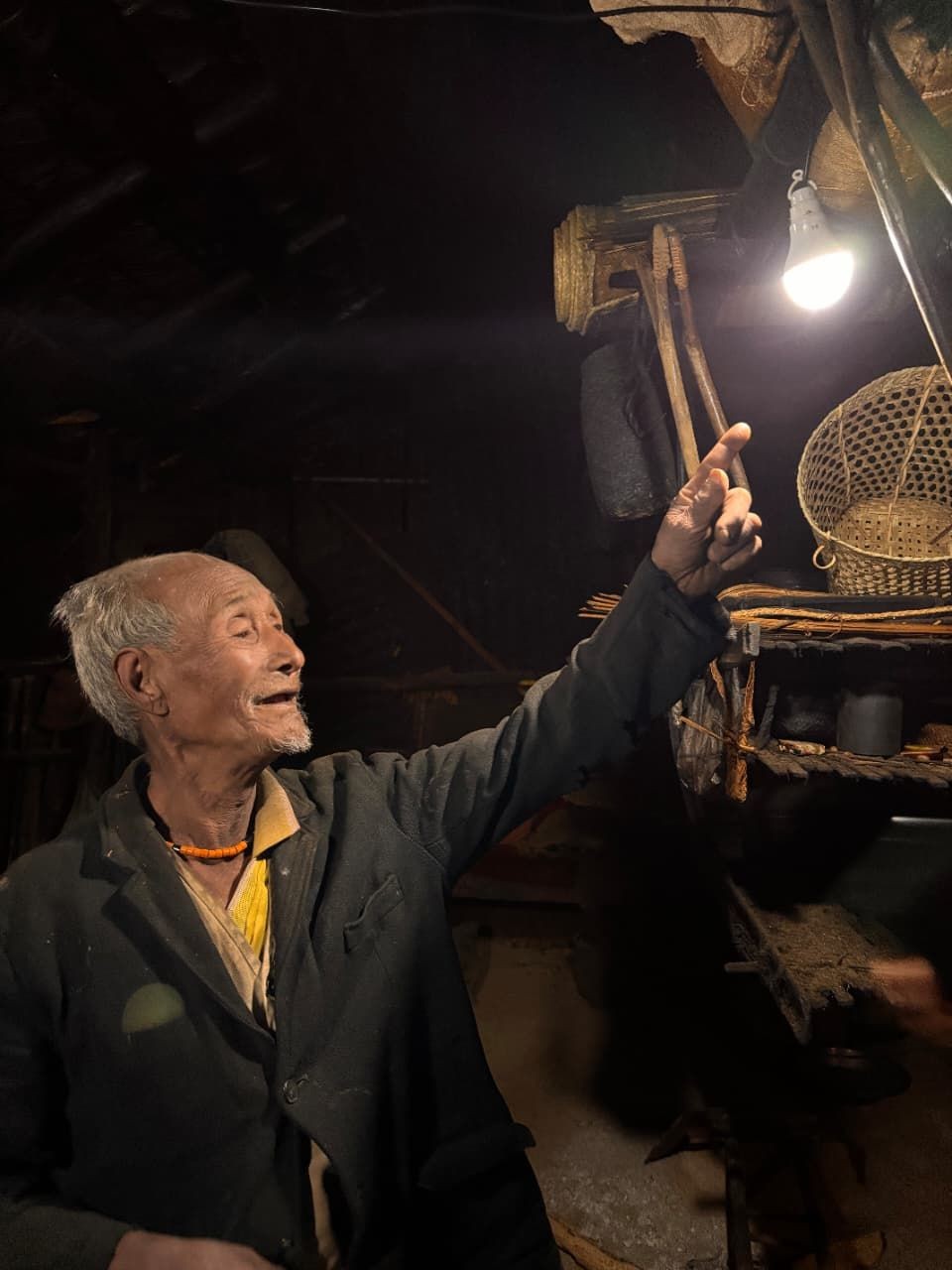
An elderly man smiles as he points to the solar light installed in his home.
A voluntary solar mission brings HOPE to Pounyiu
Why Aboriginal Energy’s Rs 5-lakh solar initiative became a lesson of humility, trust and rural electrification
H Anguvi Chishi
Pounyiu | February 17
In a region where darkness has long dictated the rhythm of life after sunset, a quiet transformation unfolded in Pounyiu village on the India–Myanmar border. For its residents, light arrived not through grids or government tenders, but through conviction, carried by a small renewable energy team that believed access to electricity is not a privilege, but a basic human need.
What began as a voluntary mission soon became a lesson of humility and human connection. For Aboriginal Energy, the solar lighting initiative in this remote Naga village was not about megawatts generated, but about dignity restored. This meant children no longer needing torches to study, kitchens glowing after dusk, and elderly villagers moving safely along illuminated paths.
A mission beyond business
Amenla Ao, Team Lead at Aboriginal Energy, told The Morung Express that the company’s guiding principle has always been to deliver sustainable energy to the “last mile.” While the firm has undertaken similar rural projects earlier, the Pounyiu initiative was unique in both geography and intent.
“We always wanted to go beyond borders,” Ao said. “When we learned that a group of like-minded people were planning a mission trip under Love Burma Mission, we approached them and requested to join. That is how we landed in Pounyiu.”
The installation, carried out purely on a voluntary basis, was supported through crowd funding and company contributions, with a total investment of approximately Rs 5 lakh.
Aboriginal Energy has also designated 2026 as its ‘Year of Missions’, signalling a strategic shift toward purpose-driven interventions alongside commercial operations.
Lighting homes, schools and pathways
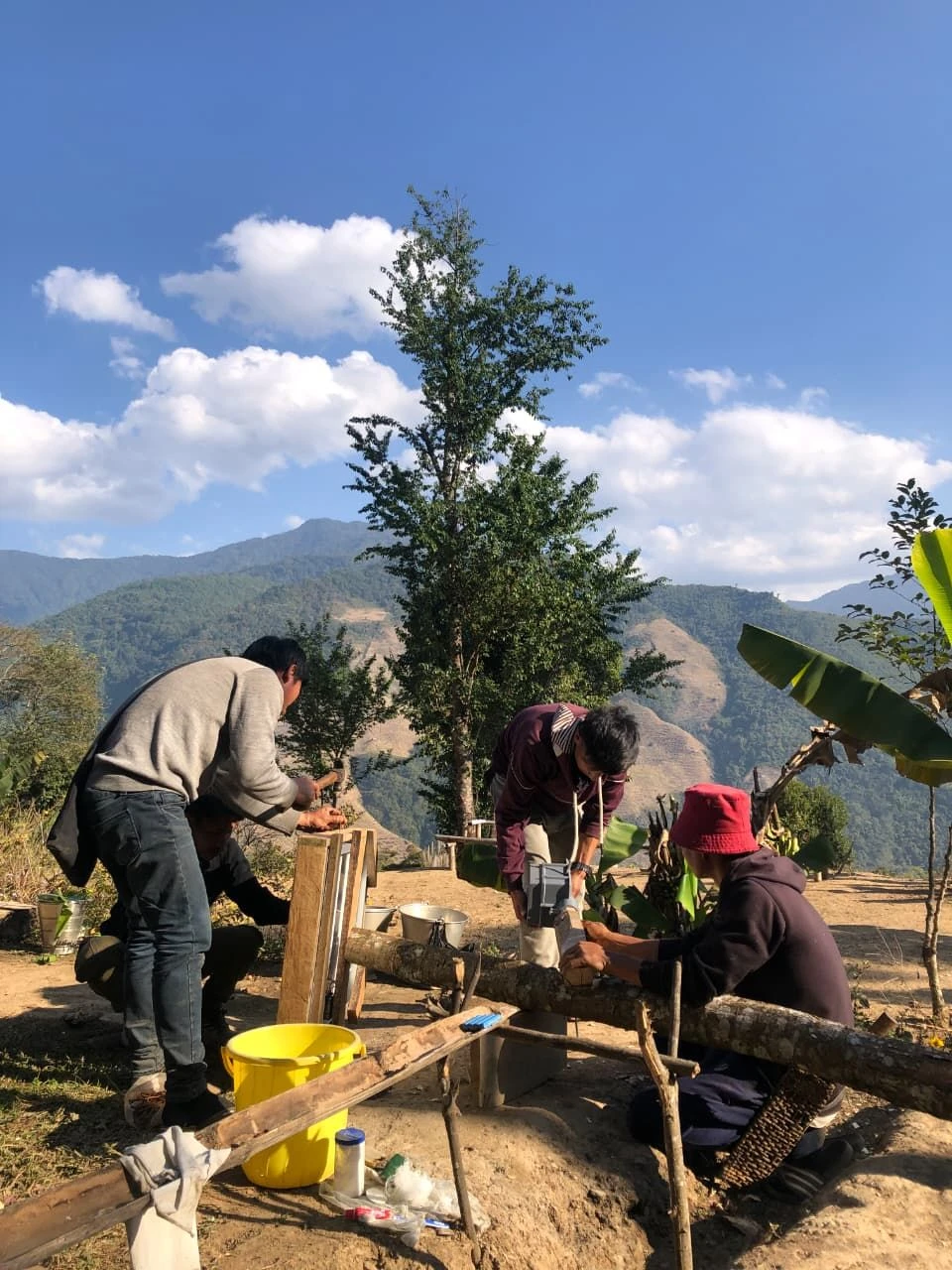
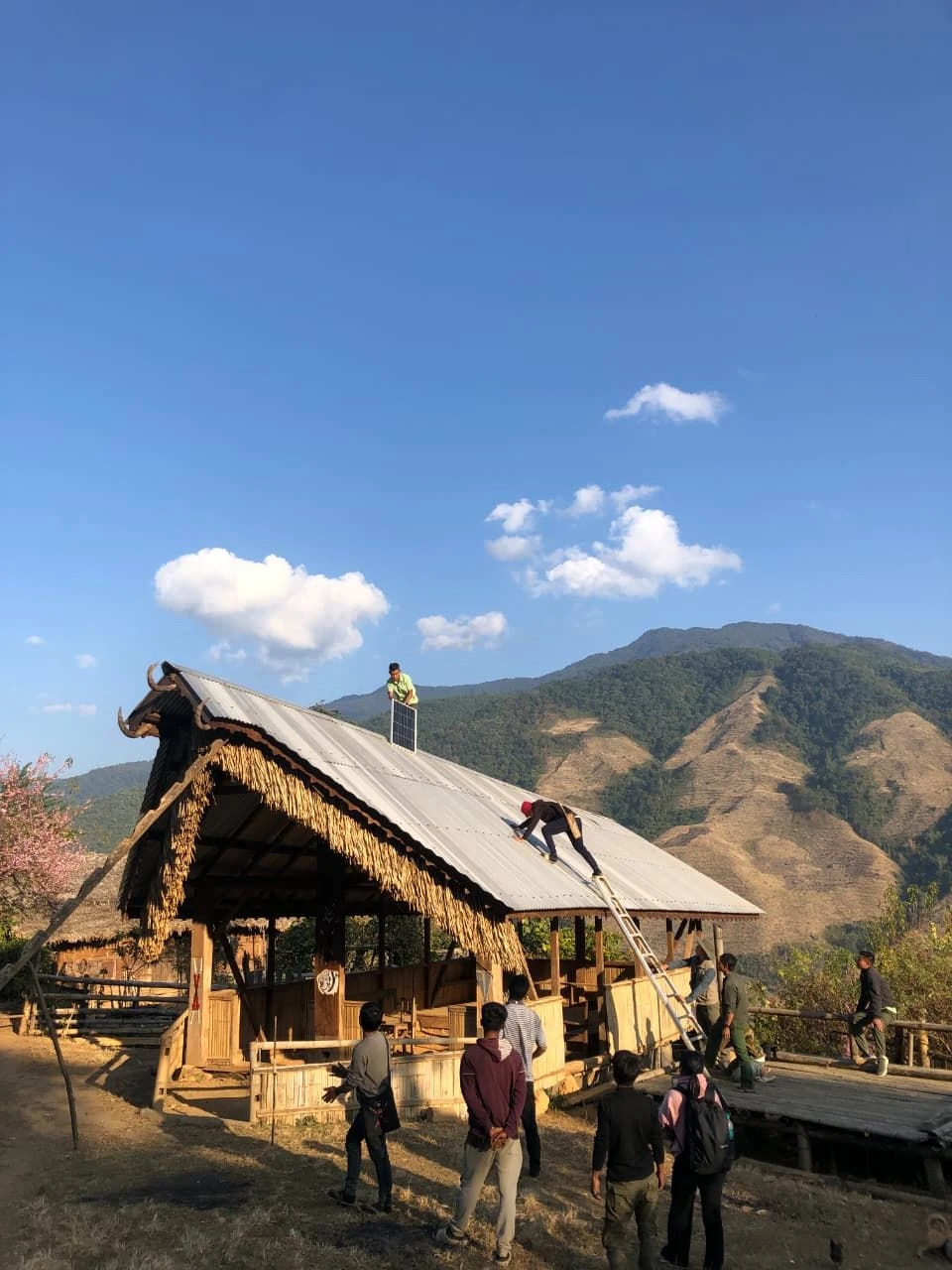
In total, the team transported 90 solar home lighting kits, 10 solar streetlights, and a 0.55 kW solar power system with battery backup and inverter to Pounyiu village. The home systems ranged from 7W to 40W, while each streetlight had a capacity of 80W.
Following consultations with village elders, the company conducted a house-to-house survey, supported by local youth volunteers, to identify genuine beneficiaries. Homes that already had functional solar systems were excluded.
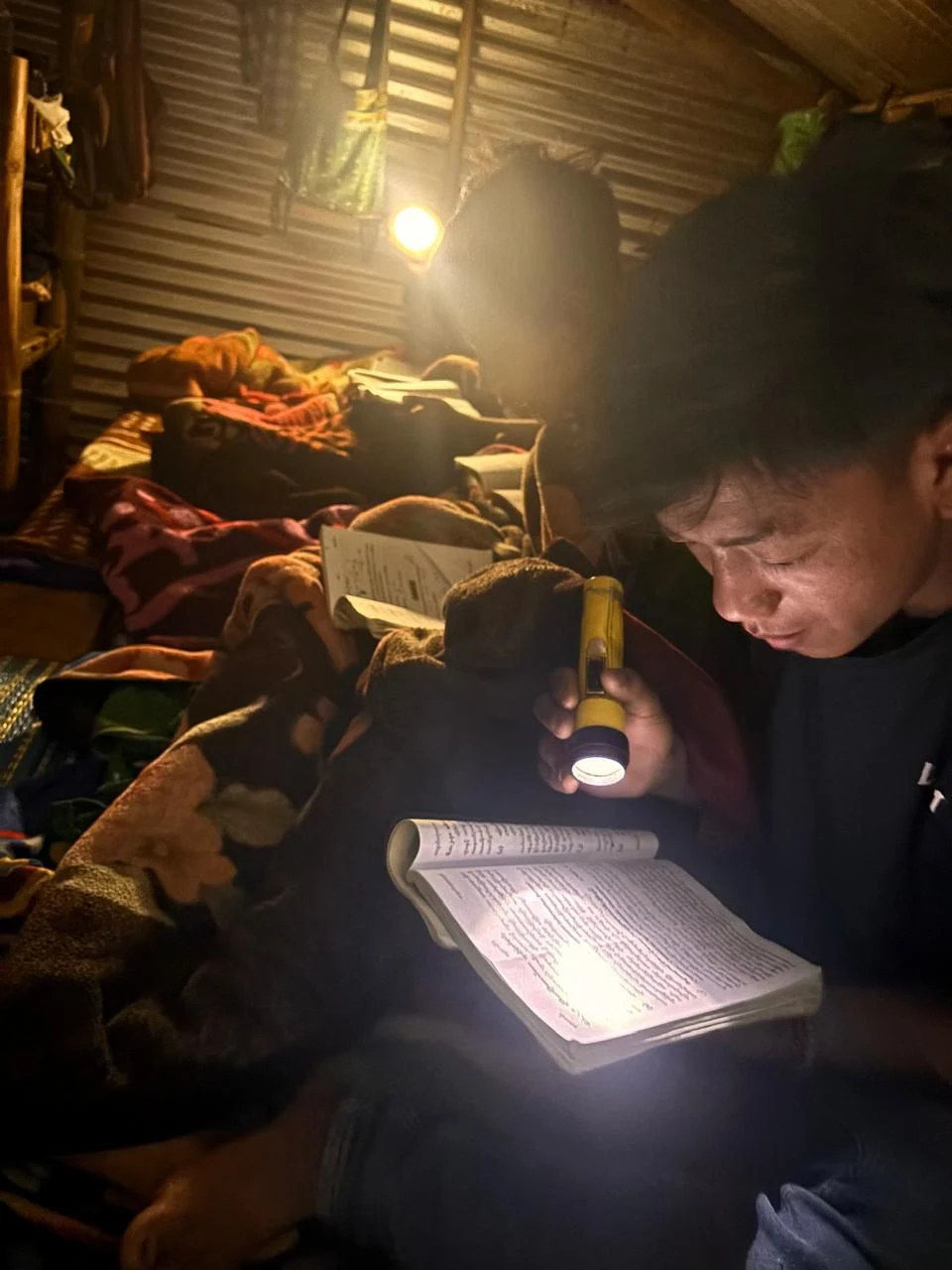
“Most of the home lighting kits went to elderly and vulnerable families,” Ao said. “We also ensured that the boys’ and girls’ hostels run by Love Burma Mission were properly lit, especially the study halls, to support night learning.”
Additional units were installed in church guest houses and kitchen areas, while solar streetlights were placed in the school campus, local grounds, church premises, and other frequently used community spaces.
Built for durability, designed for context
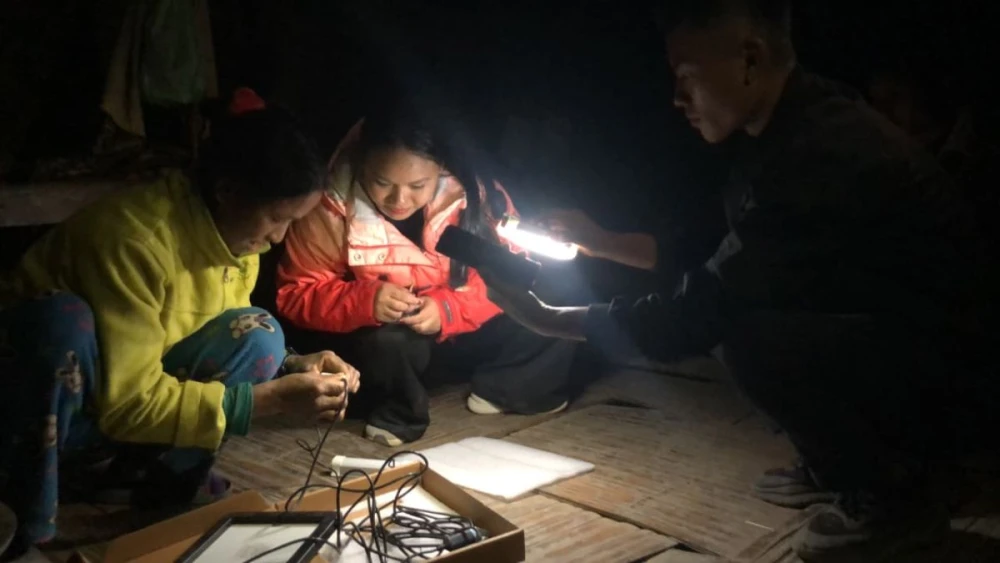
The project used a hybrid mix of indigenous and locally adapted technology, with most products designed and manufactured by Aboriginal Energy itself. Batteries carry a 2–3 year product warranty, while solar panels are expected to function for 10–15 years.
Terrain, weather and connectivity posed inherent challenges. The hilly landscape increased transportation costs, while fewer sunshine hours in the Northeast required larger battery backups and additional panels to ensure reliability.
“These conditions directly affect after-sales service and maintenance timelines,” Ao noted.
Impact felt at dusk
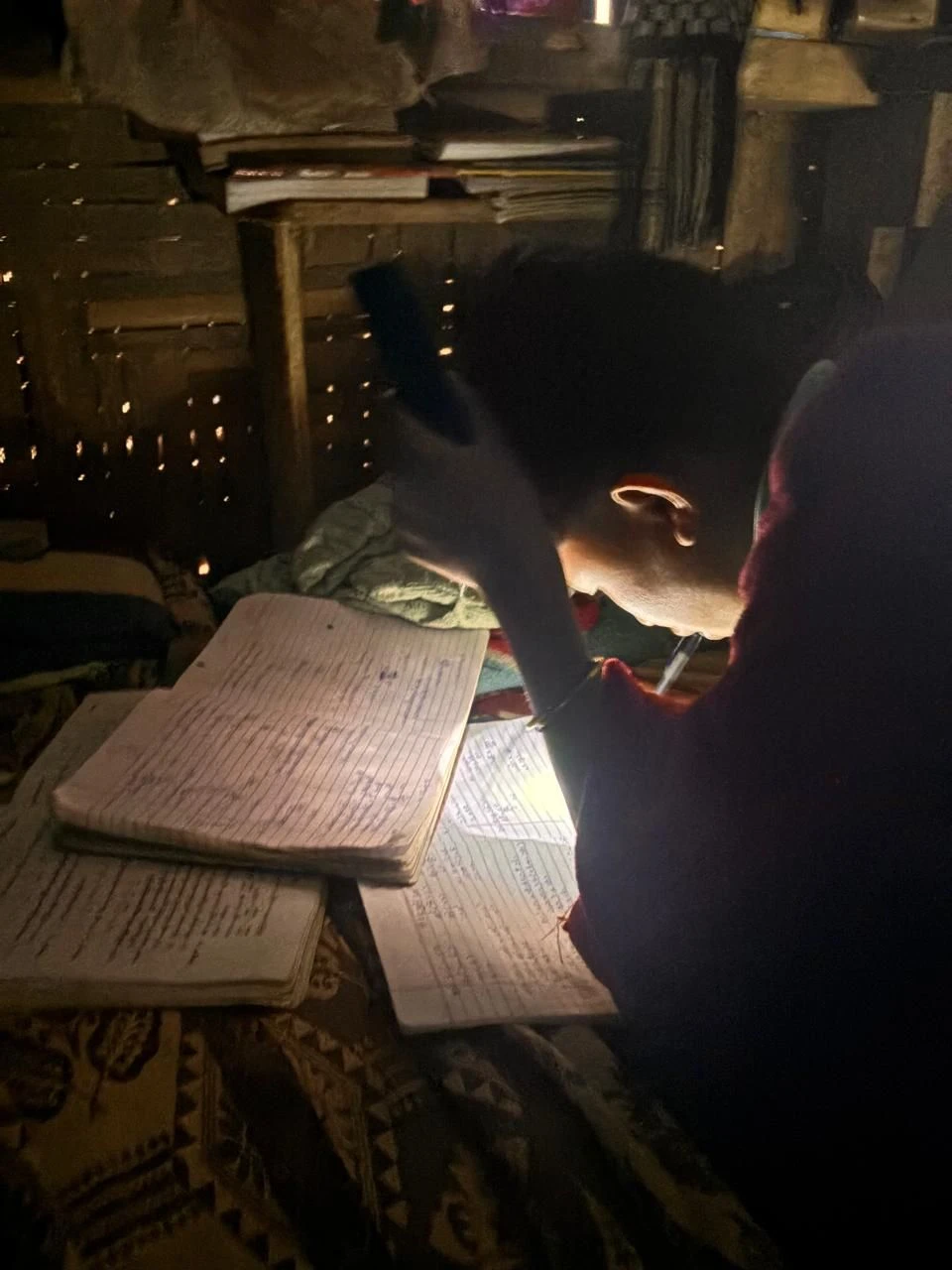
The most immediate change, according to the team, was in education. “Students no longer needed torches to study at night,” Ao said. “Seeing them learning under proper lighting was deeply rewarding.”
For women, illuminated kitchens eased evening chores after long days in the fields. For the elderly, better lighting improved mobility, safety, and dignity inside their homes. Pathways lit after dark allowed villagers of all ages to move freely, a small change with a profound psychological impact.
Community ownership at the core
Village councils and local youth were involved from planning to execution. Six youth volunteers received basic operation and maintenance training, enabling them to handle minor troubleshooting and ensure sustainability.
“The community itself became a stakeholder, not just a beneficiary,” Ao said, calling this model both simple and scalable.
Lessons from the border
Crowd funding fell short of expectations, but the team pressed on. Logistics, accommodation, and material transport were facilitated by the village community and mission team, easing execution in an unfamiliar and remote location.
“One lesson from Pounyiu is that human connection is just as important as project execution,” Ao reflected. “Trust and shared ownership determine long-term impact.”
Looking ahead, Aboriginal Energy plans to replicate similar projects across Nagaland and the Northeast, including solar micro-grids and rooftop systems, subject to funding partnerships with governments, NGOs, village bodies and individuals.
“For us,” Ao said, “their most immediate need was simply light. Being present at that moment and responding to it was an honour.”
Lesson simple yet profound
In Pounyiu, electricity did not arrive as a statistic or an infrastructure milestone. It arrived as light, steady, quiet and deeply human. The lesson from this border village is simple yet profound: when renewable energy is rooted in empathy and community trust, even a small intervention can illuminate far more than homes. It can light paths, futures and faith in shared progress.