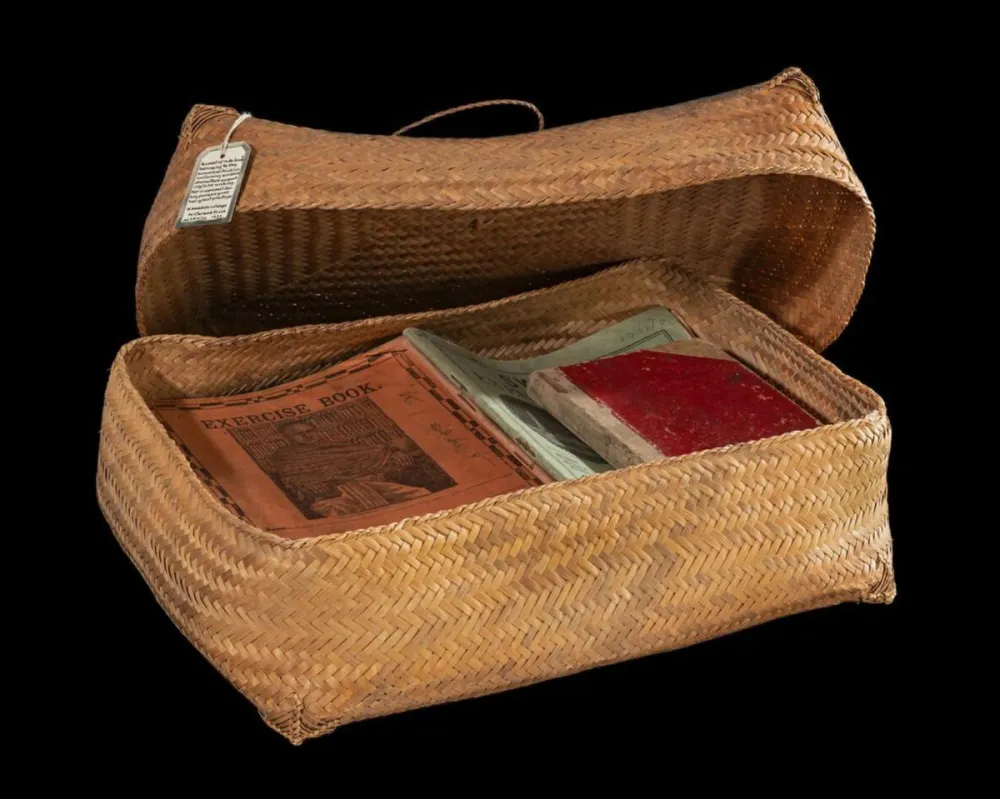
At the center of the exhibition is a significant object - the basket in which Gaidinliu kept the notebooks inscribed with her prophetic visions as spiritual guide to her followers. (Photo Courtesy: Pitt Rivers Museum)
Morung Express News
Dimapur | November 27
Objects seized from Rani Gaidinliu, a Naga freedom fighter, by British colonial forces in the 1930s go on public display for the first time at the Pitt Rivers Museum, Oxford in an exhibition that also shows how the items were “returned” digitally to communities in northeast India.
The 27 objects that make up the ‘Gaidinliu Collection’ were acquired in the 1930s by anthropologists, district officers and members of the British army in northeast India during the colonial period.
“This is the first time they have been put on public display,” the Pitt Rivers Museum said in an article on its official website.
The exhibition, “The Afterlives of Captured Objects: Reanimating the Gaidinliu Collection Digitally,” opened November 27 and runs through August 31, 2027.
Over a four-year project, researchers from India and the universities of Edinburgh and Oxford used digital methods to make the collection accessible to Naga communities. The original objects were digitized and “returned” to three of the Indian states where Naga people live. Shared through workshops, pop-up exhibitions, creative activities and social media, the collection took on a new life.
“The exhibition tells Gaidinliu’s story through her possessions and their afterlives when reanimated by her family, her followers and Naga communities today,” the museum said.
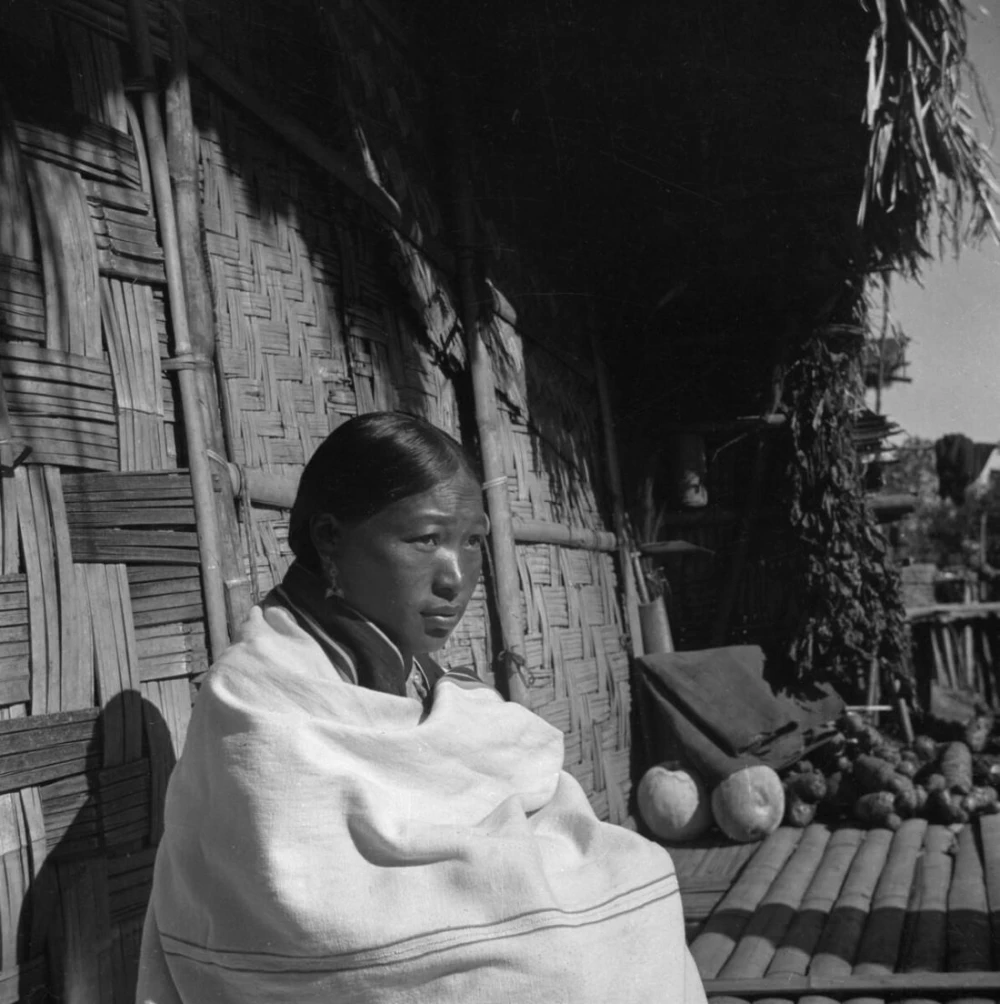
Born in 1915 in Manipur to a Rongmei Naga family, Gaidinliu became a revered religious and political leader known as “Rani” (queen). In the late 1920s, she and her cousin Jadonang led an uprising against the British, opposed the spread of Christianity and promoted Naga Indigenous religion. Jadonang was executed in 1931. Gaidinliu was captured in 1932 and freed only after Indian independence in 1947.
She later became spiritual guide of the Heraka religion and led a movement for a Zeliangrong Naga homeland across three northeastern states. She received the Padma Bhushan in 1982 and died in 1993.
Clothing and protective objects
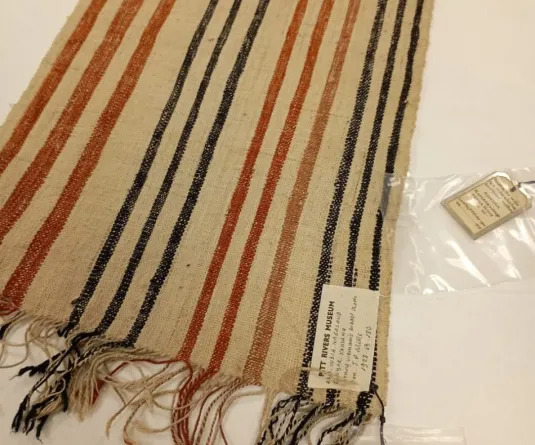
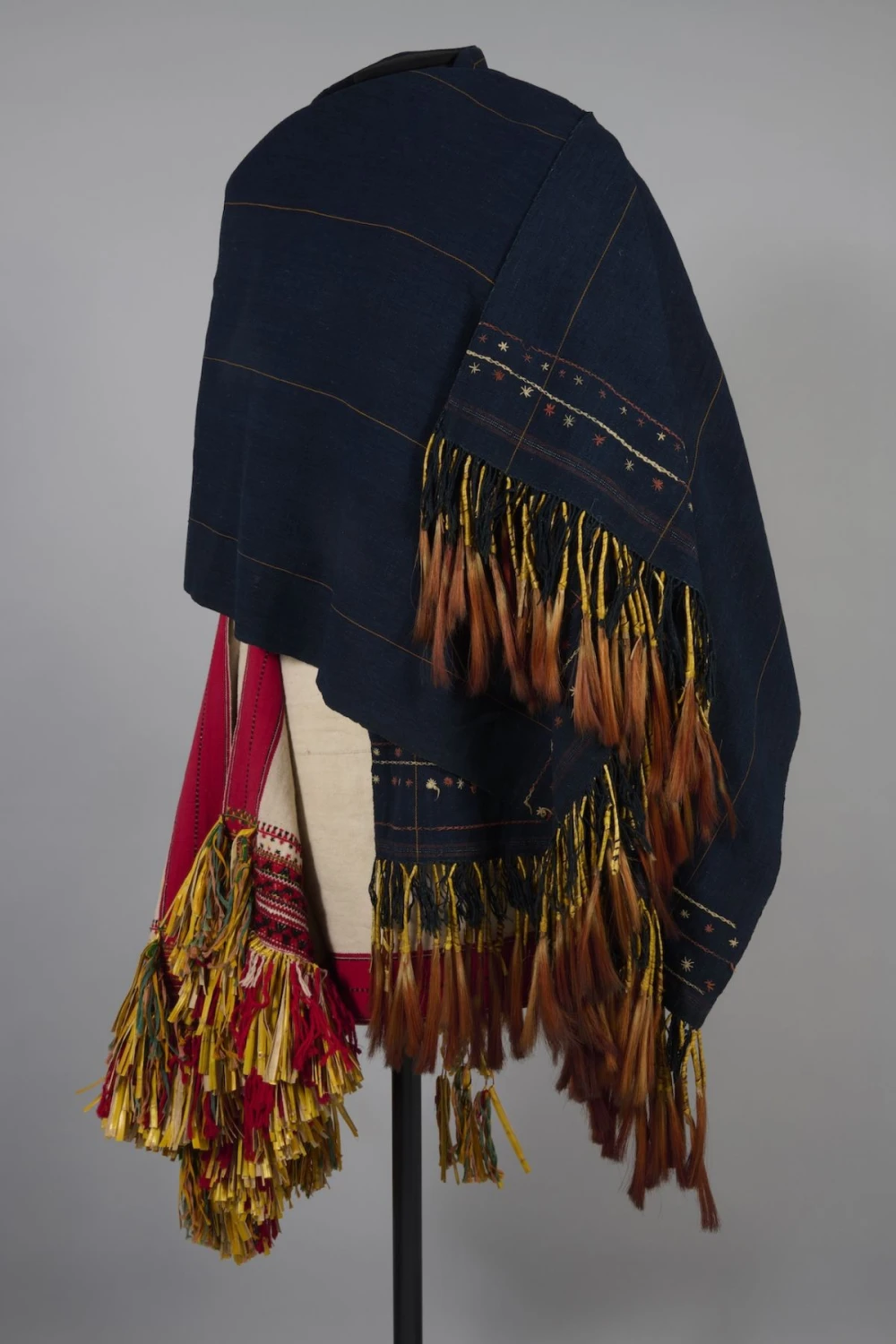
A mannequin in the opening section displays clothes that belonged to Gaidinliu, dressed as she likely wore them. “The fabrics were woven with cotton and coloured with natural dyes. The patterns are distinct to the Rongmei,” the Naga community she belonged to. “The two textiles were captured by colonial officer and anthropologist JP Mills at Kambiron, a village where Gaidinliu had hidden from the British army,” the museum said.
Believed to have “great spiritual powers,” Gaidinliu used objects to protect herself from the British. A stick topped with a monkey skull, said to ward off evil spirits, was found above her bed after she fled one hiding place. Nagas traditionally used small wooden clubs to cast an omen on an enemy; “the British believed Gaidinliu had deployed the three examples in the exhibition against them.”
The display also includes two spiral arm bands, probably worn only on special occasions, as Rongmei members still do, and a spiked metal bangle, originally one of a pair, associated with Ao or Konyak Nagas, “possibly gifted” to Gaidinliu by a member of either group.
The basket, notebooks and textiles
At the exhibition’s center is the basket where Gaidinliu kept notebooks recording her prophetic visions as a spiritual guide. She carried it everywhere but abandoned it, with its contents, while fleeing the British army near Hangrum in 1932.
Twelve notebooks are displayed in a wall case, written in a unique, untranslatable script. Followers believe the script will be decipherable only in a future golden age and treat the notebooks as sacred.
JP Mills, the colonial anthropologist who collected them, dismissed her writing as “meaningless scribbling” but noted it “gave her immense prestige” in her community, perhaps explaining why he seized the basket and notebooks as part of British efforts to suppress her movement.
Reproductions can be browsed beneath a screen showing a short film on how Naga community members responded to the “digital return.” Digital copies have been deposited with family members and relevant Naga communities in India, and the DiMuse Digital Museum’s entire contents will be presented to them on USB sticks, it said.
Another case shows textiles displayed on two small mannequins. In 1931, British military and colonial officers occupied Kambiron as part of efforts to suppress the uprising. At the center of the village stood a temple where a pair of dressed male and female clay figures were kept.
Where the objects were taken
The 27 objects were seized by British army members, colonial anthropologists and district officers during their pursuit of Gaidinliu.
Kambiron, Manipur: In February 1931, British troops entered the temple, removed two clay figures, and later destroyed both the figures and the temple. Higgins and Mills took the figures’ textiles. A year later, Mills also acquired Gaidinliu’s personal textiles there.
Hangrum, Assam: In March 1932, British forces attacked followers protecting her. She escaped, but Mills, an anthropologist connected to the museum, seized some of her most valued possessions, including her notebooks and ritual objects.
Unknown location: Her body ornaments reached the museum via Lt. Col. Nye of the 3rd Assam Rifles, the force sent to quell the uprising. Nye had received them from Sir Charles Pawsey, Deputy Commissioner of Naga Hills in the 1930s. The museum says there is no record of where or how Pawsey acquired them.
Confronting colonial language
Because the exhibition relates to a period of British rule, it includes material by colonial officers, anthropologists and curators that uses the language and assumptions of the 1930s, including some prejudiced and discriminatory language. The museum said it was reproduced “to acknowledge and challenge the past rather than to cause offence.” Such material appears on original catalogue cards and in labels printed in a retro typewriter font, so visitors can choose whether to read it.
Labels written in consultation with contemporary Naga community members appear on yellow panels throughout. The museum said it was experimenting with these approaches as part of efforts to critique and decolonize conventional museum methods.
Pilgrimage film and tribute
The exhibition screens a film by Tarun Bhartiya documenting an annual pilgrimage by Zeliangrong Nagas to Bhuban Cave in Assam. The cave is sacred to Gaidinliu’s followers because she worshipped there and discovered elements of the script she developed in her notebooks. Devotees are shown making the difficult journey to make offerings, pray and remember her.
Bhartiya, an award-winning documentary filmmaker, poet and activist, began filming and photographing the project in 2023. The film shown is a rough cut for the documentary he was making when he died in 2025. The museum is displaying some of his photographs and film “as testimony to his talents and in his memory.”
The DiMuse project
The AHRC-funded DiMuse project (2022–2026) was initiated by Arkotong Longkumer of the University of Edinburgh, with Oxford’s Clare Harris as co-investigator.
The team digitized the collection in 2D and 3D. Local researchers then shared scans, 3D renderings and film through workshops, pop-up exhibitions and social media groups, and made hard-copy replicas of the notebooks. Creative activities such as weaving, basket making and drawing were inspired by the collection. Community discussions were recorded, informed the exhibition and are available in the DiMuse Digital Museum.
Digital copies are being deposited with Gaidinliu’s family and Naga communities, and the museum’s entire contents will be given to them on USB sticks.
Future of the collection
The project raises “challenging questions about colonial extraction, the afterlives of objects from Indigenous communities, and what the appropriate future may be for the Gaidinliu Collection,” the museum said.
In DiMuse consultations, most respondents said the collection should remain at the Pitt Rivers for now, while welcoming continued community engagement. “To date, the museum has not received any requests to repatriate this collection.”
The museum said it is “keen to continue to work with communities to think and act collectively around the care of Indigenous objects in its collections, without foreclosing the difficult questions around how they were acquired.”
https://www.prm.ox.ac.uk/event/afterlives-of-captured-objects#collapse5836051