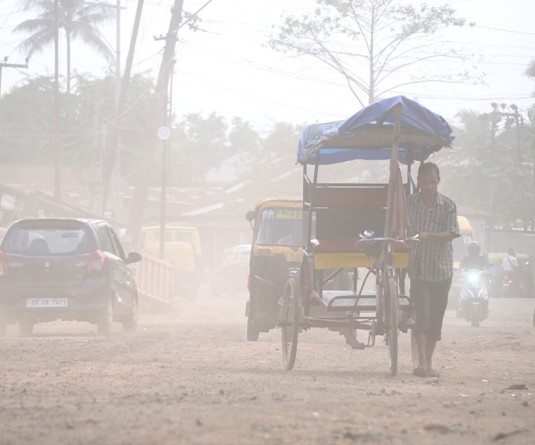
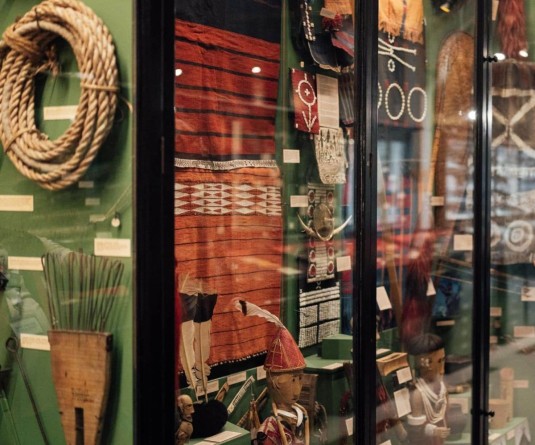
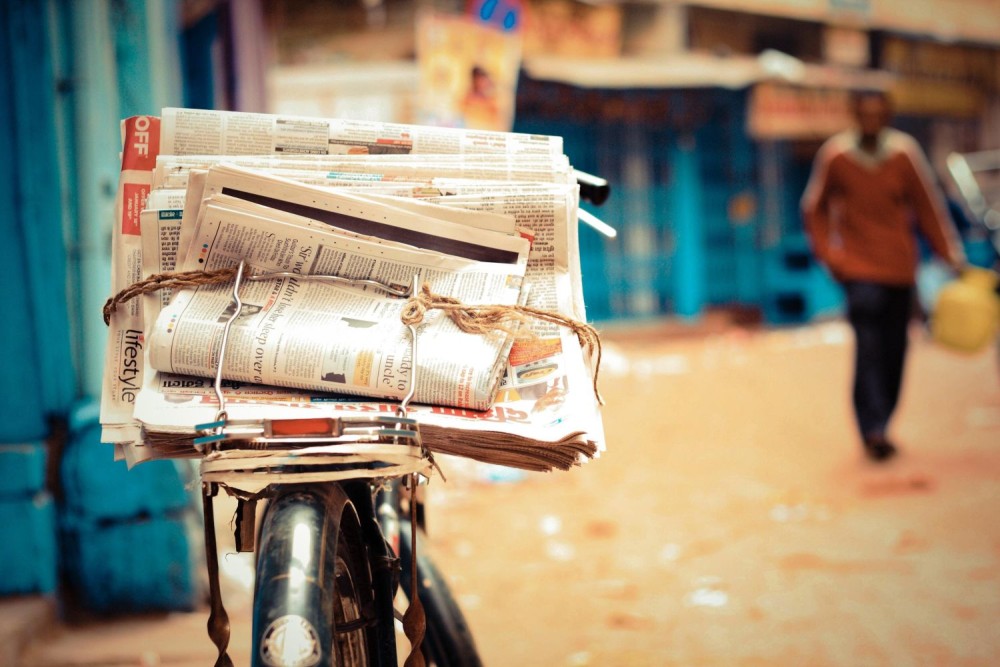
Can media serve as democracy’s fourth pillar when independence is so fragile? As journalists fight for accountability, the gap between surface-level reporting and genuine truth-seeking widens. (Photo Courtesy: Image by Deepak Girdher from Pixabay | for representational purpose only)
Lenni Samuel
Dimapur | June 23
In Nagaland, a State where journalism operates under the weight of financial constraints, the social pressures and lingering shadow of conflict, makes independent and investigative reporting a difficult pursuit.
This raises a critical question - can media truly serve as democracy’s fourth pillar when independence is constrained by financial dependence on government advertisements, threats from political and various organisations, and a persistent lack of resources for investigative work?
As journalists struggle to hold power accountable in this complex region, the gap between routine coverage and genuine truth-seeking grows increasingly visible.
“Journalists here uphold truth under tough conditions - limited resources, social pressure and at times, insurgency issues,” says Henlly Phom Odyuo, senior journalist and President of Dimapur Press Club.
Reality behind truth-seeking
While day-to-day reporting in Nagaland remains active, covering local governance, entertainment and beyond, accountability remains one of the state’s toughest journalistic challenges.
Residents point to recurring gaps. For Tushimenla Imlong, from Dimapur, although sections of the media are promoting greater accountability, the larger challenge lies in ensuring “consistent follow-up of issues beyond knee-jerk reactions.” She notes that while stories often receive initial attention, sustained scrutiny remains limited.
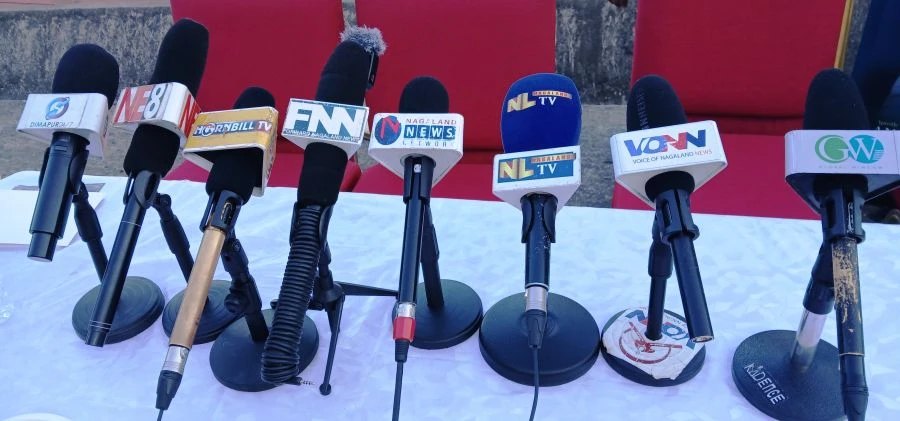
“With no funding, dependence on official handouts and the risk of backlash from political or tribal groups, hard-hitting exposes on systemic corruption or policy failures are rare,” Henlly shares. While honest, ground-level reporting on public issues remains consistent, she observes that scrutiny of those in positions of power at higher levels is often lacking.
Toshi Sanglir, a resident of Chümoukedima, says the issue is also quality of reporting. He argues that local journalism has increasingly become an “echo chamber,” where many digital and print platforms reproduce existing reports rather than undertaking original investigations.
“What is lacking is unbiased investigative journalism, especially in AI-driven news coverage on digital platforms,” he says, adding accountability and truthfulness are increasingly being compromised as “money for coverage” takes precedence over truth.
Is independent journalism a reality?
According to Henlly, “Journalists in Nagaland do report independently, but with limits.” She cites that editorial independence is constrained by financial dependence on government advertisements, social pressure and non-cooperation from government offices in providing information and data, and security risks associated with political issue.
.webp)
While acknowledging that Naga journalism still has considerable room for improvement in terms of “quality reporting, investigative journalism and truthfulness,” Dr Benjongkumba Imchen, Principal of New Model College, Mangkolemba believes many reporters continue to produce “good and accountable reporting.” He notes that the influence of tribal communities and customary laws often makes independent journalism a hesitant pursuit in Nagaland.
Sanglir argues that journalists should not just inform but empower communities, upholding the fourth estate’s role. He warns that media reliant on government ads risk becoming PR tools rather than watchdogs. “A tamed watchdog will only dance to its master’s tune,” he remarks.
Imlong raises a further concern, the media’s reactive stance. “The tendency to be reactive rather than proactive is an area that needs to be more closely examined,” she says.
Where accountability stops
Imlong observes, “If one looks at the sheer volume of content churned out, particularly by digital media journalists, there seems to be a whole lot of ground covered. However, there often remains a gap between what is being reported and well-researched exploration.” In-depth reporting enables readers and viewers to form informed opinions, something that remains an essential ingredient of a healthy democracy, she adds.
Sanglir believes that issues relating to development and public welfare often receive only surface-level coverage, with little effort to pursue stories beyond the initial report. The absence of consistent follow-up after official explanations are issued, he argues, weakens public accountability and allows allegations of mismanagement to fade without meaningful scrutiny.
Henlly raises similar concerns, pointing to inadequate reporting on government spending, development funds, land and mining deals, public contracts, and rural local governance. She attributes this partly to resource constraints, as most journalists are based in urban areas, making it difficult to cover remote regions consistently.
“When these issues are not reported deeply, the public does not know where the money goes or who is responsible,” she says. “Less scrutiny means less public awareness, making it easier for wrongdoing to go unchecked.”
On journalist protection and safeguards
While views differed on the extent of press freedom in Nagaland, all opinions broadly agreed that stronger journalism requires stronger institutional support.
While Imlong advocates for closer collaboration among journalists within the state and with regional and national media organisations believing it could strengthen editorial autonomy through the exchange of experience and best practices. Sanglir calls for greater use of the RTI Act, establishment of a Press Freedom Legal Cell to support journalists facing threats and intimidation, and a shift towards evidence-based and peace journalism.
Henlly further believes legal safeguards, newsroom collaboration and improved access to information are essential to creating an environment where journalists can pursue difficult stories without fear.“Editorial autonomy will not come from asking individuals to be brave,” she asserts.
The writer is currently a postgraduate student in Political Science at Madras Christian College, Chennai. Her academic coursework includes Public Opinion, Media Strategies and Political Journalism. This report is part of her one-month internship at The Morung Express.