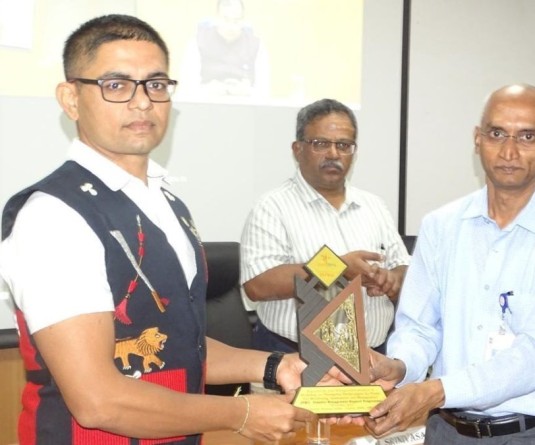
Moajungshi Menon
Imagine waking up to a message on your phone that reads: "A deadly virus has been detected in your city. Stay indoors. Share this immediately to save lives." Without verifying its source, thousands of people forward it to friends, relatives, and community groups. Within hours, panic spreads. Shops are emptied, hospitals are flooded with anxious citizens, and fear replaces reason. Later, authorities confirm that the message was completely false.
This is not merely a hypothetical situation. During the COVID-19 pandemic, the world witnessed an "infodemic"—a flood of misinformation that spread almost as rapidly as the virus itself. False cures, fabricated government orders, conspiracy theories, and manipulated videos travelled across social media at breathtaking speed. The pandemic exposed a painful truth about the digital age: misinformation can be as dangerous as any biological virus.
The digital revolution has transformed humanity in extraordinary ways. Information now travels across continents in seconds. A farmer can learn about weather patterns on a smartphone, a student in a remote village can attend online lectures from world-class universities, and a small entrepreneur can sell products to customers across the globe. Digital media has democratized communication by giving ordinary citizens a voice that was once reserved for journalists, broadcasters, and political leaders.Yet every technological revolution carries both promise and threat. The same platforms that empower truth can also amplify deception. Today, the challenge is no longer access to information but distinguishing truth from falsehood. In an era where everyone can publish, every citizen must also become responsible.
Unlike traditional newspapers, television channels, and radio stations, digital platforms have few editorial gatekeepers. Newspapers employ editors, fact-checkers, and legal teams before a story reaches readers. On social media, however, a rumour can reach millions before anyone questions its authenticity. A single click on the "Share" button can spread misinformation farther than any printing press ever could.What makes this challenge even more complex is the way social media algorithms operate. Contrary to popular belief, these algorithms are not designed primarily to promote truth; they are designed to maximize engagement. Content that provokes outrage, fear, surprise, or strong emotions often receives more likes, comments, and shares. As a result, sensational claims frequently travel faster than carefully verified facts.
This creates a dangerous cycle. The more sensational a post is, the more visible it becomes. The more visible it becomes; the more people believe it. Gradually, popularity begins to replace credibility. In the digital marketplace of attention, truth often struggles to compete with excitement.
Artificial intelligence has introduced another layer of complexity. AI has enormous potential to improve healthcare, education, and productivity. However, it has also made it easier to create convincing fake images, videos, and audio recordings known as deepfakes. Today, technology can fabricate a video showing a public figure saying words they never spoke or create images of events that never happened. As these tools become more sophisticated, distinguishing reality from manipulation will become increasingly difficult.Imagine an election campaign where a fabricated video of a candidate circulates just days before voting. Even if the video is later exposed as fake, the damage may already have been done. Public trust, once lost, is not easily restored.
India has experienced the consequences of irresponsible digital communication on several occasions. In recent years, rumours circulated through messaging platforms have led to mob violence in different parts of the country. Innocent individuals became victims because false messages portrayed them as criminals. The truth arrived only after irreversible damage had occurred. These incidents remind us that misinformation is not merely a digital problem but it has real-world consequences affecting real lives.
At the same time, it would be unfair to portray digital media only as a source of danger. When used responsibly, it has become one of the greatest forces for public good. During floods, earthquakes, and other natural disasters, social media has helped locate missing persons, coordinate relief efforts, and mobilize volunteers within hours. Citizens have exposed corruption, highlighted social injustice, raised funds for life-saving medical treatments, and amplified the voices of marginalized communities. Digital media has strengthened democracy by allowing ordinary people to participate in national discussions.
The issue, therefore, is not the technology itself. Technology is morally neutral. A knife can prepare a meal or commit a crime; the difference lies in the hands that use it. Likewise, digital media can either strengthen society or weaken it depending on how responsibly it is used.
Responsibility begins with individual users. Every citizen should develop the habit of pausing before sharing information. Four simple questions can make an enormous difference: Who published this? Is the source credible? Has the information been verified by established news organizations?Am I sharing facts or merely forwarding emotions?The old journalistic principle remains relevant today: Verify first. Publish later. Unfortunately, digital culture often encourages the opposite: Publish first. Verify later.
Influencers, bloggers, YouTubers, and online content creators also carry immense responsibility. Many have audiences larger than those of regional newspapers or television channels. Their influence extends far beyond entertainment. Their words shape opinions, purchasing decisions, political attitudes, and even social behaviour. With such influence comes an ethical obligation to verify facts, acknowledge mistakes, and distinguish clearly between opinion and evidence. Credibility should never be sacrificed for clicks.
Parents and schools also have a crucial role in preparing the next generation. Digital literacy should become as fundamental as reading and writing. Children must learn not only how to use technology but also how to question what they see online. They should understand how algorithms work, recognize manipulated images, identify fake headlines, and appreciate the importance of respectful online communication. The goal is not to produce merely skilled technology users but responsible digital citizens.
Technology companies cannot escape responsibility either. Their platforms influence billions of people every day. While complete censorship would threaten freedom of expression, platforms must continue improving systems that identify coordinated misinformation campaigns, fake accounts, and harmful content. Transparency in content moderation and greater accountability for algorithmic recommendations are essential if public trust is to be maintained.
Governments, too, have a delicate balancing act. They must protect citizens from cybercrime, online fraud, and malicious misinformation while safeguarding democratic freedoms. Excessive regulation can suppress legitimate criticism, while insufficient regulation allows harmful content to flourish. Effective governance requires transparency, independent oversight, and laws that protect both public safety and freedom of expression.
Ultimately, however, no law, algorithm, or technology can replace human judgment. The strongest defence against misinformation is a society that values critical thinking over blind forwarding, evidence over emotion, and truth over convenience.
History will remember the twenty-first century not only for artificial intelligence, smartphones, or social media, but for how humanity chose to use them. Every generation inherits powerful tools. Previous generations transformed society through the printing press, radio, and television. Our generation has inherited digital media, a technology capable of educating millions or misleading billions. Every click leaves a digital footprint. Every share influences another mind. Every comment contributes either to understanding or to division. In this digital era, we are no longer merely consumers of information; we have become its publishers, editors, and distributors.
"With great power comes great responsibility." Though these words are often associated with fiction, they capture the very essence of the digital age. Never before has humanity possessed such extraordinary power to create, share, and influence information with a single click. This power can enlighten minds, strengthen democracy, and unite communitiesbut it can also mislead, divide, and destroy lives when used carelessly. The future of digital media will ultimately depend not on technology itself, but on the wisdom, integrity, and responsibility of those who use it.
In the end, every post we publish, every comment we make, and every message we forward is a choice. Let that choice always be guided by truth, compassion, and accountability. Only then can digital media remain a force that empowers society rather than endangers it. The greatest technology of our time deserves the greatest responsibility from those who use it. Whether digital media becomes history's most powerful instrument for knowledge or its most dangerous amplifier of deception depends not on machines, but on us.