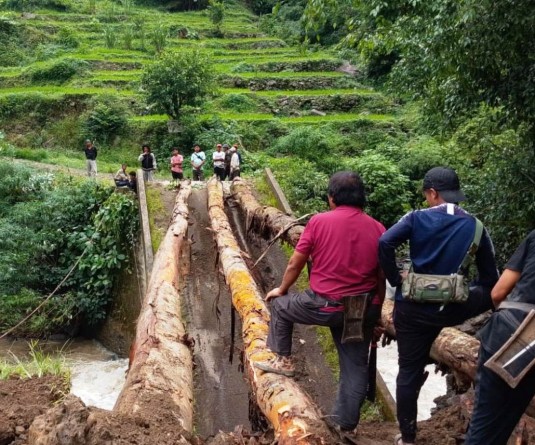
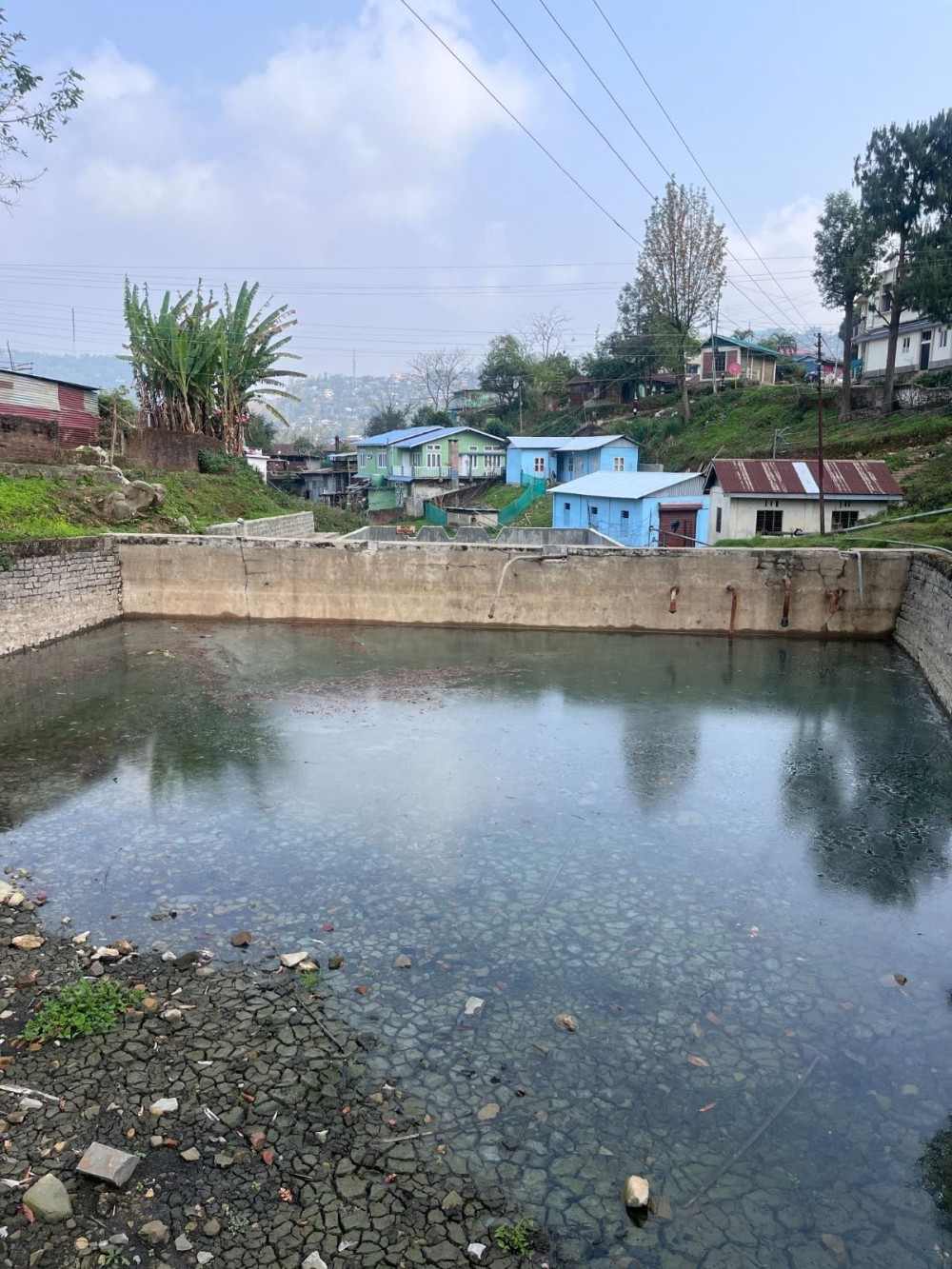
The Etsutchukha water source in Wokha, which recently dried up for the “first time,” is now gradually showing signs of revival, with water slowly reappearing. (Morung Photo)
Morung Express News
Wokha | April 24
In a positive yet cautious development, the Etsutchukha water source in Wokha, which had recently dried up for the “first time,” is now gradually showing signs of revival, with water slowly reappearing. The source, which supplies drinking water to nearly 50–60% of households in the town, had triggered widespread concern after its depletion led to acute shortages across several colonies.
Recent updates from residents indicate that water has begun emerging from two points, with the level rising by a few centimetres. Although the flow remains minimal, the development has brought a sense of relief and cautious optimism among the community, even as uncertainty persists over whether the source will fully return to its earlier capacity.
The crisis had intensified earlier this year when the once-perennial source dried up to unprecedented levels, prompting emergency meetings and public outcry. Residents had submitted memorandums to the Public Health Engineering Department (PHED), alleging negligence and calling for immediate restoration measures, including scientific intervention and regulation of groundwater use.
.webp)
While officials initially attributed the depletion to natural causes and environmental stress on the aquifer system, multiple assessments and discussions at district-level meetings later pointed to unregulated borewell drilling as a major contributing factor. This concern was further reinforced when the Wokha Town Council (WTC) imposed a complete ban on borewell drilling in January 2026, citing the alarming decline of the Etsutchukha source due to excessive groundwater extraction.
Speaking to The Morung Express, Etsutchukha Colony Chairman Yilobemo Humtsoe reiterated that the community had been raising concerns since December 2025, when the water level first began to decline. A general meeting was convened on December 31, followed by a social work in January, during which the source was found completely dried up. Representations were subsequently submitted to former Deputy Commissioner Vineet Kumar and other stakeholders, urging immediate intervention.
Following these appeals, a meeting was convened on January 6, 2026 in Kohima, attended by officials from the Public Health Engineering Department (PHED), colony representatives, the town councillor, and GBs. During the meeting, officials attributed the drying of the source to natural causes. However, the colony reiterated its concern regarding unchecked groundwater extraction and pressed for corrective measures.
.webp)
Subsequently, on January 10, another meeting chaired by the Deputy Commissioner brought together multiple departments, including PHED, Geology and Mining, Forest Department, and the Wokha Town Council, along with representatives from Lotha Hoho. Although the meeting saw extensive deliberation, no concrete solution emerged. The Geology and Mining Department later carried out verification in two locations where traces of water were observed, but no further action has been reported since.
In the interim, authorities had suggested temporary measures such as water tanker supply and alternative arrangements. However, residents maintain that these measures have not adequately addressed the urgency of the crisis. The colony has repeatedly urged the government to undertake mechanical excavation in two to three locations as an immediate step to aid revival.
Describing Etsutchukha as an “ancestral and historically significant water source” that has sustained the community for generations, Humtsoe expressed concern over what he termed as continued negligence by the concerned departments, despite repeated appeals. He also noted that while the directive to halt borewell drilling has been implemented, proactive measures such as site cleaning and restoration work using machinery have yet to be carried out.
“Whether the cause is natural or man-made, there has been a lapse in response,” Humtsoe stated, adding that while the reappearance of water is encouraging, it remains too early to determine whether the source will fully recover.
It may be noted that the drying up of Etsutchukha has also been widely discussed in district planning meetings, with officials and public representatives calling for urgent revival efforts, including afforestation and sustainable groundwater management to restore the fragile ecosystem.
Meanwhile, the residents of Etsuchukha have confirmed that, “the water is emerging and is not rainwater.” They also reiterated their appealed to the concerned authorities to visit the site, closely monitor the situation, and implement long-term, sustainable water management practices.