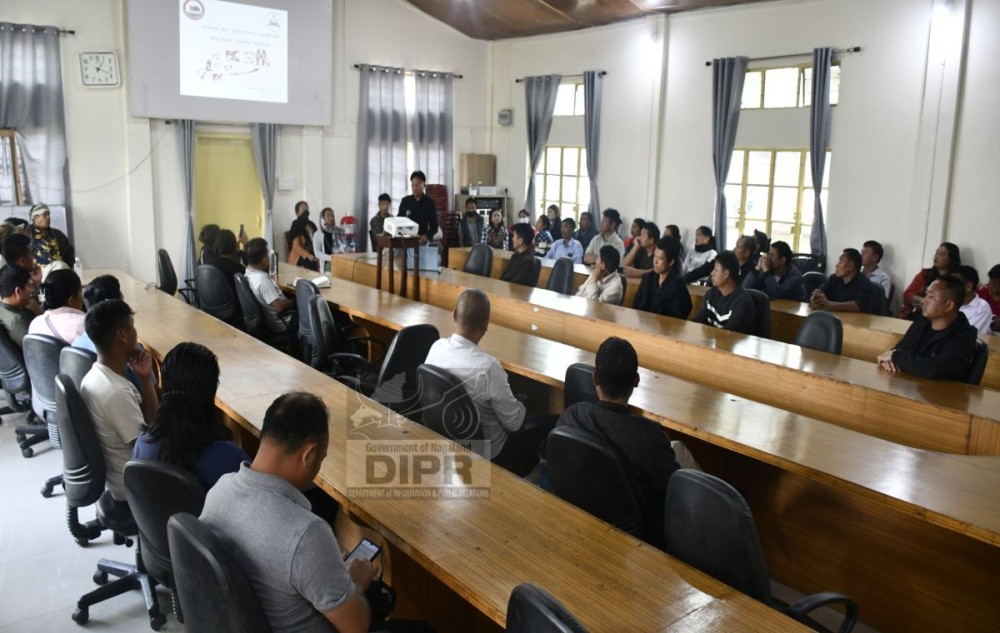
Dr Yanben M Kikon, addressing the gathering during the orientation-cum-awareness programme held at the DC Conference Hall, Wokha, on May 15. (DIPR Photo)
Morung Express News
Wokha | May 16
An orientation-cum-awareness programme on hygienic meat production and consumption for butchers, fishmongers and poultry retailers under the jurisdiction of the Wokha Town Council (WTC) was held at the DC Conference Hall, Wokha on May 15.
The programme was organised by the Wokha Town Council in collaboration with the Department of Animal Husbandry and Veterinary Services, Wokha, with the objective of promoting hygienic handling, production and consumption of meat products while ensuring public health and safety. Wholesalers and retailers dealing in pork, beef, fish and chicken attended the programme.
Speaking at the programme, Renbomo Ezung, ADC Wokha highlighted the poor level of hygiene currently maintained in meat handling and sale, stating that unhygienic practices could lead to various health complications and diseases. He said the awareness programme was aimed not only at protecting consumers but also safeguarding the health and well-being of butchers and meat handlers. He further informed that the Wokha Town Council would strictly monitor hygiene practices from now onwards and warned that stringent action would be taken against unhygienic meat handling and sale.
Delivering a presentation on “Hygienic Meat Production and Consumption and Meat-borne Zoonotic Diseases,” Veterinary Assistant Surgeon/Field Manager, PBC Wokha, Dr Yanben M Kikon, highlighted major sources of meat contamination, including water, soil, air, transportation vehicles, unhygienic clothing of butchers, slaughtering equipment, improper animal holding and meat storage, as well as contamination during handling and processing.
Dr Kikon also elaborated on microbial spoilage and bacterial infections such as E. coli and Salmonella, cautioning butchers against selling meat unfit for human consumption.
He further raised concerns over zoonotic diseases that pose occupational risks to butchers, particularly zoonotic tuberculosis caused by Mycobacterium bovis, which can be transmitted through infected livestock or carcasses. Stressing the importance of preventive measures, he encouraged butchers to wear protective gloves and undergo regular medical screening.
The session also covered diseases such as pork tapeworm (Taenia solium), rabies, bird flu and African Swine Fever (ASF). While noting that ASF is non-zoonotic and does not affect humans, Dr Kikon said the disease has severely impacted pig populations and continues to pose a major threat to pig farming, with no effective vaccine or treatment currently available.
During the programme, participants were sensitised on the importance of proper hygiene standards in meat production, handling and sale to ensure safer meat consumption and improved public health.