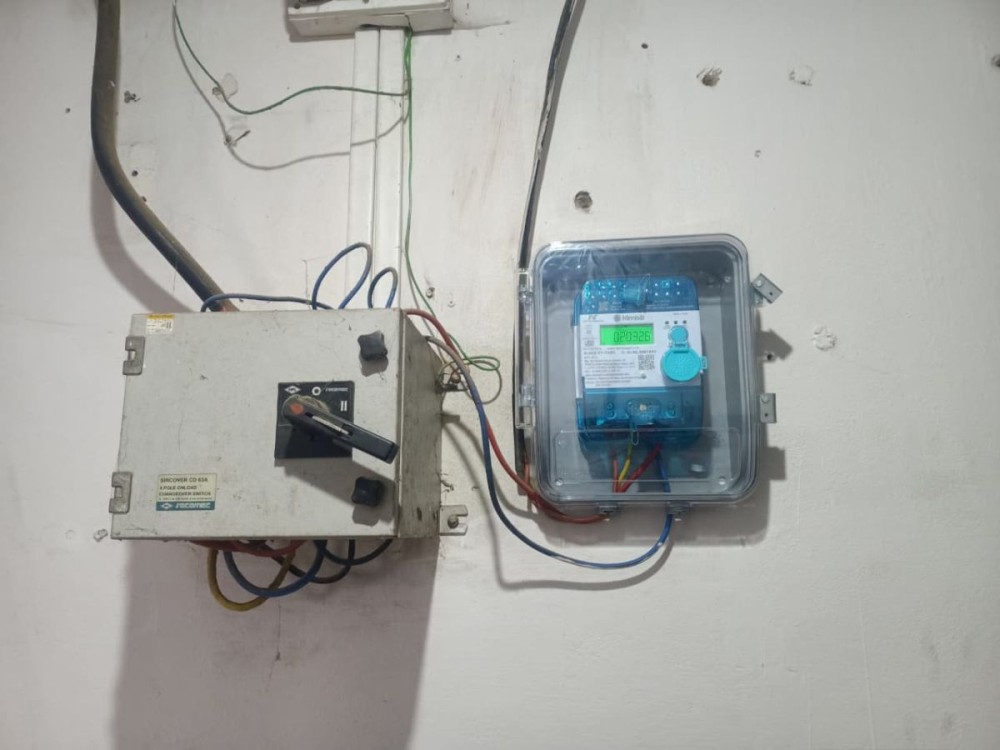
Smart meters installed at DC Office Zunheboto. Department of Power Nagaland under the Revamped Distribution Sector Scheme has installed smart meters in government and commercial buildings in parts of Zunheboto and Akuluto subdivisions. (Morung Photo)
Residents fear bill hike as power dept pushes smart metering under RDSS
Tokavi K Zhimo
Zunheboto | May 18
The rollout of smart electricity meters in Zunheboto district has sparked public debate with over affordability, digital access, power infrastructure and potential bill hikes.
The Department of Power Nagaland (DoPN) under the Revamped Distribution Sector Scheme (RDSS), has already installed smart meters in government and commercial buildings in parts of Zunheboto and Akuluto subdivisions. To date, 320 smart meters have been installed in government and commercial buildings since February 18.
While the department cites transparent billing and modernisation behind the initiative, many citizens say the transition has caused confusion and concern.
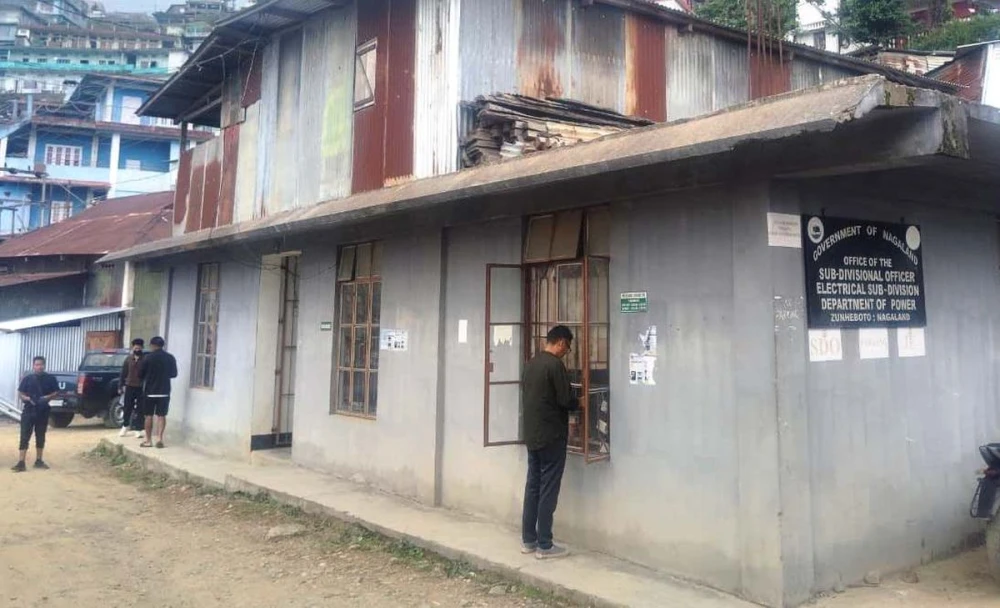
Addressing some concerns and sharing the department’s long-term vision, Er Manato S Chophy, SDO (E) of Zunheboto maintained that the smart meters aim to improve billing accuracy, reduce power losses and theft, strengthening revenue collection, and modernize the distribution system under the RDSS.
“A major portion of grid electricity is generated from fossil fuels, which are depleting at an alarming rate. Smart metering encourages energy consciousness, conservation, and efficient utilisation of electricity,” he stated in an interview with The Morung Express.
Despite the department’s assurances, residents in Zunheboto argued that the department should have first conducted large-scale public awareness programmes before beginning installations in residential areas.
Key issues include affordability for economically weaker sections, unclear tariff structures, and the new billing calculation method.
Others question technical feasibility given inconsistent internet connectivity, outdated wiring, backend IT infrastructure, and the challenges elderly citizens or basic phone users may face with app-based monitoring.
The issues of rising bills, lack of digital literacy, and potential exclusion of vulnerable groups such as widows and rural households are also highlighted.
Meanwhile, clarifying on a common ‘misconception,’ smart meters mean prepaid billing, SDO Chophy highlighted that the two are separate concepts.
“Smart meters can operate in both prepaid and postpaid modes,” he stated. “In prepaid mode, consumers recharge first and then consume electricity similar to mobile recharge systems. In postpaid mode, consumers continue receiving monthly bills just like in the conventional system.”
He further informed that while prepaid billing is no longer mandatory under a Central Electricity Authority amendment effective April 1, 2026, smart meter is basic mandatory requirement for availing electricity supply.
He cited Section 55 of the Electricity Act, 2003, requiring metering for electricity supply and the amended 2026 regulations, which mandate smart meters for consumers in areas with communication networks, in line with central timelines.
“One misconception creating panic is that prepaid mode is compulsory. Consumers have the liberty to choose prepaid or postpaid billing,” he clarified.
Smart meters, Chophy elaborated, are digital devices that communicate directly with the department's IT system in real time, enabling remote monitoring of consumption and billing.
Unlike conventional meters that require manual reading, smart meters allow readings to be accessed remotely, he said.
Consumers can use the Smart Meter Nagaland App or the official DoPN website for bill payment and related services.
Billing depends on tariff rates
Chophy also maintained that smart meters themselves do not increase bills, dispelling the fear that electricity bills may rise sharply after installation.
“Billing depends on tariff rates, appliance wattage, and the number of hours electricity is consumed. Generally, consumers overlook these factors,” he said.
According to the department, prepaid billing follows a single-slab tariff of about Rs 5.75 per unit, while postpaid billing uses slab-based rates starting at Rs 5.90 per unit, as set by the Nagaland Electricity Regulatory Commission.
One unit equals 1,000 watts used for one hour, allowing consumers to calculate their own usage, he said.
On unreliable power infrastructure, including frequent outages during rain and thunderstorms, and whether supply reliability should improve before the rollout of smart meters, SDO Chophy maintained that infrastructure upgrades are being carried out alongside the installation of smart meters.
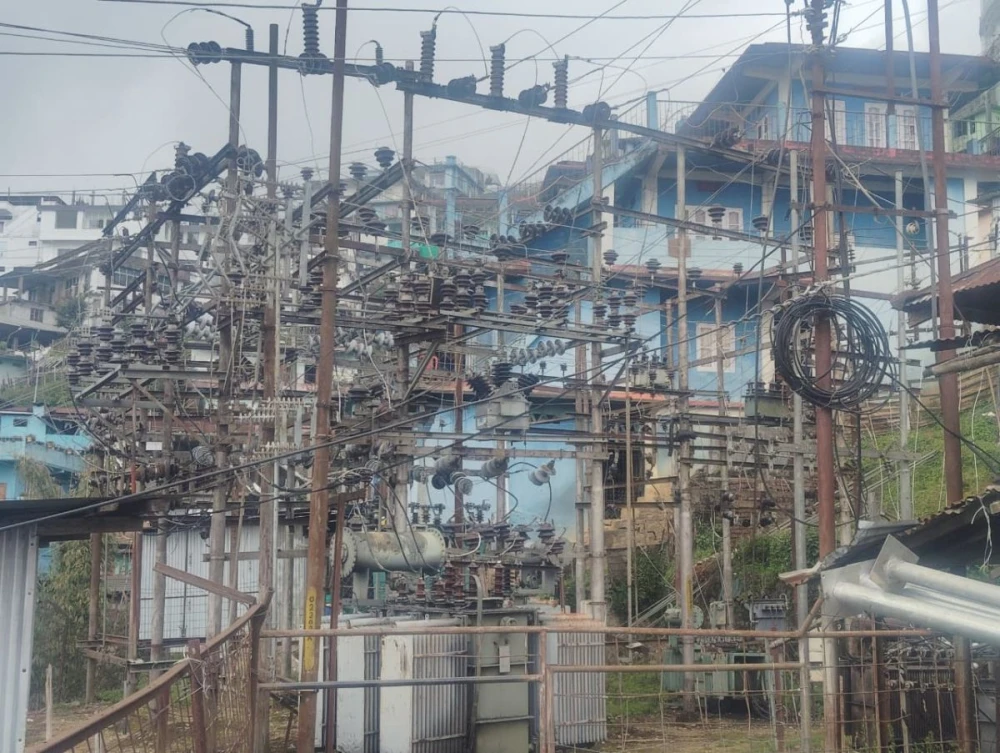
Around 13 new transformers have been installed, and reconductoring and aerial bunched conductor (ABC) cabling are ongoing to address illegal hooking and vulnerable lines, he added.
Currently, Zunheboto draws power from the Mokokchung sub-station (SS) while the upcoming Lizu SS (2×25 MVA, 132/33 kV) is nearly complete and expected to boost reliability.
Mass implementation is temporarily on hold, with installations now limited to willing consumers and new connections.
“The Department is actively undertaking mass sensitisation and public awareness programmes to educate consumers on the benefits, functioning, and objectives of Smart Metering,” the SDO added
The department acknowledged that major reforms like smart metering come with challenges but said these can be addressed “systematically.”
Despite skepticism, the department maintained that smart metering is essential for future reforms, energy accountability, and efficient management.
SDO Chophy said successful implementation will enable advanced technologies like rooftop solar integration and smart net-metering, allowing consumers to both use and export power.
“Rooftop solar is the future,” he said.
“Smart meters are essential for proper energy accounting in such systems.”
He urged citizens not to rely on misinformation and to cooperate during the transition.
“I appeal to the people of Zunheboto not to be swayed by negative apprehensions. Reliable power supply comes from proper energy accounting and modernisation.”